MP Cabinet clears ₹241 crore school transport plan
Synopsis
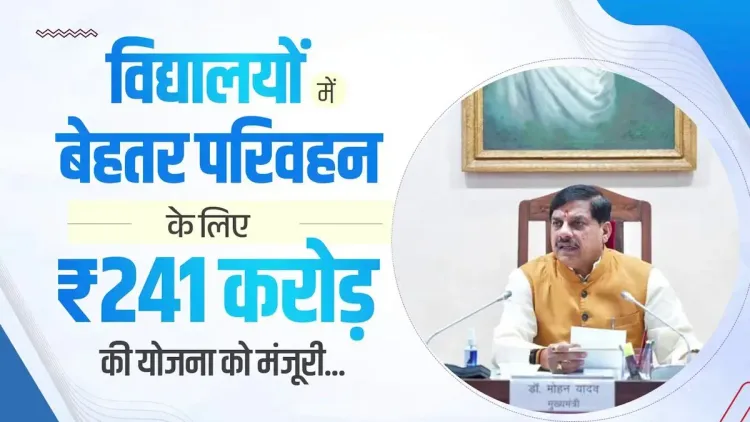
The Madhya Pradesh Cabinet has approved a ₹241 crore scheme to improve school transportation across the state, with bus operations and maintenance decentralised to the district level. Chief Minister Dr. Mohan Yadav announced the decision on 15 October 2026, aiming to strengthen rural student access and reduce dropout rates.
Key Takeaways
₹241 crore approved by the Madhya Pradesh Cabinet for a state-wide school transport scheme.
Bus operations and maintenance will be managed at the district level , decentralising control from the state to local administrators.
Mohan Yadav announced the decision following the cabinet meeting on 15 October 2026 .
The scheme aligns with the national Samagra Shiksha Abhiyan framework, which includes student transport provisions for underserved areas.
The policy targets improved attendance and reduced dropout rates, consistent with goals under the National Education Policy 2020 .
District-level tendering and operational rollout will be the key implementation milestone to watch.
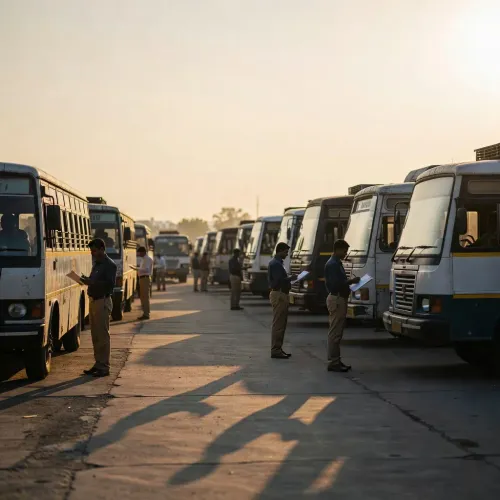
Tens of thousands of schoolchildren across Madhya Pradesh — many in remote, poorly connected villages — are at the centre of a major policy push: the state cabinet has approved a ₹241 crore scheme to overhaul school transportation, with bus operations and maintenance to be managed at the district level.
Chief Minister Dr. Mohan Yadav announced the decision following the Cabinet meeting on Thursday, 15 October 2026, posting on X that the scheme was approved 'to improve transport arrangements in schools across the state,' with district administrations taking operational charge of bus fleets.
District-level control: why it matters
The shift to district-level bus management is the structural heart of this plan. By decentralising operations and maintenance, the government is betting that local administrators will respond faster to route gaps, breakdowns, and seasonal access problems — the chronic pain points that cause rural students, particularly girls, to drop out or simply never enrol.
India's Samagra Shiksha Abhiyan, the central framework that merged earlier school-access schemes in 2018, already includes provisions for student transport in underserved areas. Madhya Pradesh's ₹241 crore outlay slots directly into that national architecture — but the district-ownership model signals a more hands-on state commitment than a routine central-fund pass-through.
The dropout math behind ₹241 crore
Distance from school remains one of the most stubborn drivers of non-enrollment and dropout rates across India's larger states, and Madhya Pradesh — with its vast tribal belt and dispersed rural population — has historically ranked among the more challenged states on secondary-level attendance. The National Education Policy 2020 set explicit targets to reduce dropout rates, creating pressure on state governments to fix the last-mile access problem that policy papers diagnose but budgets rarely solve.
A ₹241 crore allocation for a state the size of Madhya Pradesh is a meaningful, if not transformative, commitment. The real test will come in the tendering process — whether contracts are awarded at speed, whether routes actually reach the most underserved habitations, and whether maintenance funding holds once the scheme moves from announcement to operation.
What to watch as rollout begins
District collectors and education officers will now be responsible for procuring and running the bus fleets — a task that requires procurement capability, fuel logistics, and driver management that vary widely across Madhya Pradesh's 55 districts. Observers will track whether enrollment and attendance data in targeted areas improves within one or two academic years, and whether the scheme's district-level design proves more durable than earlier centralised transport pilots.
For now, the cabinet decision puts real money behind an old promise. The buses have been funded — getting them on the road, on time, to every village that needs them, is where the work truly begins.
Point of View
Where attendance and enrollment metrics increasingly carry political weight. Decentralising operations to districts is an administratively sound move — but it also disperses accountability, making it harder to hold a single authority responsible if rollout stalls. For Chief Minister Dr. Mohan Yadav, who has been in office since December 2023, this cabinet cycle signals an emphasis on welfare-delivery optics as much as structural reform. The real policy test is whether district-level execution capacity in Madhya Pradesh's tribal and rural belts can match the ambition of the budget line.
NationPress
15 Oct 2026
Frequently Asked Questions
What is the MP school transport scheme approved in October 2026?
The Madhya Pradesh Cabinet approved a ₹241 crore scheme on 15 October 2026 to improve transportation for school students across the state, with bus operations and maintenance managed at the district level.
Who announced the MP Cabinet school bus decision?
Chief Minister Dr. Mohan Yadav announced the Cabinet decision on X, stating the scheme would improve transport arrangements in schools across Madhya Pradesh.
Why is district-level school bus management significant?
District-level management means local administrators control procurement, operations, and maintenance, allowing faster responses to route gaps and breakdowns — a key advantage for remote and rural areas.
How does this scheme relate to Samagra Shiksha Abhiyan?
Samagra Shiksha Abhiyan, launched in 2018, includes national provisions for student transport in underserved areas. Madhya Pradesh's ₹241 crore scheme fits within this framework while adding a distinct district-ownership model.
What impact is the MP school transport scheme expected to have?
The scheme aims to reduce student dropout rates and improve enrollment, particularly in rural and tribal areas of Madhya Pradesh where distance from school is a major barrier to attendance.