CM Sai: 40 Lakh Chhattisgarh Women Freed from Smoke-Filled Kitchens
Synopsis
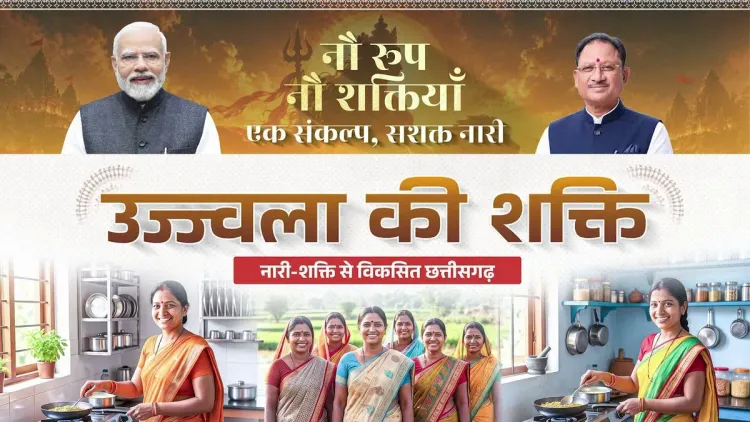
Chhattisgarh Chief Minister Vishnu Deo Sai, posting on Navratri 2026, credited the Pradhan Mantri Ujjwala Yojana with delivering smoke-free kitchens to nearly 40 lakh women in the state, linking clean fuel access to health, time savings, and women's empowerment.
Key Takeaways
Pradhan Mantri Ujjwala Yojana has provided clean LPG connections to nearly 40 lakh women in Chhattisgarh , according to CM Sai.
The scheme was first launched in May 2016 to eliminate indoor air pollution for BPL households and was subsequently expanded to broader beneficiary categories.
CM Vishnu Deo Sai framed the benefit beyond health — arguing that time saved in the kitchen enables women to pursue skills, interests, and ambitions.
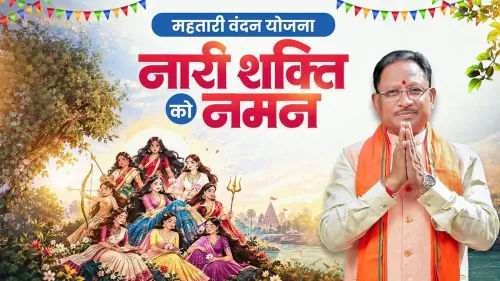
The post used the mahtari (mother-figure) framing, consistent with the Chhattisgarh BJP government's broader branding of women-centric welfare.
The message was timed to coincide with Navratri 2026 , anchoring a governance narrative to a festival centred on feminine divinity.
Clean fuel changed the kitchen — and then it changed everything else. Chhattisgarh Chief Minister Vishnu Deo Sai on Thursday, October 15, 2026, marked Navratri by highlighting how the Pradhan Mantri Ujjwala Yojana has brought smoke-free cooking to nearly 40 lakh women across the state, framing the shift as the foundation of real women's empowerment.
Posting in Hindi, CM Sai wrote: 'जब हमारी बहनों को धुएँ से मुक्त रसोई मिलती है, तो उनके स्वास्थ्य के साथ-साथ उनके जीवन में भी नई सहजता आती है' — 'When our sisters get a smoke-free kitchen, not only does their health improve, but a new ease enters their lives as well.' He added that time and effort saved from cooking now allows women to invest in their skills, interests, and dreams. 'Expanding self-confidence and new possibilities in the lives of our mahtari-bahens (mothers and sisters) is the meaningful identity of women's empowerment,' he wrote.
A 2016 scheme still reshaping rural Chhattisgarh
The Pradhan Mantri Ujjwala Yojana was launched in May 2016 to deliver free LPG connections to households below the poverty line, with the core goal of eliminating indoor air pollution caused by burning wood and biomass on traditional stoves. The health toll of smoke-filled kitchens — respiratory disease, eye damage, hours lost daily to fuel collection — fell disproportionately on rural women. Chhattisgarh, with its large rural and tribal population, was among the states with the highest potential for impact.
Subsequent expansions of the scheme broadened eligibility beyond the original BPL criteria, drawing in additional categories of beneficiaries. CM Sai's claim of nearly 40 lakh beneficiaries in the state signals the scale at which the programme has penetrated Chhattisgarh's households — though state-level health-impact assessments and updated distribution figures remain an area to watch.
Navratri as the backdrop for a welfare message
The post carried the hashtags #CGNavratri2026, #महतारी_का_सम्मान ('honour for the mother-figure'), and #महतारी_के_मान ('respect for the mother-figure') — linking the religious and cultural observance of Navratri directly to a governance narrative. It is a well-worn but effective political communication move: welfare delivery gains emotional resonance when anchored to a festival centred on feminine divinity.
The mahtari framing is notable. In Chhattisgarhi culture, mahtari means 'mother,' and the word has been adopted as a branding touchstone by the BJP government in the state — most visibly in its cash-transfer scheme for women. Invoking it here ties the Ujjwala benefit into a broader, consistent narrative of maternal respect as state policy.
The message lands at a moment when BJP-governed states are doubling down on central welfare schemes as a core electoral and governance asset. The framing — less about the gas cylinder itself and more about the time, dignity, and possibility it unlocks — is a deliberate upgrade from simple beneficiary counts. Numbers matter, but the story of a woman who now has an hour to learn a skill is the image that sticks.
Point of View
Culturally resonant governance story. The shift in framing from 'gas cylinder delivered' to 'dream pursued' reflects a maturing of welfare communication: beneficiary numbers alone no longer suffice; the narrative must connect entitlement to aspiration. Timing the message around Navratri and invoking the mahtari lexicon deepens the emotional register without making a single partisan claim. The real test, as always, will be whether state-level LPG refill rates and health outcomes in rural Chhattisgarh back the empowerment story being told.
NationPress
15 Oct 2026
Frequently Asked Questions
What is the Pradhan Mantri Ujjwala Yojana?
The Pradhan Mantri Ujjwala Yojana is a central government scheme launched in May 2016 that provides free LPG connections to households below the poverty line, with the aim of replacing smoke-producing traditional cooking stoves and reducing indoor air pollution.
How many women in Chhattisgarh have benefited from the Ujjwala Yojana?
According to Chhattisgarh Chief Minister Vishnu Deo Sai , nearly 40 lakh women in the state have received clean LPG fuel access under the Pradhan Mantri Ujjwala Yojana.
What did CM Vishnu Deo Sai say about women's empowerment on Navratri 2026?
CM Sai said that a smoke-free kitchen improves not just health but also brings a new ease to women's lives, and that the time saved from cooking allows women to invest in their skills, interests, and dreams — which he called the meaningful identity of women's empowerment.
What does 'mahtari' mean in Chhattisgarh politics?
Mahtari means 'mother' in Chhattisgarhi culture and has become a key branding term for the BJP government in Chhattisgarh , used in welfare schemes and communications to signal respect and care for women and mother-figures.
Why did CM Sai post about Ujjwala Yojana during Navratri?
CM Vishnu Deo Sai timed the post to Navratri 2026 — a festival celebrating feminine divinity — to connect the state's welfare delivery for women to the cultural and spiritual significance of the occasion, reinforcing the government's women-centric governance narrative.