CM Vishnu Deo Sai: PMAY homes a mark of dignity for women
Synopsis
Chhattisgarh CM Vishnu Deo Sai, posting on Navratri 2026, said PMAY homes built in women's names are pillars of honour, security, and self-respect — and that the joy on their faces is his government's greatest achievement.
Key Takeaways
Chief Minister Vishnu Deo Sai posted on 12 October 2026 during Navratri , tying housing welfare to the season's theme of feminine power.
PMAY homes in Chhattisgarh are being registered in women's names , giving them formal property ownership.
CM Sai described women's happiness on receiving house keys as his government's 'greatest asset.' The post used hashtags #शक्ति_वंदन , #CGNavratri2026 , and #महतारी_के_मान , reflecting the state BJP's sustained women-centric outreach.
The 'Mahatari' branding connects PMAY delivery to the broader Mahatari Vandana welfare positioning of the Sai government.
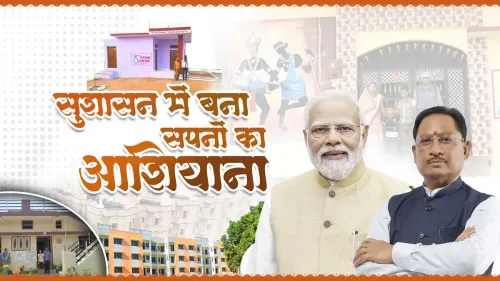
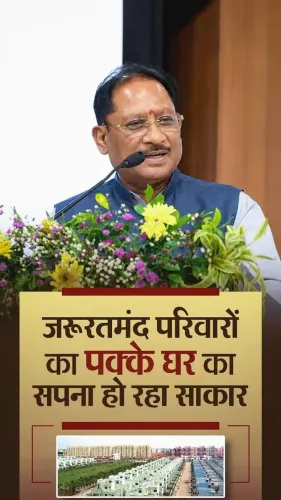
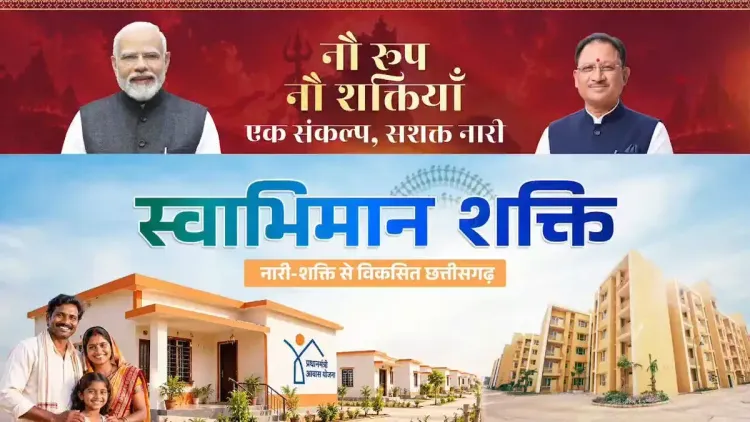
A key in hand, a face lit with joy — Chhattisgarh Chief Minister Vishnu Deo Sai says that moment, when a woman receives the keys to her own pucca home under the Pradhan Mantri Awas Yojana, is the truest measure of his government's success.
Posting on Monday, 12 October 2026, during the Navratri season — a period his government has been marking under the hashtag #CGNavratri2026 — the Chief Minister shared a deeply personal sentiment in Hindi: 'Jab meri bahnon ko apne pakke ghar ki chaabi milti hai, unke chehre ki khushi dekhkar mann ko bahut santosh milta hai' ('When my sisters receive the keys to their own permanent home, the joy on their faces brings deep satisfaction to my heart').
Houses in women's names — the PMAY design choice that matters
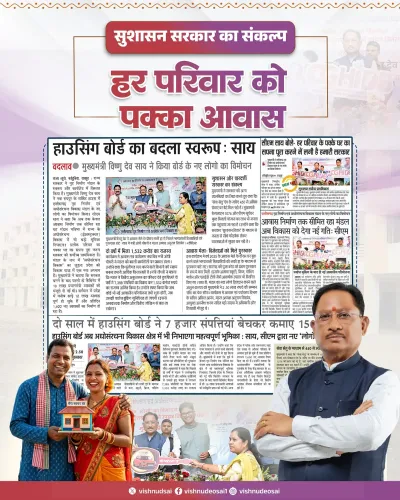
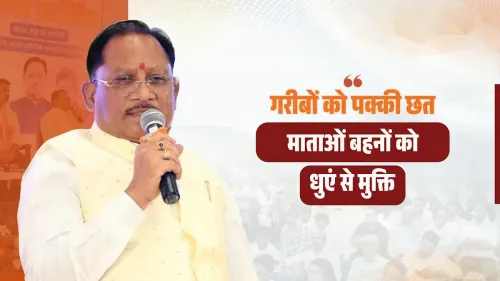
The post draws specific attention to a structural feature of the scheme: homes are being built in the names of women in the family. CM Sai calls this the 'strong foundation of their honour, security, and self-respect.' This provision — registering property ownership with women as primary or co-owners — is central to PMAY's design, aimed at converting housing support into lasting asset ownership for women who have historically been excluded from property records.
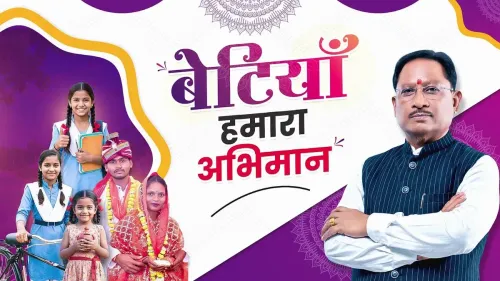
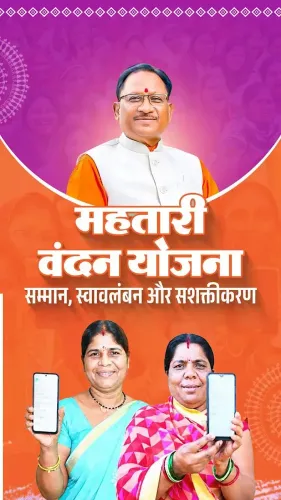
The hashtag #महतारी_के_मान ('Mahatari ke Maan' — honour of the mother) echoes a Chhattisgarhi cultural reference, tying the housing initiative to the BJP-led state government's broader 'Mahatari Vandana' outreach that has positioned welfare schemes for women as a political and governance priority in the state.
Navratri, 'Shakti Vandana', and the politics of women-first welfare
The timing is deliberate. Navratri — nine nights of worship of the goddess Durga, a symbol of feminine power — provides the symbolic frame for the #शक्ति_वंदन ('Shakti Vandana', or salutation to power/womanhood) messaging. CM Sai's post lands this welfare message within a cultural register that resonates strongly across Chhattisgarh's rural heartland.
His closing line carries the political thesis plainly: 'Mataon aur bahnon ke chehre ki khushi hi hamari sarkar ki sabse badi poonji hai' — 'The happiness on the faces of our mothers and sisters is our government's greatest asset.' That is not just a sentiment; it is a governing statement, framing women's welfare outcomes as the headline metric by which this administration chooses to be judged.
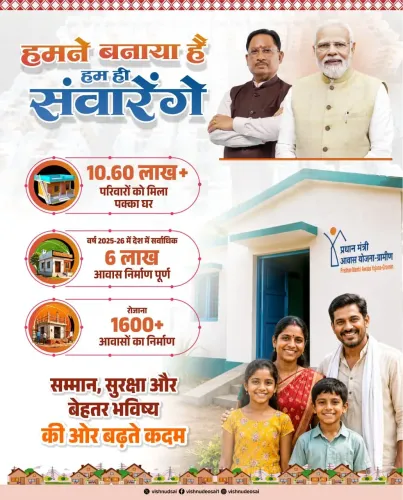
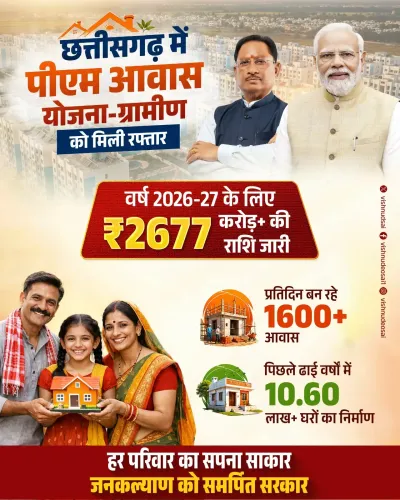
For millions of families in Chhattisgarh — where rural housing backlogs remain significant — a pucca home is not an abstraction. It is rain-proof walls, a lockable door, and a land title in a woman's name. CM Sai is betting that the photograph of that moment — keys, smiles, ownership — is worth more than any policy press release.
Point of View
Particularly women, ahead of any future electoral cycle. The Navratri timing amplifies the 'Shakti' symbolism, weaving cultural resonance into governance messaging — a technique the BJP has refined across multiple states. The 'Mahatari' branding further signals that the Sai administration sees women's welfare not as a sideshow but as its primary political identity in Chhattisgarh.
NationPress
12 Oct 2026
Frequently Asked Questions
What is Pradhan Mantri Awas Yojana and who benefits in Chhattisgarh?
Pradhan Mantri Awas Yojana (PMAY) is a central government scheme providing financial assistance to build permanent homes for economically weaker families. In Chhattisgarh, a key feature highlighted by CM Vishnu Deo Sai is that these homes are being registered in women's names, making them formal property owners.
Why are PMAY homes registered in women's names?
Registering homes in women's names is a deliberate policy design to give women legal property ownership, which historically they have been denied. It converts housing support into a lasting economic asset for women and strengthens their security and social standing.
What is Mahatari Vandana in Chhattisgarh?
Mahatari Vandana is a welfare outreach initiative by the Chhattisgarh BJP government under CM Vishnu Deo Sai, focused on financial and social support for women. 'Mahatari' means 'mother' in Chhattisgarhi, and the branding connects multiple women-centric schemes under one identity.
What did CM Vishnu Deo Sai post on Navratri 2026?
On 12 October 2026, during Navratri, CM Sai posted in Hindi expressing that seeing women receive keys to PMAY homes brings him deep satisfaction, and that homes built in women's names are the foundation of their honour, security, and self-respect.
What is the significance of #ShaktiVandan and #CGNavratri2026?
These hashtags reflect the Chhattisgarh government's messaging campaign during Navratri 2026, linking the Hindu festival's theme of feminine divine power to the state's women-centric welfare delivery, particularly housing under PMAY.