CM Sai Hails PMAY, Ujjwala as Pillars of Modi's Welfare Drive
Synopsis
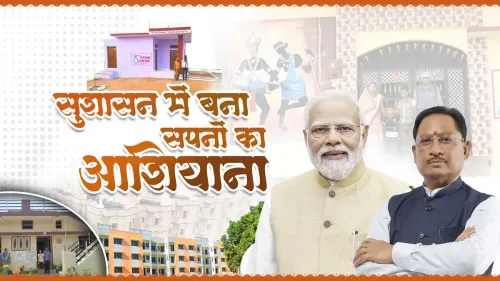
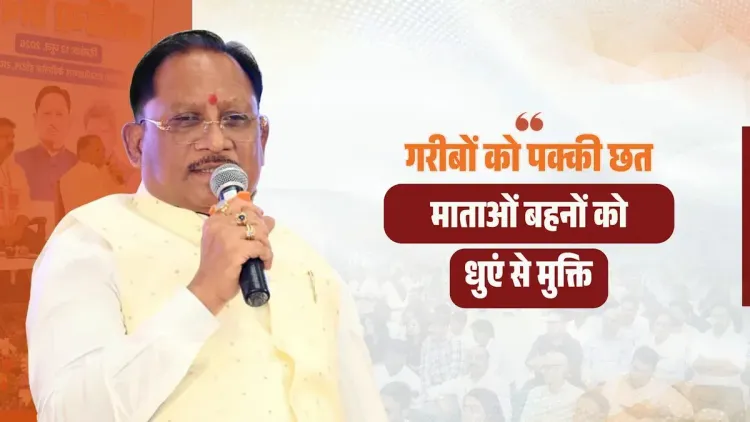
Chhattisgarh Chief Minister Vishnu Deo Sai on 13 June 2026 praised PM Narendra Modi's Pradhan Mantri Awas Yojana and Ujjwala Yojana, saying the schemes have fulfilled housing dreams for crores of poor families and freed women from smoke-related health hazards.
Key Takeaways
CM Vishnu Deo Sai publicly praised PMAY and Ujjwala Yojana in a post on 13 June 2026 , attributing their success to PM Narendra Modi 's leadership.
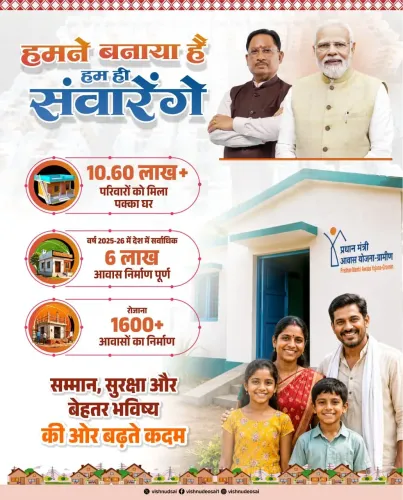
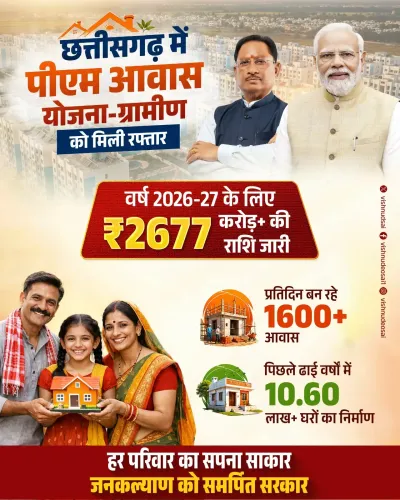
Pradhan Mantri Awas Yojana was launched in June 2015 with a 'Housing for All' mandate, targeting pucca homes for eligible poor families.
Pradhan Mantri Ujjwala Yojana , launched in May 2016 in Ballia, Uttar Pradesh , initially targeted 5 crore BPL households with free LPG connections.
Both schemes were scaled up post- 2019 with Aadhaar-linked direct benefit transfers and higher beneficiary targets.
Chhattisgarh, with its large rural and tribal population, is among the key states where both schemes have significant reach.
State-level completion data for Chhattisgarh and any new phase announcements in the next Union Budget will be closely watched.
Chhattisgarh Chief Minister Vishnu Deo Sai on Saturday, 13 June 2026 lauded two flagship central welfare schemes — Pradhan Mantri Awas Yojana (PMAY) and Pradhan Mantri Ujjwala Yojana — crediting Prime Minister Narendra Modi's leadership for transforming the lives of crores of poor families and women across India.
Context
In a post on X, CM Sai wrote — translated from Hindi — that 'Pradhan Mantri Awas Yojana ne croro garib parivaron ke apne ghar ke sapne ko sakar kiya hai' ('Pradhan Mantri Awas Yojana has fulfilled the dream of owning a home for crores of poor families'). He added that the Ujjwala Yojana has freed mothers and sisters from smoke, making their lives 'more secure, healthy and dignified.'
The statement positions both schemes as central achievements of the National Democratic Alliance (NDA) government at the Centre, with CM Sai explicitly attributing the outcomes to PM Modi's leadership.
Policy Backdrop
Pradhan Mantri Awas Yojana was launched in June 2015 with the stated goal of 'Housing for All,' targeting the construction of pucca (permanent) houses for eligible families in both rural and urban areas. The scheme was subsequently extended beyond its original 2022 deadline with additional phases and revised targets.
Pradhan Mantri Ujjwala Yojana was inaugurated in May 2016 in Ballia, Uttar Pradesh, initially aiming to provide free LPG connections to 5 crore households living below the poverty line, with women listed as the primary beneficiaries. Both programmes were scaled up after 2019 with increased targets and integration with Aadhaar-linked direct benefit transfers, cementing their place as cornerstones of the NDA's welfare delivery architecture.
Stakeholders and Impact
The primary beneficiaries of both schemes are BPL (Below Poverty Line) households, rural poor, and women — groups that form a significant electoral and social constituency in states like Chhattisgarh. The Ujjwala scheme, in particular, has been framed as a women's empowerment and public health intervention, replacing traditional biomass cooking fuels that are associated with indoor air pollution and respiratory illness.
For Chhattisgarh — a state with large tribal and rural populations — the reach of PMAY and Ujjwala carries particular significance. CM Sai, who assumed office in December 2023 following the BJP's return to power in the state, has consistently aligned state-level messaging with Central welfare narratives.
What's Next
Attention will now turn to state-level completion reports for PMAY and Ujjwala targets in Chhattisgarh, as well as any fresh phase announcements or revised beneficiary lists that may emerge in the next Union Budget. CM Sai's public endorsement also signals that welfare scheme delivery will remain a key political and administrative priority for the BJP government in the state ahead of future electoral cycles.
Point of View
Sai reinforces the NDA's dual narrative of shelter and dignity as measurable governance outcomes. For Chhattisgarh, a state the BJP recaptured in late 2023 partly on a welfare delivery platform, such messaging serves both administrative signalling and political consolidation. The timing, ahead of potential budget discussions and beneficiary list revisions, suggests the state government is positioning itself to claim credit for Central scheme outcomes on its turf.
NationPress
13 Sept 2026
Frequently Asked Questions
What is Pradhan Mantri Awas Yojana and who benefits from it?
Pradhan Mantri Awas Yojana (PMAY) is a Central government housing scheme launched in June 2015 to provide permanent homes to eligible poor families in rural and urban areas. BPL households and economically weaker sections are the primary beneficiaries.
What is Pradhan Mantri Ujjwala Yojana?
Pradhan Mantri Ujjwala Yojana is a Central scheme launched in May 2016 that provides free LPG connections to women from Below Poverty Line households, replacing traditional cooking fuels to reduce indoor air pollution and improve health outcomes.
What did Chhattisgarh CM Vishnu Deo Sai say about Modi's welfare schemes?
CM Vishnu Deo Sai said on 13 June 2026 that PMAY has fulfilled the dream of owning a home for crores of poor families, and that Ujjwala Yojana has freed mothers and sisters from smoke, making their lives more secure, healthy and dignified.
When was Vishnu Deo Sai appointed Chief Minister of Chhattisgarh?
Vishnu Deo Sai was appointed Chief Minister of Chhattisgarh in December 2023 after the BJP won the state assembly elections.
How many households did Ujjwala Yojana initially target?
Pradhan Mantri Ujjwala Yojana initially targeted 5 crore BPL households with free LPG connections when it was launched in May 2016, with the target subsequently revised upward in later phases.