MP Cabinet clears ₹2,442 crore pulse self-reliance mission over 5 years

Synopsis
With India importing 60–65% of its pulses, Madhya Pradesh has committed ₹2,442 crore over five years to flip that equation — through seed certification, processing infrastructure, and farmer incentives. If it delivers, the state could become the blueprint for national pulse self-reliance.
Key Takeaways
The Madhya Pradesh Cabinet approved ₹2,442 crore for the Mission for Self-Reliance in Pulses on 6 May 2025 .
Investment will be deployed in a phased manner over five years , covering seed certification, processing units, and farmer training.
India currently imports 60 to 65 per cent of its domestically consumed pulses, according to government data.
The mission is aligned with the state's Agriculture Welfare Year and PM Modi's food security vision.
Madhya Pradesh already leads nationally in pulse production and aims to set a benchmark for other states.
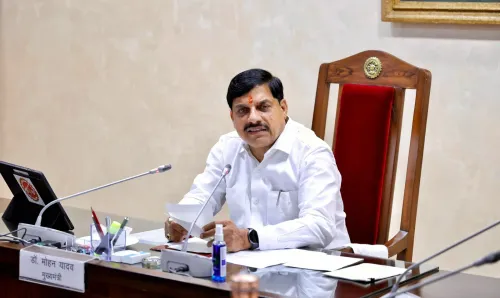
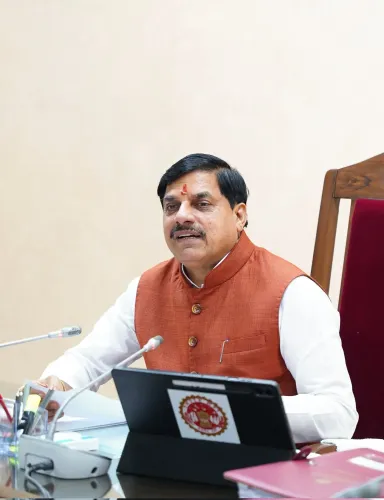
The Madhya Pradesh Cabinet on Tuesday, 6 May 2025, approved an investment of ₹2,442 crore to be deployed over the next five years under the Mission for Self-Reliance in Pulses, in a bid to reduce India's heavy dependence on pulse imports, state government officials said. The decision, taken at a Cabinet meeting in Bhopal, is being positioned as a cornerstone of broader agricultural reform in the state.
Why This Mission Now
India currently imports nearly 60 to 65 per cent of the pulses it consumes domestically, according to government data — a figure that has long underscored the country's structural vulnerability in food security. State MSME Minister Chetanya Kumar Kashyap said the initiative is aligned with Prime Minister Narendra Modi's vision to strengthen domestic pulse production and reduce import dependency. This comes amid a sustained push by the Centre to boost agricultural self-reliance across key commodities.
Key Components of the Mission
The ₹2,442 crore outlay will fund a comprehensive set of interventions across the pulse supply chain. These include seed certification, quality improvement, grading and labelling, and the establishment of dedicated production and processing units. The mission will also roll out farmer training programmes and incentive schemes to encourage adoption of modern agricultural practices. Officials said disbursements will be phased across five years, with milestones tied to production and infrastructure targets.
Madhya Pradesh's Role in Pulse Production
Madhya Pradesh already ranks among India's leading pulse-producing states. Minister Kashyap noted that the state is now aiming to meet significantly higher production benchmarks under this mission. The initiative is also linked to the state's Agriculture Welfare Year, under which pulse cultivation has been designated a priority sector. Officials say the mission is expected to create new economic opportunities for farmers and agro-processing industries alike.
Broader Impact and What's Next
Beyond farm-level productivity gains, the mission is projected to stimulate agro-industrial activity, generate rural employment, and contribute to moderating domestic pulse prices over time. Officials expressed confidence that Madhya Pradesh could serve as a replicable model for other states grappling with similar import dependence. Detailed implementation guidelines and sector-specific targets are expected to be released in the coming weeks, following the Cabinet's formal approval.
Point of View
442 crore commitment is notable in scale, but the mission's credibility will hinge on whether seed certification and processing infrastructure actually reach small and marginal farmers, who dominate pulse cultivation. Linking incentive disbursements to verifiable output milestones — rather than input provisioning — will be the critical design test. Without that accountability layer, the risk is that funds flow to agro-industry while farm-level productivity stagnates.
NationPress
1 Oct 2026
Frequently Asked Questions
What is the Madhya Pradesh Mission for Self-Reliance in Pulses?
It is a five-year state government programme approved by the Madhya Pradesh Cabinet on 6 May 2025, with a total outlay of ₹2,442 crore. The mission aims to boost domestic pulse production through seed certification, processing unit creation, farmer training, and incentive schemes, reducing India's dependence on pulse imports.
Why does India import so many pulses?
India currently imports nearly 60 to 65 per cent of the pulses it consumes domestically, according to government data. Structural gaps in seed quality, processing infrastructure, and farm-level productivity have historically made domestic supply insufficient to meet demand.
How will the ₹2,442 crore be spent?
The funds will be deployed in phases over five years on seed quality improvement and certification, grading and labelling, establishment of production and processing units, and farmer training and incentive programmes. Specific sectoral allocations are expected to be detailed in implementation guidelines.
What is Madhya Pradesh's current standing in pulse production?
Madhya Pradesh is already one of India's leading pulse-producing states. The new mission seeks to raise the state's output significantly beyond its current levels, with officials positioning it as a national model for pulse self-reliance.
How does this mission connect to the Agriculture Welfare Year?
The Madhya Pradesh government has designated pulse production as a priority sector under its Agriculture Welfare Year initiative. The mission's objectives are integrated into this broader agricultural reform framework, ensuring coordinated policy and budgetary support across departments.