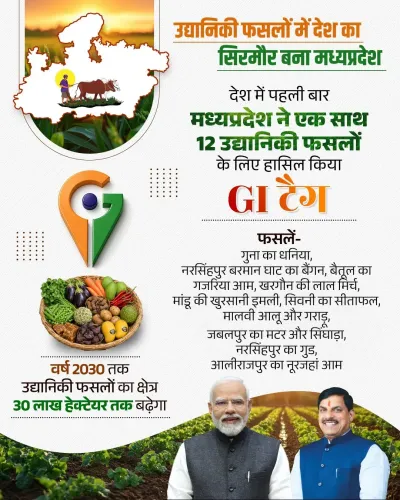
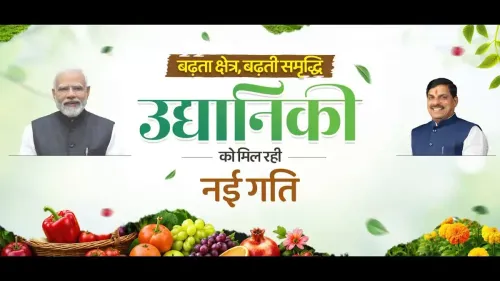
MP CM Mohan Yadav: 12 Horticulture Crops Get GI Tag

Synopsis
Madhya Pradesh has secured GI tags for 12 horticultural crops simultaneously, the Chief Minister's Office announced on 13 July 2026, calling it global recognition for farmers' hard work. The batch registration is among the state's largest in the horticulture category and aligns with national efforts to brand regional produce for premium markets.
Key Takeaways
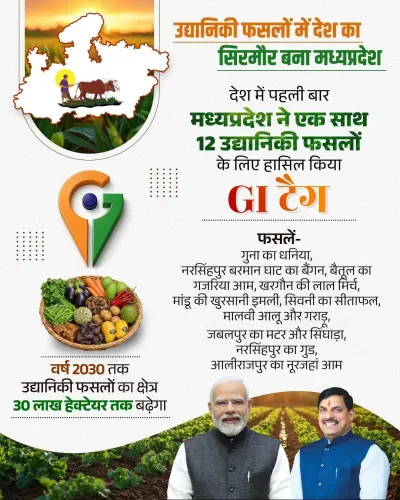
12 horticultural crops from Madhya Pradesh received GI tags simultaneously, announced on 13 July 2026 .
The announcement was made by the Chief Minister's Office of Madhya Pradesh , tagging CM Dr.
GI tags are governed by the Geographical Indications of Goods (Registration and Protection) Act, 1999 and granted by the Geographical Indications Registry under DPIIT.
The batch registration follows a national trend of multi-product GI filings by states to secure market exclusivity and premium pricing for regional produce.
Key beneficiaries include horticulture farmers, local producers, and agricultural exporters in Madhya Pradesh.
Successful implementation will depend on downstream certification, branding, and export promotion measures for the tagged crops.
The Chief Minister's Office of Madhya Pradesh announced on Monday, 13 July 2026 that 12 horticultural crops from the state have simultaneously received Geographical Indication (GI) tags, marking a significant milestone for the state's farming community and its push for global recognition of regional produce.
Context
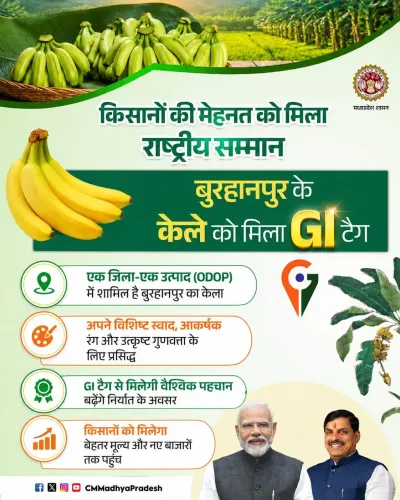
The official post, shared from the Chief Minister's Office handle and tagging Chief Minister Dr. Mohan Yadav and the state's horticulture department, declared: 'Kisanon ki mehnat ko vaishvik samman' ('Global recognition for the hard work of farmers'). The simultaneous grant of GI tags to 12 horticultural crops in a single batch is among the largest such registrations recorded for a single Indian state in the horticulture category.
Policy Backdrop
GI tags in India are governed by the Geographical Indications of Goods (Registration and Protection) Act, 1999, enacted to comply with WTO TRIPS obligations and to give region-specific products legal protection against imitation. The Geographical Indications Registry, operating under the Department for Promotion of Industry and Internal Trade, examines and grants these registrations.
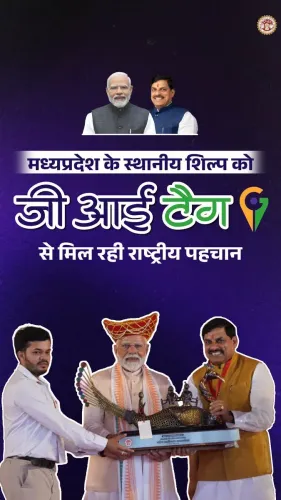
Madhya Pradesh has been pursuing GI registrations for its distinctive local goods — spanning textiles and handicrafts — since the mid-2000s. The latest batch registration of horticultural items follows a broader national pattern of multi-product GI filings, with states such as Maharashtra and Uttar Pradesh having pursued similar cluster approaches to secure market exclusivity for their regional produce.
Stakeholders and Impact
The primary beneficiaries of GI recognition are horticulture farmers, local producers, and agricultural exporters in Madhya Pradesh. A GI tag confers legal exclusivity on the use of the product's name, enabling producers to command premium pricing in both domestic and international markets and protecting them from counterfeit or misrepresented goods.
For rural economies, GI status can translate into stronger supply chains, better access to organised retail and export channels, and increased bargaining power for smallholder farmers. The central government has consistently emphasised regional branding as a tool to boost farm incomes and diversify agricultural exports, and state-level registrations like this one directly support that policy direction.
What's Next
The immediate challenge following a GI grant lies in implementation: establishing robust certification mechanisms, branding frameworks, and export promotion strategies for the newly tagged crops. Without these downstream steps, the economic benefit of GI status risks remaining theoretical for farmers on the ground.
Observers will watch whether Madhya Pradesh rolls out dedicated marketing support — potentially under existing central schemes for agricultural branding — to translate the GI recognition into measurable income gains for its farming communities. The batch registration may also prompt other states to accelerate similar multi-product GI filings for their own horticultural produce.
Point of View
Fitting into a broader competitive race among Indian states to lock in intellectual property rights over regional produce. For CM Mohan Yadav, who took office in December 2023 with farmer welfare as a stated priority, the announcement offers a tangible policy deliverable ahead of potential electoral cycles. However, the real test lies beyond the registry: states that have secured GI tags in the past have often struggled to convert legal recognition into sustained income gains for farmers without robust branding and export infrastructure. The move signals intent, but stakeholders will be watching closely for the implementation roadmap that follows.
NationPress
13 Jul 2026
Frequently Asked Questions
What is a GI tag and why does it matter for farmers?
A GI (Geographical Indication) tag is a legal certification that a product originates from a specific region and possesses qualities or a reputation attributable to that origin. For farmers, it enables premium pricing, protects against counterfeit products, and improves access to organised retail and export markets.
Which 12 horticultural crops from Madhya Pradesh got the GI tag?
The specific names of the 12 horticultural crops have not been confirmed in publicly verified records available at the time of this report. The Chief Minister's Office announced the batch registration on 13 July 2026; an official list is expected to be released by the Geographical Indications Registry.
Who grants GI tags in India?
GI tags in India are granted by the Geographical Indications Registry, a statutory body functioning under the Department for Promotion of Industry and Internal Trade (DPIIT), Government of India, in accordance with the Geographical Indications of Goods (Registration and Protection) Act, 1999.
How does Madhya Pradesh's GI registration compare to other states?
Madhya Pradesh's simultaneous registration of 12 horticultural crops in a single batch is among the larger multi-product GI filings in the horticulture category. States like Maharashtra and Uttar Pradesh have pursued similar cluster approaches, reflecting a national trend of competitive regional branding for agricultural produce.
What happens after a GI tag is granted?
After a GI tag is granted, the state and producers must establish certification bodies, develop branding and packaging standards, and create export promotion strategies. Without these steps, the economic benefits of GI status may not reach farmers effectively.