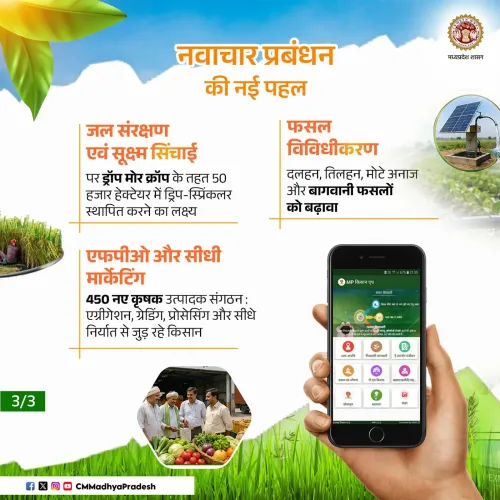
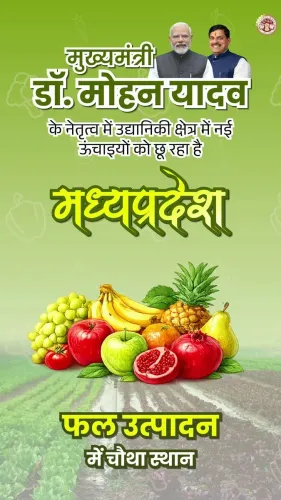
CM Mohan Yadav Pushes Horticulture as MP Farmers' Prosperity Drive
Synopsis
The Chief Minister's Office of Madhya Pradesh has highlighted the state's horticulture sector expansion under CM Dr. Mohan Yadav, framing innovation and modern technology as key drivers of farmer prosperity. The push continues a long-running state strategy of crop diversification from cereals to higher-value horticultural produce.
Key Takeaways
The Chief Minister's Office of Madhya Pradesh posted on 29 May 2026 positioning horticulture expansion as the foundation of farmer prosperity in the state.
Mohan Yadav , in office since December 2023 , is credited with driving innovation and modern technology adoption in the horticulture sector.
Madhya Pradesh has been expanding horticulture under the central Mission for Integrated Development of Horticulture (MIDH) , launched in 2014 , and related state schemes active since the mid-2000s.
The Department of Horticulture, Madhya Pradesh and the state agriculture ministry were both tagged, indicating coordinated government messaging.
Small and marginal farmers are the primary target beneficiaries, with higher-value horticultural crops offering improved per-acre returns over traditional foodgrains.
Next state agricultural production data and upcoming fiscal budgetary allocations will be key indicators of actual progress.
The Chief Minister's Office of Madhya Pradesh on Friday, 29 May 2026, highlighted the state's expanding horticulture sector, crediting Chief Minister Dr. Mohan Yadav's leadership for driving innovation, modern technology adoption, and rising production across the state's farming communities.
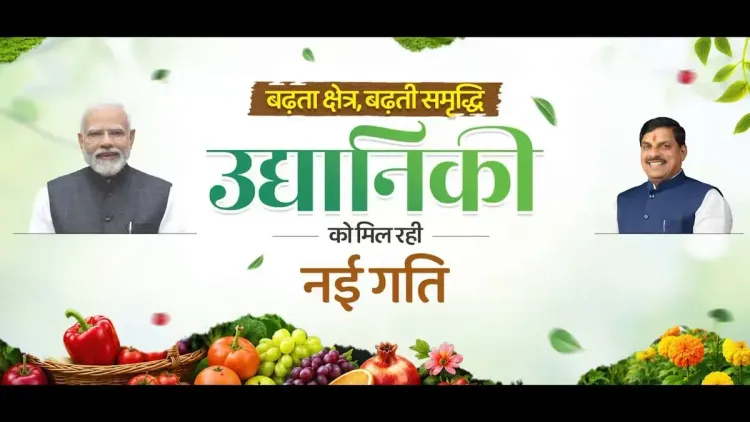
The post, shared from the official CMO handle, declared that 'the expansion of horticultural crops is becoming the foundation of farmers' prosperity,' and positioned Madhya Pradesh as establishing 'new dimensions of progress' in the horticulture sector through innovation and technology. The Department of Horticulture, Madhya Pradesh, and the state agriculture ministry were tagged in the communication, signalling coordinated messaging across government departments.
Context
Madhya Pradesh has historically been one of India's leading producers of soybean, pulses, and wheat. Over the past two decades, successive state governments have worked to diversify this cereal-heavy cropping pattern toward higher-value fruits, vegetables, and floriculture. The current push under Dr. Mohan Yadav, who took office as Chief Minister in December 2023, continues this long-running strategic emphasis on horticulture as a vehicle for rural income growth. The state's large agrarian base — home to millions of small and marginal farmers — makes crop diversification a politically and economically significant policy priority. Higher-value horticultural produce typically offers better returns per acre compared to traditional foodgrains, a factor that has driven state governments across India to actively promote the shift.Policy Backdrop
The central government's Mission for Integrated Development of Horticulture (MIDH), launched in 2014, provides a national framework within which states like Madhya Pradesh design and fund their own horticulture expansion programmes. Madhya Pradesh has been participating in the National Horticulture Mission and related state-specific schemes since the mid-2000s, channelling subsidies, training, and infrastructure support to farmers willing to transition to horticultural crops. Protected cultivation — including polyhouses and shade nets — along with cluster-based development and improved cold-chain infrastructure have been recurring themes in the state's horticulture strategy. These interventions aim to reduce post-harvest losses and connect farmers more directly to markets, improving net realisations.Stakeholders and Impact
The primary beneficiaries of this policy thrust are horticulture farmers, particularly small and marginal farmers who stand to gain the most from income diversification. For this segment, the shift from staple crops to vegetables, fruits, or flowers can meaningfully alter household economics, provided market linkages and cold-chain support are in place. The Department of Horticulture, Madhya Pradesh, tagged explicitly in the post, plays a central operational role — administering subsidy disbursements, organising farmer training, and coordinating with central schemes. The state agriculture ministry's involvement signals a whole-of-government approach to the sector's promotion. Broader rural communities in horticulture clusters — including input suppliers, transporters, and agri-processors — also stand to benefit as production volumes rise and supply chains deepen.What's Next
Attention will now turn to the release of the next state agricultural production data, which will offer a measurable indication of whether the horticulture expansion narrative is translating into on-ground output gains. Budgetary allocations in the upcoming fiscal year and the announcement of any new cluster development projects or processing infrastructure will be closely watched by farmers, agri-businesses, and policy observers alike. If Madhya Pradesh sustains its momentum in horticulture, it could reinforce the state's positioning as a model for crop diversification in central India — a template other agrarian states may look to replicate.Point of View
Amplifying this theme serves a dual purpose: it aligns with central government crop-diversification goals under MIDH while reinforcing his administration's rural development credentials ahead of future electoral cycles. The explicit tagging of the horticulture department and agriculture ministry suggests this is not a one-off social media post but part of a coordinated communications push. Whether the narrative holds will depend on verifiable production and income data — the absence of specific numbers in the post leaves room for scrutiny.
NationPress
14 Oct 2026
Frequently Asked Questions
What is Madhya Pradesh doing to help horticulture farmers?
The Madhya Pradesh government, under Chief Minister Dr. Mohan Yadav, is promoting horticulture expansion through innovation, modern technology, and production growth, backed by central schemes like the Mission for Integrated Development of Horticulture (MIDH) and state-specific programmes that provide subsidies, training, and infrastructure support.
What is the Mission for Integrated Development of Horticulture (MIDH)?
MIDH is a central government scheme launched in 2014 to support the expansion of horticultural crops — including fruits, vegetables, and flowers — across Indian states, providing funding and a policy framework within which states like Madhya Pradesh design their own horticulture programmes.
How does horticulture help farmers earn more in Madhya Pradesh?
Horticultural crops such as fruits, vegetables, and flowers typically offer higher returns per acre compared to traditional staple crops like wheat and soybean, making crop diversification a key strategy for raising farmer incomes, particularly for small and marginal farmers.
Who is in charge of horticulture development in Madhya Pradesh?
The Department of Horticulture, Madhya Pradesh, is the nodal state agency responsible for promoting horticultural crops through subsidies, farmer training, and infrastructure support, working in coordination with the state agriculture ministry and central government schemes.
When did Mohan Yadav become Chief Minister of Madhya Pradesh?
Dr. Mohan Yadav became Chief Minister of Madhya Pradesh in December 2023 and has since focused on agricultural development, including the expansion of the state's horticulture sector.