MP CMO Pushes Crop Diversification to Boost Horticulture
Synopsis
The Chief Minister's Office of Madhya Pradesh on 4 June 2026 spotlighted crop diversification as the state's strategy to promote horticultural crops, reaffirming a policy arc that traces back to the National Horticulture Mission and the Rashtriya Krishi Vikas Yojana, with implications for farm incomes, water use and rural investment in central India.
Key Takeaways
The Madhya Pradesh CMO on 4 June 2026 flagged crop diversification as a route to promote horticultural crops.
The post aligns with the National Horticulture Mission launched in 2005-06 and the state's own State Horticulture Mission .
Crop diversification has been a central policy thrust under the Rashtriya Krishi Vikas Yojana since 2010-11 .
Target beneficiaries include small farmers and existing horticulture growers in belts such as Ratlam , Chhindwara and Khargone .
Key metrics to watch are state budget outlays for horticulture and district-level adoption in the coming kharif season.
The Chief Minister's Office of Madhya Pradesh on 4 June 2026 spotlighted the state government's push to promote horticultural crops through crop diversification, signalling continued policy emphasis on shifting farmers from traditional cereals to higher-value produce. The post, made from the official handle, framed the shift as a core plank of the state's rural economic strategy under Chief Minister Mohan Yadav.
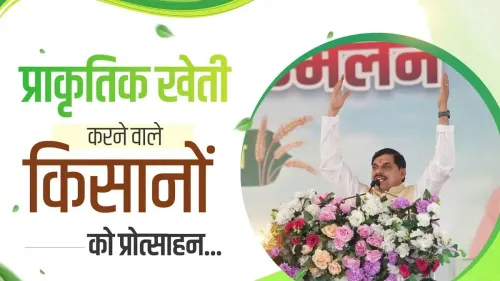
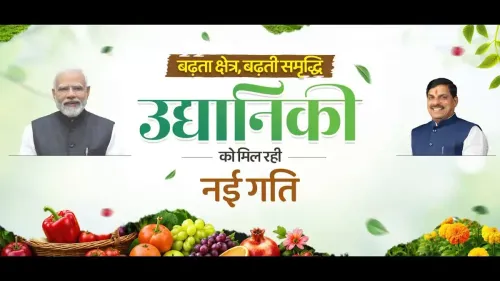
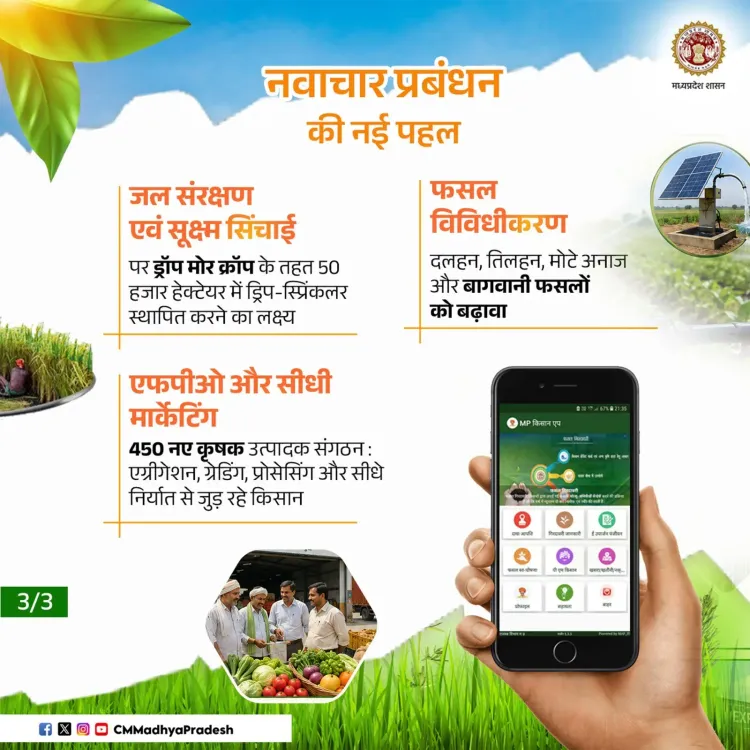
The message, written in Hindi, read 'फसल विविधीकरण से बागवानी फसलों को बढ़ावा' (promoting horticultural crops through crop diversification). The accompanying image reinforced the focus on fruits, vegetables and allied horticulture as the next frontier for farm incomes in the state.
Context
Madhya Pradesh is one of India's largest agrarian states, historically anchored in soybean, wheat, gram and other pulses. Over the last decade, successive state governments have layered horticulture promotion on top of this cereal-and-oilseed base, encouraging orchards, vegetable clusters and spice cultivation as a route to higher per-acre realisation for farmers.
The CMO's framing — diversification 'se' (through) horticulture — places the post within a familiar policy vocabulary that Indian agricultural planners have used since the mid-2000s. It signals continuity rather than a fresh scheme, reaffirming horticulture as a priority sector for the Yadav administration.
Policy backdrop
The National Horticulture Mission, a centrally sponsored scheme launched in 2005-06, remains the foundational instrument for expanding area and productivity under fruits, vegetables, flowers and spices. Madhya Pradesh's own State Horticulture Mission, aligned to the central effort, was rolled out the same year and has since funded nursery development, drip irrigation and post-harvest infrastructure.
Crop diversification received a dedicated push under the Crop Diversification Programme introduced in 2010-11 within the Rashtriya Krishi Vikas Yojana, which began in 2007. The programme's stated objective was to wean farmers off water-intensive cereals in regions where the cropping pattern was straining groundwater and soil health.
The National Mission on Sustainable Agriculture, with diversification components active by 2018-19, was subsequently adopted by Madhya Pradesh to build climate-resilient cropping models. Together, these schemes form the policy scaffolding behind the CMO's renewed messaging.
Stakeholders and impact
The most direct beneficiaries of a sustained diversification push are small and marginal farmers in rainfed districts, who stand to gain from higher-value crops such as mangoes, oranges, tomatoes, onions and chillies. Established horticulture growers in belts around Ratlam, Chhindwara, Khargone and Burhanpur would also benefit from expanded market linkages and cold-chain investment.
Crop diversification is widely viewed as a mechanism to raise farmer incomes while reducing pressure on groundwater — a concern flagged repeatedly in Economic Surveys and in NITI Aayog assessments of rainfed regions. For state finances, however, the shift requires upfront subsidy outlays on planting material, micro-irrigation and grading infrastructure.
For agribusiness and food-processing firms, a wider horticultural base in central India could deepen sourcing options closer to consumption markets in the north and west, potentially compressing logistics costs.
What's next
Attention will turn to the state's budget allocations for horticulture subsidies and to district-level adoption data in the coming kharif season. Indicators to watch include the area brought under fruit and vegetable cultivation, uptake of drip and sprinkler systems, and the rollout of post-harvest facilities such as pack-houses and cold storage.
If the diversification push translates into measurable acreage shifts, Madhya Pradesh could consolidate its position as a horticulture hub in central India — a transition that would reshape both the state's farm economy and its water-use profile over the coming years.
Point of View
The Yadav administration is signalling that high-value crops remain a politically and economically convenient pivot — one that promises higher farmer incomes without directly challenging the state's powerful cereal and oilseed lobbies. The real test will lie in budget outlays, micro-irrigation coverage and post-harvest infrastructure, not in messaging. Until those numbers move, the diversification pitch will read as continuity rather than transformation.
NationPress
18 Oct 2026
Frequently Asked Questions
What is crop diversification in Madhya Pradesh?
Crop diversification in Madhya Pradesh refers to encouraging farmers to shift from traditional cereals such as wheat and paddy and from oilseeds like soybean to higher-value crops, especially horticultural produce like fruits, vegetables and spices, supported through central and state schemes.
Which schemes support horticulture in Madhya Pradesh?
Horticulture in Madhya Pradesh is supported primarily by the National Horticulture Mission launched in 2005-06, the State Horticulture Mission and the Rashtriya Krishi Vikas Yojana, which fund nurseries, drip irrigation, orchards and post-harvest infrastructure.
Why is Madhya Pradesh promoting horticultural crops?
Madhya Pradesh is promoting horticultural crops to raise farmer incomes, reduce reliance on water-intensive cereals, improve soil and water-use efficiency, and build a climate-resilient cropping pattern in line with national agricultural policy.
Who benefits from crop diversification policies?
Small and marginal farmers in rainfed districts, established horticulture growers, agribusiness firms and food processors stand to benefit, alongside consumers who gain access to a wider and more stable supply of fruits and vegetables.
What should be tracked next on MP's horticulture push?
Watch the state budget allocations for horticulture subsidies, district-level adoption data in the coming kharif season, and investments in cold storage, pack-houses and micro-irrigation systems.