MP CM Mohan Yadav: 33.80 Lakh Jobs via Udyam Portal

Synopsis
On Independence Day 2026, MP CM Dr. Mohan Yadav announced that 3.34 lakh Udyam Portal registrations have created 33.80 lakh jobs in 2.5 years. The state's 8,000 startups — half women-led — are to grow to 12,000+ with 100 new incubation centres.
Key Takeaways
3.34 lakh manufacturing units registered on the Udyam Portal in Madhya Pradesh over the past two-and-a-half years.
These registrations have generated employment — direct and indirect — for 33.80 lakh young people .
Madhya Pradesh currently has approximately 8,000 active startups , with 50 per cent led by women entrepreneurs .
Mohan Yadav has set a target of 12,000-plus startups within the next two-and-a-half years.
100 new incubation centres are planned to support the expanded startup ecosystem.
The announcement was made on Independence Day, August 15, 2026 , aligning the milestone with national significance.
On Independence Day, August 15, 2026, Madhya Pradesh Chief Minister Dr. Mohan Yadav unveiled a striking employment scorecard for the state — and set an even more ambitious target for the years ahead. In just two-and-a-half years, over 3.34 lakh manufacturing units registered on the Udyam Portal have generated direct and indirect employment for 33.80 lakh young people across the state.
33.80 Lakh Jobs and a Startup Surge Already Underway
The numbers CM Yadav cited on Saturday morning frame a clear argument: formal MSME registration is translating into real jobs at scale. The Udyam Portal — Government of India's digital gateway for small and medium enterprise registration — has become the backbone of this push, pulling manufacturing units into the formal economy and unlocking benefits tied to that recognition.
Alongside manufacturing, Madhya Pradesh now hosts approximately 8,000 active startups. The headline detail inside that figure: 50 per cent of these startups are led by women entrepreneurs — a statistic that cuts against the stereotype of India's startup world as a young-man's game and signals a structural shift in who is building businesses in the state.
The 12,000-Startup Target and 100 New Incubation Centres
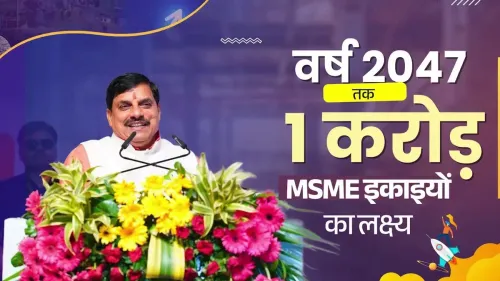
CM Yadav did not stop at the scoreboard. He announced concrete forward targets: 12,000-plus startups and 100 new incubation centres to be established within the next two-and-a-half years. Incubation centres are the connective tissue of any startup ecosystem — providing mentorship, infrastructure, and early-stage capital access to founders who would otherwise build in isolation.
The ambition is to grow the startup count by roughly 50 per cent from the current base of 8,000, while simultaneously building out the physical and institutional scaffolding to sustain that growth. Whether budget allocations and policy mechanisms will match the scale of those targets is the next test.
Where MP Fits in India's Startup and MSME Story
The broader context matters here. Startup India, launched by the central government in 2016, set the national template — encouraging states to compete on ease of registration, access to incubators, and women-led enterprise promotion. A decade on, states like Madhya Pradesh are now reporting results at a scale that suggests the policy architecture is maturing.
The emphasis on employment through entrepreneurship rather than government hiring reflects a deliberate strategic bet. With India's youth demographic bulge pressing hard on the job market, generating livelihoods through MSMEs and startups — rather than waiting for public-sector expansion — has become the dominant playbook across state capitals.
For Madhya Pradesh, a state that has historically trailed Maharashtra, Karnataka, and Delhi in startup rankings, the 8,000-startup figure and the 50 per cent women-leadership data point to a genuine catch-up story in motion. The next two-and-a-half years will show whether the targets hold.
Point of View
000-startup and 100-incubation-centre targets now become benchmarks against which the administration will be measured, raising the political stakes of delivery. Framing employment through entrepreneurship rather than government jobs also reflects a broader ideological shift in how Indian states are choosing to answer the youth unemployment question.
NationPress
15 Aug 2026
Frequently Asked Questions
How many jobs has the Udyam Portal created in Madhya Pradesh?
According to CM Dr. Mohan Yadav, the Udyam Portal registrations in Madhya Pradesh have generated direct and indirect employment for 33.80 lakh young people over the past two-and-a-half years, through over 3.34 lakh registered manufacturing units.
What is Madhya Pradesh's startup target for the next 2.5 years?
CM Mohan Yadav has announced a target of more than 12,000 startups and 100 new incubation centres to be established in Madhya Pradesh within the next two-and-a-half years.
What percentage of MP startups are led by women?
50 per cent of Madhya Pradesh's approximately 8,000 active startups are led by women entrepreneurs, according to the Chief Minister's Independence Day announcement.
What is the Udyam Portal?
The Udyam Portal is the Government of India's official online platform for MSME registration. It allows small and medium enterprises to formally register, access government benefits, and be counted in official employment and production data.
When did Dr. Mohan Yadav become Chief Minister of Madhya Pradesh?
Dr. Mohan Yadav became Chief Minister of Madhya Pradesh in December 2023 . The two-and-a-half year employment figures cited in his Independence Day post correspond broadly to his tenure in office.