MP CM Mohan Yadav flags 171:100 girl-boy college ratio on I-Day
Synopsis
On Independence Day 2026, Madhya Pradesh CM Dr. Mohan Yadav highlighted a 171:100 girl-to-boy college enrollment ratio, 50-plus Sandipani Vidyalaya students on state merit lists, 73 universities serving 16 lakh youth, and 1,000 new doctor appointments with 1,000 more pledged in six months.
Key Takeaways
171 girls are enrolling in Madhya Pradesh colleges for every 100 boys , a gender-enrollment inversion CM Yadav highlighted as a landmark achievement.
More than 50 students from Sandipani Vidyalayas — the state's model-school programme — have appeared on the state-level merit list.
Madhya Pradesh's higher education network spans 73 universities and over 1,400 colleges , serving more than 16 lakh students .
1,000 new doctors were appointed to state health services in the past three months ; another 1,000 are to be recruited in the next six months .
The announcements were made by CM Dr.
Mohan Yadav in his Independence Day address on 15 August 2026 .
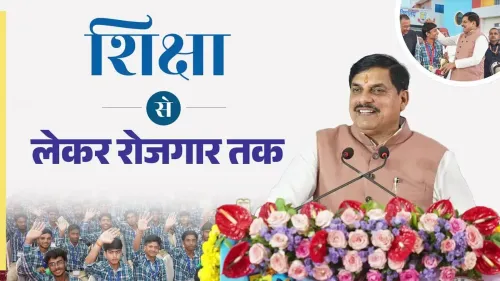
On Independence Day, 15 August 2026, Madhya Pradesh Chief Minister Dr. Mohan Yadav used his address to the state to put a single number at the centre of the celebration: for every 100 boys enrolling in colleges across Madhya Pradesh, 171 girls are walking through the same doors. 'When I see this,' he said, 'my heart fills with joy.'
Sandipani Vidyalayas earn their place on the merit board
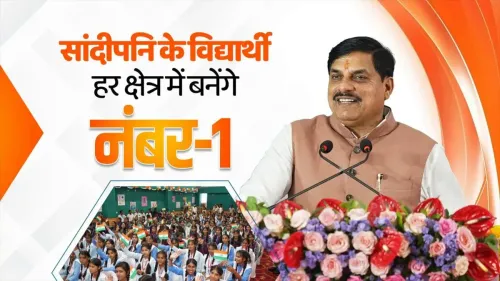
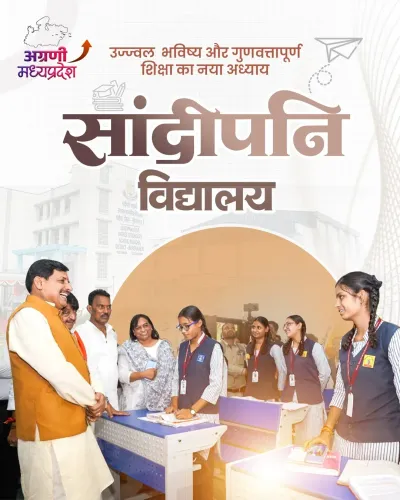
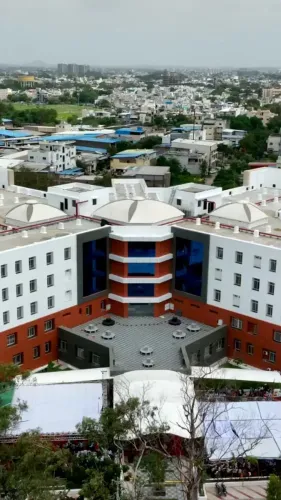
The Chief Minister opened with the school education story. Sandipani Vidyalayas — the state's flagship model-school programme designed to bring comprehensive, well-resourced schooling to underserved communities — have, he said, become an identity of Madhya Pradesh. More than 50 students from these schools have secured places on the state-level merit list, a result the government is positioning as proof that the programme is delivering academic outcomes, not just infrastructure.
The Sandipani scheme, launched under the state's push to raise the quality floor of government schooling, targets districts where private-school access is limited. Merit-list appearances from these campuses signal that the gap between government and private outcomes may be narrowing — though independent verification of the exact figures awaits official data.
The 171:100 ratio — and what it means for MP's colleges
Madhya Pradesh now runs 73 universities and more than 1,400 colleges, collectively shaping the futures of over 16 lakh young people. The gender-enrollment ratio CM Yadav highlighted — 171 girls per 100 boys — is the sharpest data point in the address. It inverts the national anxiety about girls dropping out of the education pipeline and suggests that, at least at the enrollment stage, Madhya Pradesh's colleges are pulling in more women than men.
That reversal matters in a state that has historically struggled with female literacy and school retention rates. Whether the ratio holds through graduation and into employment is the next question — but as a headline enrollment figure on Independence Day, it lands with force.
A thousand doctors in three months — and a thousand more coming
The address then pivoted to public health. CM Yadav announced that 1,000 new doctors have been appointed to the state's health services in the past three months, and committed to recruiting 1,000 more within the next six months. If delivered, that is a 2,000-doctor expansion of the public medical workforce inside a single year — a significant staffing push for a state where rural health infrastructure has long been stretched thin.
Madhya Pradesh has faced persistent shortfalls in doctors at primary health centres, particularly in tribal and remote districts. A recruitment drive of this scale, if sustained, could meaningfully shift patient-to-doctor ratios in underserved areas. The six-month deadline gives the government a trackable commitment to hold against.
Independence Day addresses by state governments routinely bundle social-sector metrics — but the specificity of the numbers CM Yadav chose to lead with signals that education and health are the two pillars his administration wants judged on heading into the second half of his term. The gender ratio in colleges, the merit-list haul from Sandipani schools, the doctor count: each is a scoreboard, not a promise. Madhya Pradesh is saying: check the board.
Point of View
A merit-list count, a doctor headcount — reflects a deliberate governing posture: frame the BJP administration in Madhya Pradesh as a delivery government, not merely an ideological one. The 171:100 enrollment ratio is particularly shrewd politics in a state where women's education has historically been a vulnerability. By committing to a six-month doctor-recruitment deadline publicly, Yadav also creates a self-imposed accountability clock heading into the back half of his term, signalling confidence that the numbers will hold — or betting that the promise itself does political work in the interim.
NationPress
15 Aug 2026
Frequently Asked Questions
What is the girl-to-boy enrollment ratio in Madhya Pradesh colleges?
According to CM Dr. Mohan Yadav's Independence Day address on 15 August 2026, 171 girls are enrolling in Madhya Pradesh colleges for every 100 boys .
What are Sandipani Vidyalayas in Madhya Pradesh?
Sandipani Vidyalayas are model schools set up by the Madhya Pradesh government to provide comprehensive facilities and quality education, particularly in areas with limited private-school access. More than 50 of their students have made the state-level merit list.
How many doctors has Madhya Pradesh recruited recently?
CM Yadav announced that 1,000 new doctors were appointed in the past three months, with a commitment to recruit 1,000 more within the next six months.
How many universities and colleges are there in Madhya Pradesh?
Madhya Pradesh has 73 universities and more than 1,400 colleges , collectively serving over 16 lakh students , according to CM Yadav's Independence Day speech.
Who is the Chief Minister of Madhya Pradesh in 2026?
Dr. Mohan Yadav is the Chief Minister of Madhya Pradesh. He has held the post since December 2023 and has focused on education and health sector improvements in the state.