MP CM Mohan Yadav Maps Multi-City Industrial Growth Plan
Synopsis
CM Dr. Mohan Yadav has mapped a sector-specific economic vision for Madhya Pradesh: logistics in Jabalpur, food processing in Narsinghpur-Raisen, IT and a GIS Summit in Bhopal, and metropolitan planning linking Indore with Dewas, Sehore, and Ujjain.
Key Takeaways
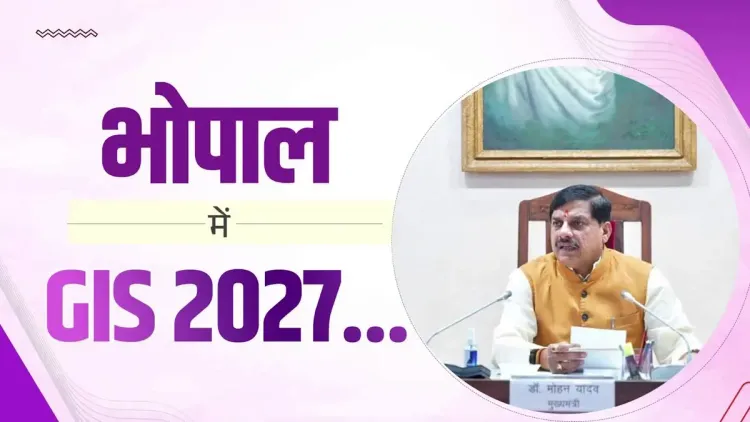
Bhopal is being developed as an IT and technical hub, with a GIS Summit planned to establish it as a major industry-and-trade centre.
Jabalpur is targeted for logistics sector growth and is slated to become a metropolitan city after Indore and Bhopal.
Narsinghpur and Raisen have been identified as priority zones for food processing industry investment.
A metropolitan region covering Dewas, Sehore, Ujjain, and Indore is under active development planning.
The blueprint spans six sectors — tourism, engineering, manufacturing, logistics, food processing, and IT — signalling a deliberate multi-city, multi-sector growth strategy.
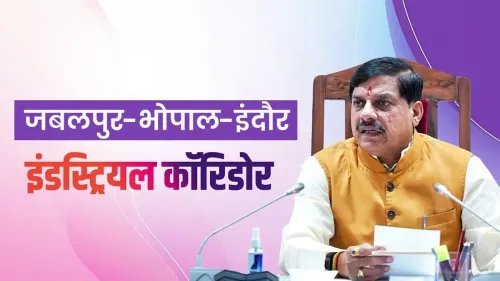
Madhya Pradesh is no longer betting on one city. Chief Minister Dr. Mohan Yadav on Thursday, 15 October 2026 laid out a sprawling, sector-specific economic blueprint for the state — routing logistics investment to Jabalpur, food processing to Narsinghpur and Raisen, and staking Bhopal's future on IT and a coming GIS Summit designed to crown it as a major industry-and-trade destination.
Bhopal's GIS Summit and the IT Pivot
Bhopal, long the state's administrative capital, is being repositioned as an economic engine in its own right. CM Yadav said the city is 'IT aur takneeki kshetron ke kendra ke roop mein ubhar raha hai' — emerging as a centre for IT and technical sectors. A GIS Summit is to be organised in the city specifically to develop it as a 'premier hub for industry and commerce,' the Chief Minister stated. The announcement signals a deliberate push to layer economic identity onto a city that has historically been defined by governance rather than commerce.
Jabalpur's Logistics Leap — and a Metropolitan Ambition
Jabalpur, Madhya Pradesh's third-largest city, is being earmarked for logistics development — a logical fit given its location in the eastern corridor connecting central India to industrial clusters further east. But the bigger headline for Jabalpur is metropolitan: CM Yadav confirmed plans to develop it as a metropolitan city, following the trail blazed by Indore and Bhopal. That is a significant urban-policy upgrade, signalling infrastructure prioritisation, land-use planning, and potentially metro rail eligibility down the line.
The Indore-Dewas-Sehore-Ujjain Belt Takes Shape
Perhaps the most consequential urban announcement is the formal work underway to merge Dewas, Sehore, Ujjain, and Indore into a single metropolitan region. Indore — already Madhya Pradesh's commercial capital and a consistent top performer in national cleanliness rankings — would anchor this western cluster. Bringing Ujjain (a major pilgrimage city) and the industrial town of Dewas into one planning zone would create a combined economic belt with manufacturing, services, tourism, and agri-processing capacity. Madhya Pradesh has pursued metro rail in both Indore and Bhopal under central and state urban development schemes since the mid-2010s; the multi-city metropolitan push extends that arc.
Food Processing Zones in Narsinghpur and Raisen
The state's agricultural heartland is also getting a targeted play. CM Yadav specifically named Narsinghpur and Raisen as priority zones for food processing industry — two districts with strong agrarian bases in the Narmada valley. Madhya Pradesh's central geography has long made it a natural logistics and processing hub; formal sector-mapping now gives investors a clearer signal on where the state intends to concentrate infrastructure and incentives.
The breadth of this announcement — tourism, engineering, manufacturing, logistics, food processing, IT, and urban expansion all named in a single cabinet communication — reflects a state strategy of distributing growth across its urban spine rather than doubling down on one mega-city. The GIS Summit date and the formal metropolitan-region notification covering the Indore belt are the next concrete milestones to watch.
Point of View
It would create one of central India's largest integrated planning zones, with manufacturing, pilgrimage tourism, and agri-processing under a single developmental umbrella. The GIS Summit for Bhopal mirrors a pattern of states using marquee investment events to generate momentum ahead of formal policy notifications. Jabalpur's metropolitan upgrade, if backed by infrastructure spending, could rebalance the state's economic geography eastward for the first time in a decade.
NationPress
15 Oct 2026
Frequently Asked Questions
What is the GIS Summit planned for Bhopal?
The GIS Summit is a planned investment and industry event to be held in Bhopal, aimed at developing the city as a premier centre for industry, commerce, and technology. CM Mohan Yadav announced it as part of a broader economic blueprint for Madhya Pradesh on 15 October 2026.
Which cities are being merged into a metropolitan region in Madhya Pradesh?
Madhya Pradesh is working on developing a metropolitan region combining Dewas, Sehore, Ujjain, and Indore . The integrated zone would leverage Indore's commercial strength alongside Ujjain's pilgrimage economy and Dewas's industrial base.
Why is Jabalpur being developed as a logistics hub?
Jabalpur's location in eastern Madhya Pradesh makes it a natural corridor city connecting central India to eastern industrial clusters. The state government has identified it as a priority zone for logistics sector investment, alongside plans to upgrade it to metropolitan city status.
Which districts in MP are earmarked for food processing industry?
CM Mohan Yadav has specifically named Narsinghpur and Raisen as priority zones for food processing, both located in the agriculturally productive Narmada valley region of Madhya Pradesh.
What sectors is Madhya Pradesh focusing on for industrial growth?
The state's current growth blueprint covers six sectors: tourism, engineering, manufacturing, logistics, food processing, and IT. Each sector has been mapped to specific cities or districts to guide investor targeting and infrastructure planning.