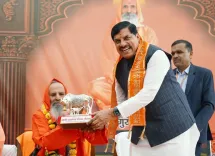
MP CM Mohan Yadav Offers Free Plot Registries in Forest Villages
Synopsis
The Chief Minister's Office of Madhya Pradesh announced that the Mukhya Mantri Registry Yojana is providing free registration of land pattas and plots in forest villages, granting formal ownership rights to tribal and forest-dwelling families under CM Dr. Mohan Yadav's government.
Key Takeaways
The Mukhya Mantri Registry Yojana provides free registration of pattas and plots in Madhya Pradesh's forest villages .
The scheme targets tribal families and forest village residents who have long lacked formal land titles.
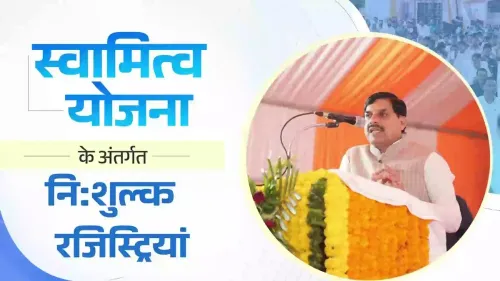
It complements the central government's Swamitva Yojana , launched in 2020 , which mapped rural properties via drone surveys.
Free registration removes stamp duty and registration fee barriers, converting informal occupation into legally recognised ownership.
Formal title enables access to institutional credit, welfare schemes, and legal protection for beneficiaries.
The number of registrations completed and potential expansion beyond initial forest villages remain key metrics to watch.
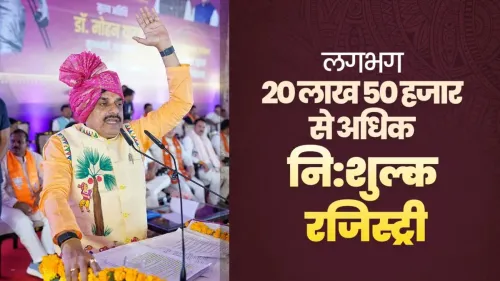
For families living deep inside Madhya Pradesh's forest villages, a piece of land has long existed without a document to prove it — until now. The Chief Minister's Office of Madhya Pradesh announced on Saturday, 21 November 2026 that the state's Mukhya Mantri Registry Yojana is providing free registration of pattas and plots in forest villages, formally conferring ownership rights on households that have lived on that land for generations.
The post, shared from the official CMO handle tagging Chief Minister Dr. Mohan Yadav, carried the message: 'Apne ghar ka swamitva har parivar ka samman' — 'Ownership of one's home is the dignity of every family.' That single line captures the political and human stakes of the scheme in one breath.
What the Mukhya Mantri Registry Yojana Does
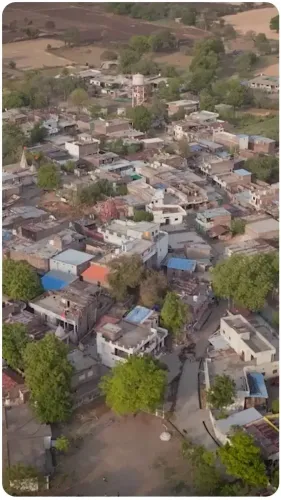
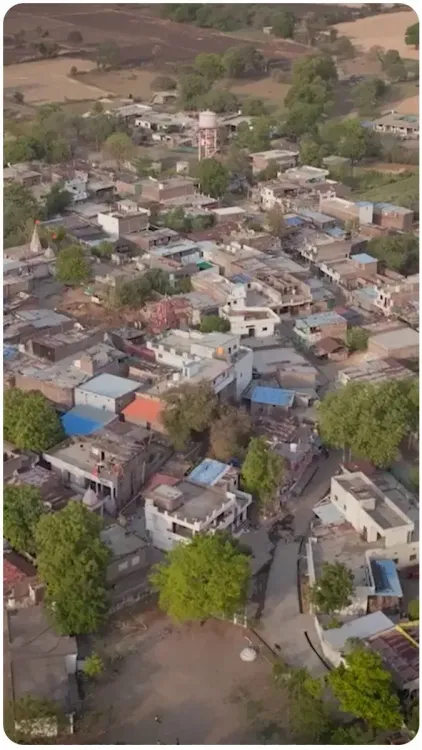
Under the scheme, the state government is bearing the full cost of registering land pattas and plots in forest villages — settlements that have historically sat in a legal grey zone, governed neither cleanly by revenue law nor forest law. Residents of these villages, many of them tribal families, have often occupied land without formal title, leaving them unable to access credit, government benefits tied to property ownership, or legal protection against displacement.
Free registration removes the financial barrier — stamp duty and registration fees that can run into thousands of rupees — and converts informal occupation into legally recognised ownership. The scheme is framed explicitly as a dignity initiative: ownership as honour, not just administration.
Building on the National Swamitva Blueprint
The Mukhya Mantri Registry Yojana sits within a broader national push for rural land formalisation. The central government's Swamitva Yojana, launched in 2020, used drone surveys to map rural properties and issue property cards to households across India. Madhya Pradesh — a state with one of the country's largest forest covers and a substantial scheduled tribe population — has extended that logic to the specific challenge of forest villages, where drone-based revenue mapping alone was insufficient without a corresponding state-level registration mechanism.
The state's move fills that gap: mapping without registration is incomplete; registration without mapping is unenforceable. Together, they create a paper trail that can anchor a family's economic and legal life.
Who Stands to Gain
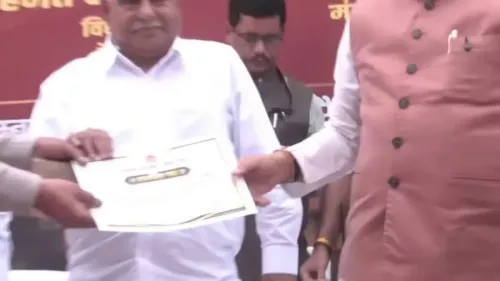
The immediate beneficiaries are forest village residents and tribal families in Madhya Pradesh who hold pattas or occupy plots without registered title. A formal registry document opens access to institutional credit, government welfare schemes linked to property ownership, and legal standing in disputes. For communities that have navigated informal tenure for decades, the registration is not a technicality — it is a transformation in legal identity.
The critical numbers to watch: how many registrations have been completed so far, and whether the scheme is being extended beyond the initial set of forest villages. Those figures will determine whether this is a targeted pilot or a sweeping state-wide shift in land governance.
A government that can hand a family a registered title deed is handing them something more durable than a promise — it is handing them standing.
Point of View
Forest-dwelling tribal families, that has historically been underserved by land administration systems. Framing land registration as 'dignity' rather than 'bureaucracy' signals a deliberate welfare-branding strategy ahead of local political cycles. The scheme also addresses a structural gap: forest villages sit in a legal no-man's-land between revenue and forest departments, and state-level registration is the only mechanism that can resolve it. Whether implementation keeps pace with the announcement will be the real test of the policy's reach.
NationPress
21 Nov 2026
Frequently Asked Questions
What is the Mukhya Mantri Registry Yojana in Madhya Pradesh?
The Mukhya Mantri Registry Yojana is a Madhya Pradesh state government scheme that provides free registration of land pattas and plots, particularly in forest villages, to give formal ownership rights to families living there.
Who benefits from free land registration in MP forest villages?
Forest village residents and tribal families in Madhya Pradesh who hold pattas or occupy plots without registered title are the primary beneficiaries, gaining legal ownership documents at no cost.
How is the Mukhya Mantri Registry Yojana different from Swamitva Yojana?
The central Swamitva Yojana, launched in 2020, uses drone surveys to map rural properties and issue property cards. The Mukhya Mantri Registry Yojana is a state-level scheme that goes further by providing free formal registration of those plots, particularly in forest villages not fully covered by revenue mapping.
What does free land registration mean for tribal families in Madhya Pradesh?
A registered land title gives tribal families legal ownership standing, access to institutional credit, eligibility for property-linked government welfare schemes, and protection against land disputes or displacement.
Who is the Chief Minister of Madhya Pradesh announcing this scheme?
Dr. Mohan Yadav is the Chief Minister of Madhya Pradesh, heading the BJP government since December 2023. The scheme announcement was made by his official office on 21 November 2026.