MP CM Office Launches Dahi Micro Lift Irrigation for 47,000 Ha
Synopsis
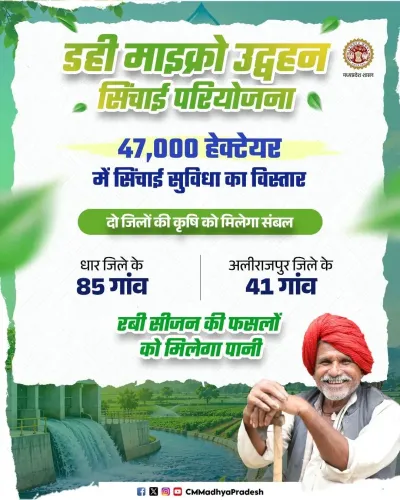
The Chief Minister's Office of Madhya Pradesh has announced the Dahi Micro Lift Irrigation Project, channelling Narmada river water to 47,000 hectares of tribal farmland — a move that could transform single-crop, rain-dependent agriculture in the state's tribal heartland into a reliably irrigated, double-harvest economy.
Key Takeaways
The Dahi Micro Lift Irrigation Project was announced by the Chief Minister's Office of Madhya Pradesh on 12 November 2026 .
The project will bring Narmada river water to the tribal belt of Madhya Pradesh using a lift and micro-distribution system.
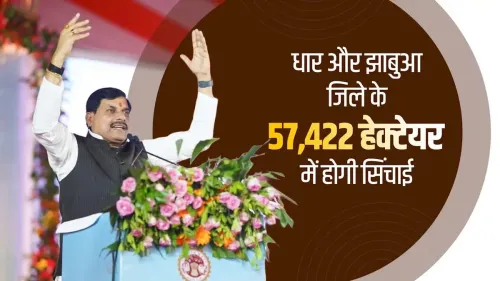
It will cover 47,000 hectares of agricultural land, enabling irrigation for tribal farmers.
The announcement tagged Chief Minister Dr.
Mohan Yadav and the MP Water Resources Department .
The scheme uses a micro lift irrigation model — mechanically pumping water uphill through pressurised pipe networks to reach terrain unsuitable for gravity-fed canals.
Tribal-dominated districts near the Narmada valley are the primary beneficiaries of this project.
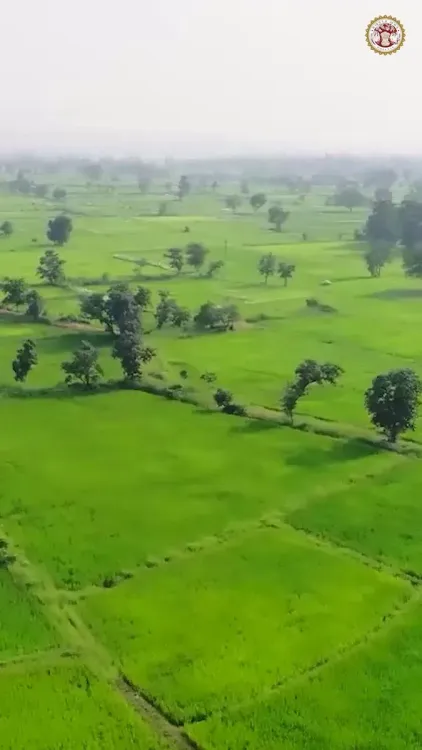
Water from the Narmada river is about to reach tribal farmlands that have long waited for it — the Chief Minister's Office of Madhya Pradesh announced on 12 November 2026 that the 'Dahi Micro Lift Irrigation Project' will bring irrigation to 47,000 hectares of agricultural land in the state's tribal heartland.
The post, shared from the official CMO handle and tagging Chief Minister Dr. Mohan Yadav and the MP Water Resources Department, declared: 'Ab aadivasi anchal ke kheton tak pahunchega Maa Narmada ka jal' — 'Now the water of Mother Narmada will reach the fields of the tribal region.' The language is deliberate: Narmada is not merely a river in Madhya Pradesh's political and cultural vocabulary; she is a sacred lifeline, and invoking her name in this context signals both the scale and the symbolic weight of the project.
What the Dahi Micro Lift Irrigation Project Does
Lift irrigation — where water is mechanically pumped uphill from a river to reach elevated or distant farmland — is the only viable solution for tribal belt geographies in Madhya Pradesh, where terrain and distance make gravity-fed canals impractical. The 'micro' component points to a network of smaller distribution channels and pressurised pipe systems that deliver water closer to individual field plots, reducing waste and increasing coverage. By targeting 47,000 hectares of agricultural land, the project represents a significant push to convert rain-dependent, single-crop tribal farms into reliably irrigated, potentially double-crop holdings.
The Tribal Farmland Gap This Project Targets
Madhya Pradesh holds one of the largest Scheduled Tribe populations in India, concentrated in districts such as Dhar, Jhabua, Alirajpur, Barwani, and Betul — many of which lie along or near the Narmada valley. Despite proximity to India's fifth-longest river, irrigation penetration in these areas has historically lagged far behind the state average, leaving tribal farmers exposed to monsoon volatility and limited to lower-value kharif crops. A micro lift scheme drawing directly from the Narmada could structurally shift that equation — more water means a rabi season, a second income, and a hedge against a failed monsoon.
Dr. Mohan Yadav's Infrastructure Push in MP's Hinterland
Chief Minister Dr. Mohan Yadav, tagged directly in the announcement, has made rural and tribal infrastructure a stated priority of his administration. For Madhya Pradesh, which is already among India's top agricultural states by area sown, closing the tribal-belt irrigation gap is both an equity imperative and an economic multiplier.
The numbers tell the story plainly: 47,000 hectares irrigated could mean tens of thousands of tribal farm households gaining a second harvest and a more stable annual income. If the Dahi project delivers on its promise, the Narmada's water will do more than irrigate fields — it will rewrite the agricultural calendar for a region that has long farmed at the mercy of the sky.
Point of View
Delivering visible water infrastructure to Madhya Pradesh's tribal belt — historically a swing constituency — carries both developmental and political logic. At the national level, the project reinforces the push to expand irrigation coverage as a food-security and farmer-income buffer against increasingly erratic monsoon patterns. The real test will be execution: lift irrigation schemes are capital- and energy-intensive, and their long-term impact depends on sustained maintenance funding and reliable power supply to pumping stations.
NationPress
12 Nov 2026
Frequently Asked Questions
What is the Dahi Micro Lift Irrigation Project in Madhya Pradesh?
The Dahi Micro Lift Irrigation Project is a scheme announced by the Madhya Pradesh government to lift water from the Narmada river and deliver it via a micro-distribution network to 47,000 hectares of agricultural land in the state's tribal belt.
How many hectares will the Dahi irrigation project cover in MP?
The project will provide irrigation to 47,000 hectares of agricultural land, primarily in tribal areas of Madhya Pradesh.
Which river is the source of water for the Dahi Micro Lift Irrigation Project?
The Narmada river is the source of water for the Dahi Micro Lift Irrigation Project.
Which tribal districts in Madhya Pradesh will benefit from this irrigation scheme?
The project targets the tribal heartland of Madhya Pradesh, which includes districts near the Narmada valley such as Dhar, Jhabua, Alirajpur, Barwani, and Betul, though the official announcement did not specify exact districts.
Who is the Chief Minister of Madhya Pradesh overseeing this project?
Chief Minister Dr. Mohan Yadav is overseeing this irrigation expansion initiative and was directly tagged in the official CMO announcement.