CM MP Office Credits Modi's 12 Years for Housing, Solar and Digital Gains
Synopsis
The Chief Minister's Office of Madhya Pradesh marked twelve years of PM Modi's leadership on 15 June 2026 by highlighting gains under PMAY, solar energy, Digital India and road connectivity, framing lakhs of families as direct beneficiaries of centrally sponsored welfare programmes.
Key Takeaways
The Chief Minister's Office of Madhya Pradesh posted on 15 June 2026 crediting PM Narendra Modi 's twelve-year tenure for development gains.
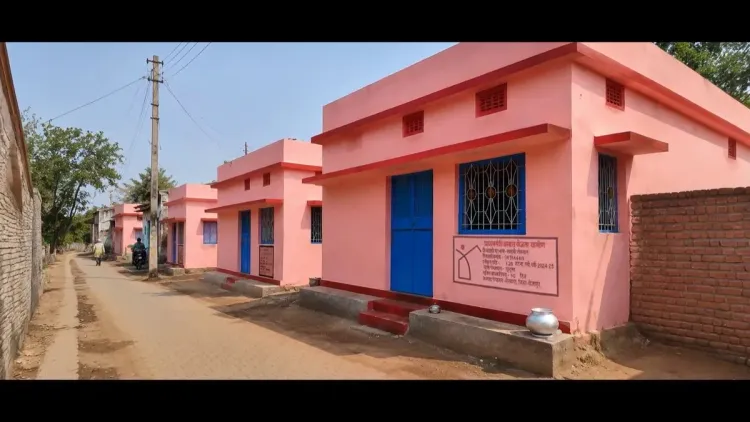
Four pillars cited: Pradhan Mantri Awas Yojana , solar energy promotion, digital services expansion, and improved road and transport facilities.
PMAY was launched in June 2015 and has been extended beyond its original 2022 deadline, with both urban and rural phases active.
The post is tagged with #12YearsOfSakshamMiddleClass and #12YearsOfSeva , indicating a coordinated BJP communication campaign.
CM Mohan Yadav is tagged, reflecting state-level alignment with central government scheme messaging.
State budget allocations and physical progress under PMAY and solar rooftop targets for FY 2026-27 remain the key metrics to watch.
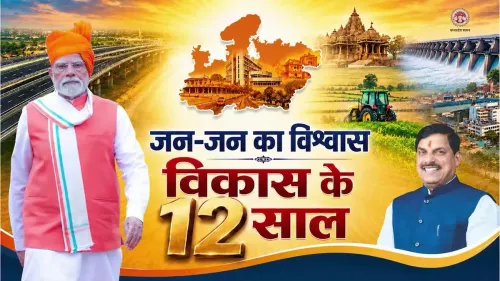
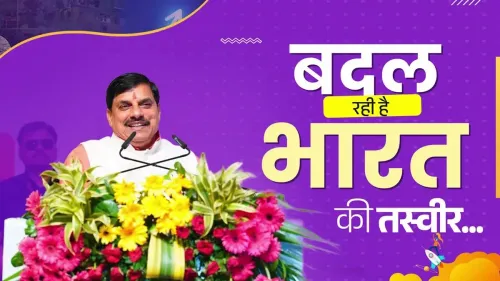
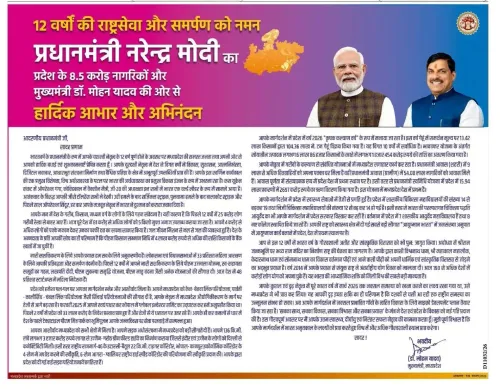
The Chief Minister's Office of Madhya Pradesh, on Monday, 15 June 2026, credited Prime Minister Narendra Modi's twelve years of leadership for transforming the lives of lakhs of families through flagship programmes spanning affordable housing, solar energy, digital services, and road infrastructure.
Context
The post, shared under the hashtags #12YearsOfSakshamMiddleClass and #12YearsOfSeva, states: 'The light of development has reached every home.' It attributes progress to four pillars — the Pradhan Mantri Awas Yojana (PMAY), promotion of solar energy, expansion of digital services, and improved road and transport facilities — all framed as outcomes of the Modi government's tenure since 2014.
Chief Minister Mohan Yadav, tagged in the post, has been at the helm of Madhya Pradesh since December 2023 and has consistently aligned state messaging with central scheme outcomes. The post also tags the Prime Minister's Office (@PMOIndia), signalling coordinated communication across BJP-governed institutions.
Policy Backdrop
PMAY was launched in June 2015 with the stated goal of providing pucca houses to all eligible rural and urban households. The scheme has since been extended beyond its original 2022 deadline, with urban and rural phases continuing to run. Madhya Pradesh has been among the states reporting progress under both phases.
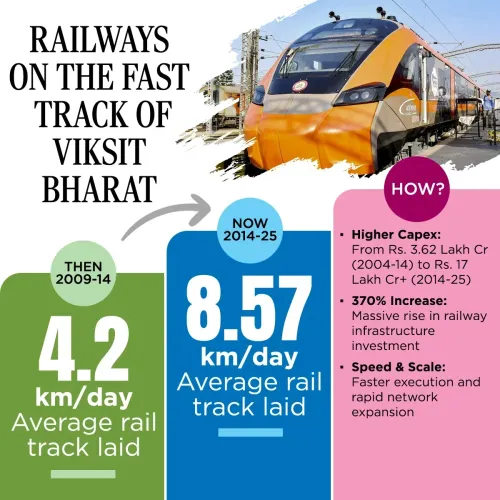
The Digital India programme, formally launched in 2015, sought to expand e-governance and internet access to underserved communities. On the energy front, the National Solar Mission — revised in 2015 — and subsequent rooftop solar schemes have pushed states to ramp up renewable capacity. Road connectivity has been accelerated under the Bharatmala Pariyojana, approved in 2017, which targets national highway expansion and rural road upgrades.
Stakeholders and Impact
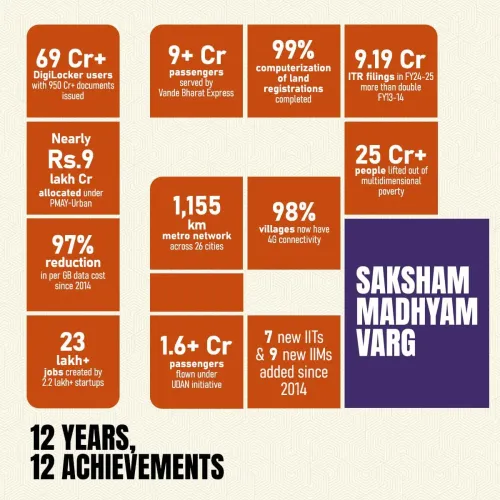
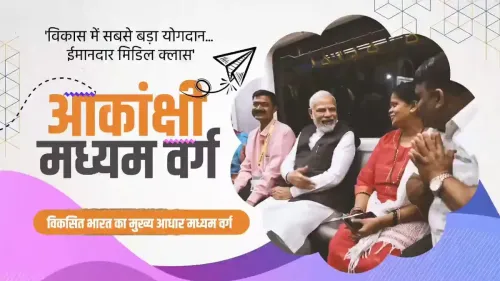
The post specifically invokes the welfare of lakhs of families, with the hashtag #12YearsOfSakshamMiddleClass ('12 Years of an Empowered Middle Class') indicating the intended beneficiary narrative spans both rural households and aspirational middle-income groups. Convergence of housing, clean energy, digital delivery and transport has been central to the BJP's welfare architecture since 2014.
State-level amplification of centrally sponsored scheme outcomes has become a standard communication pattern in BJP-ruled states, serving both accountability reporting and political credit attribution ahead of electoral cycles.
What's Next
Attention will now turn to Madhya Pradesh's budget allocations and physical progress reports for PMAY's urban and rural phases, as well as the state's solar rooftop targets for FY 2026-27. As the central government approaches the completion of its third consecutive term, scheme-saturation messaging from state offices is likely to intensify, making ground-level delivery data increasingly significant for public scrutiny.
Point of View
Where state offices amplify central government milestones to reinforce shared credit for welfare delivery. By invoking PMAY, solar energy, Digital India and Bharatmala in a single message, the Chief Minister's Office of Madhya Pradesh aligns itself with a decade-long narrative of convergent scheme governance that the BJP has made central to its electoral identity. The hashtag '#12YearsOfSakshamMiddleClass' is a deliberate pitch to aspirational voters, suggesting the party sees the middle class — not just the rural poor — as a key constituency for this messaging cycle. As the Modi government enters what would be its twelfth year, such state-level amplification will intensify pressure on administrators to show verifiable ground-level outcomes.
NationPress
19 Sept 2026
Frequently Asked Questions
What is Pradhan Mantri Awas Yojana and how has it benefited Madhya Pradesh?
Pradhan Mantri Awas Yojana (PMAY) is a centrally sponsored scheme launched in June 2015 to provide pucca houses to eligible rural and urban families. Madhya Pradesh has been among the states reporting progress under both its urban and rural phases, which have been extended beyond the original 2022 deadline.
Why did the Madhya Pradesh CM Office post about 12 years of Modi government?
The post marks twelve years of Prime Minister Narendra Modi's leadership since 2014, using the occasion to highlight welfare and infrastructure gains under centrally sponsored schemes in Madhya Pradesh. It is part of a coordinated BJP campaign under hashtags like #12YearsOfSeva and #12YearsOfSakshamMiddleClass.
Who is the Chief Minister of Madhya Pradesh in 2026?
Mohan Yadav has been the Chief Minister of Madhya Pradesh since December 2023. He is tagged in the post and has consistently aligned state-level communication with the central government's scheme-delivery narrative.
What is the Bharatmala Pariyojana and how does it relate to road development in MP?
Bharatmala Pariyojana is a central government programme approved in 2017 to accelerate national highway construction and rural road upgrades across India. Madhya Pradesh benefits from this initiative as part of the broader road and transport improvements referenced in the CM Office post.
What does #12YearsOfSakshamMiddleClass mean?
'Saksham' means 'empowered' or 'capable' in Hindi, so the hashtag translates to '12 Years of an Empowered Middle Class.' It signals the BJP's effort to frame a decade of central welfare schemes as having uplifted not just the rural poor but also aspirational middle-income households.