MP CM Yadav: 3 airports built, 7 more approved in 3 years

Synopsis
Madhya Pradesh CM Dr. Mohan Yadav announced approvals for five new airports including Singrauli on August 9, 2026. Combined with three airports built and two earlier approvals in three years, the state now has ten new airports in its pipeline under India's UDAN regional connectivity push.
Key Takeaways
Three new airports — at Datia , Satna , and Rewa — have been constructed in Madhya Pradesh in the last three years.
Two additional airports had already received approval before August 9, 2026 .
The Ministry of Civil Aviation granted fresh approval for five more airports , including one at Singrauli , on the same date.
The state's total new-airport pipeline now stands at ten airports in a three-year window.
The expansion aligns with India's UDAN regional connectivity scheme , which has grown the national airport network from 74 in 2014 to over 140 by 2024 .
Singrauli , an industrial hub in eastern MP, is the headline location among the newly approved sites.
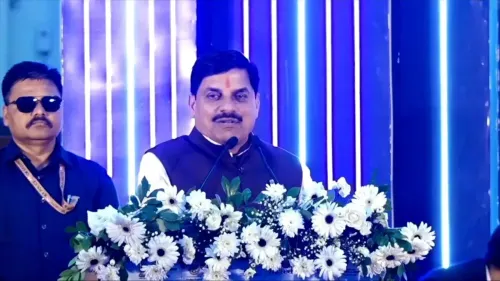
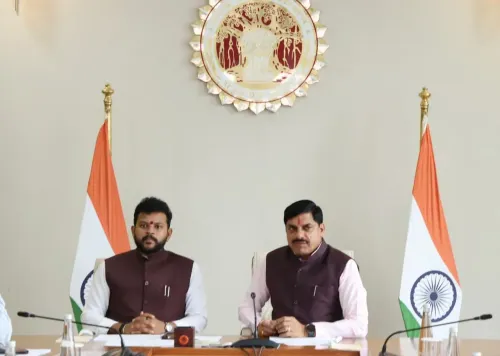
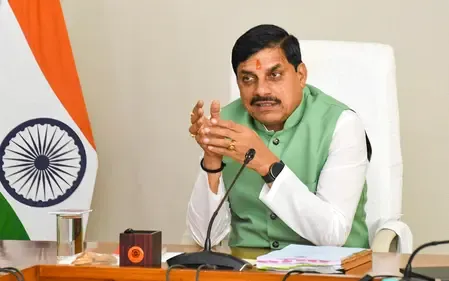
Madhya Pradesh is rewriting its aviation map at a pace that would have seemed impossible a decade ago. Chief Minister Dr. Mohan Yadav, speaking on Sunday, August 9, 2026, announced that five new airports — including one at Singrauli — have received fresh approvals, adding to a wave of air-connectivity expansion already reshaping the state's tier-2 and tier-3 districts.
Three airports built, five more greenlit in a single day
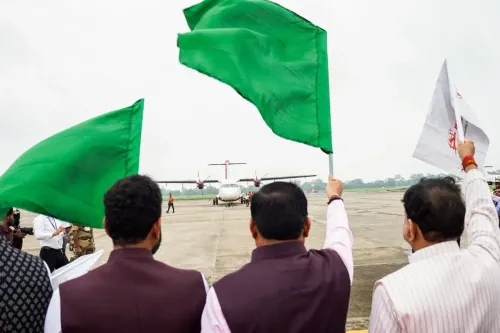
The Chief Minister's Office of Madhya Pradesh laid out the scorecard plainly: in the last three years, new airports have come up at Datia, Satna, and Rewa — three districts that previously had no operational air link. Alongside those, two additional airports had already received approval before today's announcement. Then, in a single stroke, the Ministry of Civil Aviation greenlit five more, taking the state's total pipeline to ten new airports in three years. CM Yadav credited the Union Ministry of Civil Aviation (MoCA_GoI) as a partner in driving this push.
Why Singrauli — and what it signals
Singrauli, in eastern Madhya Pradesh, is the district that anchors this latest batch of approvals. It is one of India's most energy-dense zones — home to major coal fields and thermal power plants — yet it has historically lacked fast connectivity to state and national capitals. An airport here is not just a convenience; it is an economic accelerant for an industrial corridor that moves goods and workers by road for want of any alternative. The pattern is deliberate: target districts where economic activity already exists but connectivity lags, and unlock the multiplier.
MP inside India's airport sprint
The state's expansion sits inside a much larger national story. India grew its operational airport network from roughly 74 airports in 2014 to over 140 by 2024, driven substantially by the UDAN regional connectivity scheme launched by the Ministry of Civil Aviation in 2016. Madhya Pradesh signed multiple MoUs under successive UDAN phases between 2017 and 2022, laying the groundwork for exactly this kind of multi-city rollout. The state is now among the most active participants in that national push, turning policy framework into tarmac.
For residents of smaller districts — local businesses, the tourism sector, and daily commuters — the real test will be operationalisation timelines and the UDAN flight routes that follow each approval. An approved airport is a promise; a scheduled flight is delivery. That clock starts now.
Point of View
CM Yadav frames the expansion as a Centre-state partnership win rather than a purely state achievement — a politically useful framing ahead of any electoral cycle. The focus on industrial districts like Singrauli, rather than tourist or pilgrimage towns alone, suggests the state is deliberately broadening the UDAN argument beyond leisure travel to economic productivity. Ten new airports in three years would be a significant infrastructure claim for any mid-sized state, and the pace at which approvals are being announced will face scrutiny on the harder metric: actual operationalisation and live flight routes. If timelines slip, the gap between announcement and delivery could become the story.
NationPress
9 Aug 2026
Frequently Asked Questions
Which new airports have been approved in Madhya Pradesh in 2026?
On August 9, 2026 , the Ministry of Civil Aviation approved five new airports in Madhya Pradesh, including one at Singrauli . The other four locations in this batch have not been individually named in the official announcement.
Which airports were built in Madhya Pradesh in the last three years?
New airports have been constructed at Datia , Satna , and Rewa in Madhya Pradesh over the last three years, according to CM Dr. Mohan Yadav.
What is the UDAN scheme and how does it relate to MP's new airports?
UDAN — Ude Desh Ka Aam Naagrik — is a regional air connectivity scheme launched by the Ministry of Civil Aviation in 2016 to make flying affordable and develop underserved airports. Madhya Pradesh signed MoUs under UDAN phases between 2017 and 2022 , forming the policy backbone for the current airport expansion.
Why is Singrauli getting an airport?
Singrauli is a major industrial and energy district in eastern Madhya Pradesh, home to coal fields and thermal power plants. An airport is expected to improve business connectivity and reduce dependence on long road travel for workers and goods.
How many new airports will Madhya Pradesh have after these approvals?
Counting three airports already built, two earlier approvals, and the five new approvals announced on August 9, 2026 , Madhya Pradesh now has ten new airports in its pipeline over a three-year period.