CM Sukhu Meets Nadaun Students, Flags Education Push
Synopsis
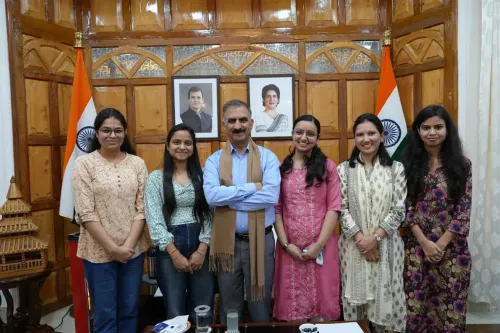
Himachal Pradesh CM Sukhvinder Singh Sukhu met students from Nadaun and PhD scholars from HP University at Oak Over on 9 August 2026, discussing CBSE adoption in state schools, the 1% Dr. Y.S. Parmar Student Loan Scheme, and filling vacant teaching posts.
Key Takeaways
CM Sukhvinder Singh Sukhu held a dialogue with students from Nadaun constituency and PhD scholars from Himachal Pradesh University at Oak Over on 9 August 2026 .
The meeting covered student futures, educational access, and Nadaun's development .
The state is introducing the CBSE curriculum in government schools to bring them on par with private institutions.
Parmar Student Loan Scheme offers education loans at just 1% interest , one of the lowest rates among Indian state schemes.
Filling vacant teacher posts in government schools was flagged as an active priority.
Sukhu emphasised that youth research and ideas should directly contribute to Nadaun's regional development .
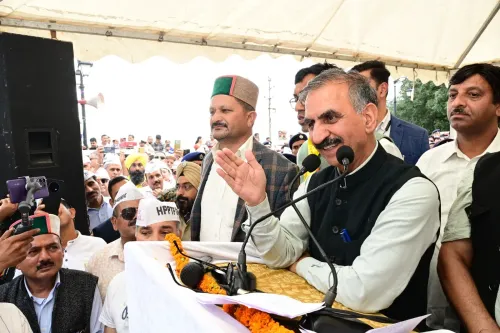
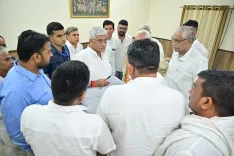
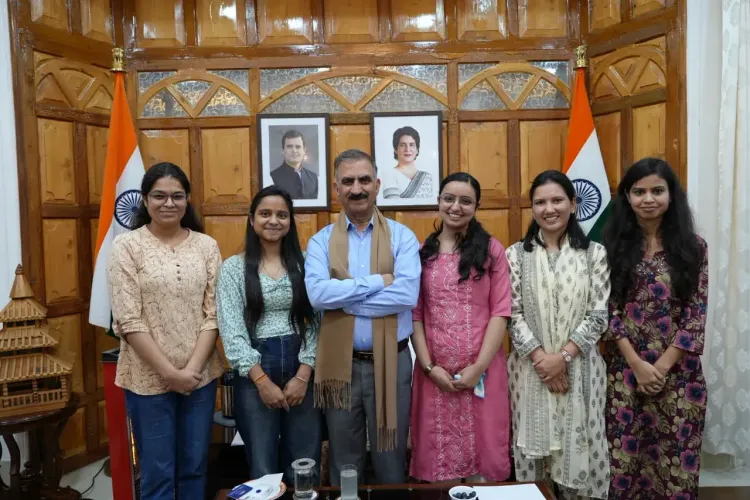
At Oak Over on Sunday, 9 August 2026, Himachal Pradesh Chief Minister Sukhvinder Singh Sukhu sat down with students from his home constituency of Nadaun and PhD scholars from Himachal Pradesh University — a meeting that doubled as both a constituency outreach and a policy briefing on the state's education agenda.
What the CM heard at Oak Over
The delegation brought together students from Nadaun assembly constituency in Hamirpur district and research scholars from various departments of Himachal Pradesh University, Shimla. Sukhu described the exchange as a 'sarthak charcha' — a meaningful dialogue — covering student futures, educational access, and the development trajectory of Nadaun. The CM said he listened carefully to youth ideas and explored how their talent, energy, and research could feed directly into the region's growth.
Three reforms Sukhu put on the table
The Chief Minister highlighted three concrete steps the state government is taking to widen educational opportunity. First, the introduction of the CBSE curriculum in government schools — a significant structural shift that puts Himachal Pradesh state-run institutions on the same academic footing as private schools across the country. Second, the Dr. Y.S. Parmar Student Loan Scheme, which offers education loans at a strikingly low 1% interest rate, named after the state's founding Chief Minister. Third, active steps to fill vacant teaching posts — a chronic pressure point in government school systems across India.
Nadaun's CM and the constituency connection
Sukhu has represented Nadaun in the state assembly and has been Chief Minister since December 2022. Direct meetings of this kind — where a sitting CM invites constituents to his official residence — are a deliberate signal of accessibility, particularly to younger voters. The PhD scholars in the room added an unusual dimension: their research output, Sukhu suggested, should be seen as a resource for local development, not just an academic exercise.
The Dr. Y.S. Parmar scheme is worth watching. At 1% interest, it is among the most subsidised student loan programmes in any Indian state, and its uptake will be a practical test of whether the policy is reaching first-generation learners in hill districts. Progress on CBSE adoption in state schools and the pace of teacher recruitment will be equally telling in the months ahead.
Youth voices shaped this conversation. Whether they shape the policy that follows is the real question.
Point of View
Subsidised loans, teacher hiring — are not new announcements but a restatement of an ongoing policy direction, which suggests the meeting was as much about political communication as policy consultation. The inclusion of PhD scholars is a sharper move: it frames the government as valuing research and intellectual capital, not just school-level access. The real test of this engagement will come when vacancy-filling timelines and loan disbursement data become public.
NationPress
9 Aug 2026
Frequently Asked Questions
What is the Dr. Y.S. Parmar Student Loan Scheme in Himachal Pradesh?
The Dr. Y.S. Parmar Student Loan Scheme is a Himachal Pradesh government programme that provides education loans to students at a subsidised interest rate of just 1%, named after the state's first Chief Minister, Dr. Yashwant Singh Parmar.
Why is Himachal Pradesh introducing CBSE in government schools?
The Himachal Pradesh government is adopting the CBSE curriculum in state-run schools to align them with the national education board standard, giving students in government schools access to the same academic framework as those in private institutions.
Where is Oak Over and why did CM Sukhu meet students there?
Oak Over is the official residence of the Himachal Pradesh Chief Minister in Shimla. CM Sukhu hosted the student and researcher delegation there for a direct dialogue on education and Nadaun's development.
What is Nadaun constituency and who represents it?
Nadaun is an assembly constituency in Hamirpur district, Himachal Pradesh. It is currently represented by Chief Minister Sukhvinder Singh Sukhu, who has held the seat and has served as CM since December 2022.
What role does Himachal Pradesh University play in the state's education system?
Himachal Pradesh University, established in 1970 and based in Shimla, is the state's primary public university offering postgraduate and doctoral research programmes across multiple departments. PhD scholars from the university were part of the delegation that met CM Sukhu.