MP CM Yadav announces second medical university, 8 Ayurveda colleges
Synopsis
On Independence Day 2026, Madhya Pradesh CM Dr. Mohan Yadav announced a second medical university, eight new Ayurvedic colleges under construction, over 15,000 km of roads built in 2.5 years at ₹23,000 crore, metropolitan expansion to Jabalpur and Gwalior, and fast-tracked preparations for Simhastha Kumbh 2028 in Ujjain.
Key Takeaways
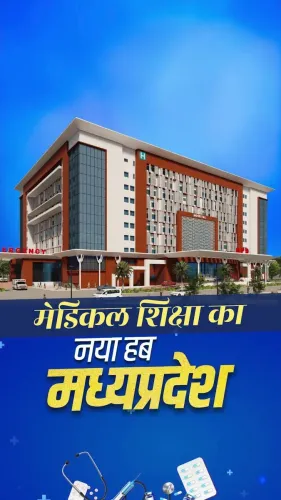
Madhya Pradesh will get a second medical university to support quality education in the state's expanding network of new medical colleges.
Construction on 8 new Ayurvedic colleges has already commenced across the state.
Over 15,000 km of roads have been constructed, upgraded, or strengthened at a cost of ₹23,000 crore in the past two and a half years.
Bhopal and Indore are developing metropolitan regions; Jabalpur and Gwalior are next in line for the same framework.
Preparations for Simhastha Kumbh Mela 2028 in Ujjain are accelerating, building on the state's large-scale infrastructure investment ahead of the 12-yearly pilgrimage.
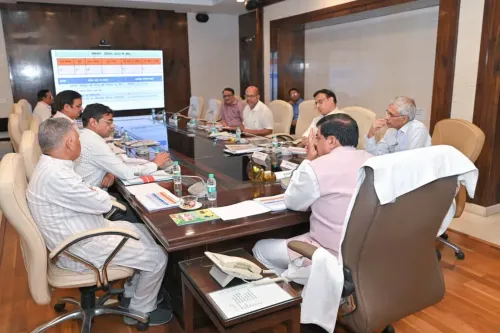
On Independence Day, August 15, 2026, Madhya Pradesh Chief Minister Dr. Mohan Yadav unveiled a sweeping governance update — a second medical university for the state, eight new Ayurvedic colleges already under construction, over 15,000 kilometres of roads built or upgraded in two and a half years, metropolitan expansion plans for Jabalpur and Gwalior, and accelerating preparations for the Simhastha Kumbh Mela 2028 in Ujjain. Five announcements. One Independence Day address.
A second medical university for a state adding colleges fast
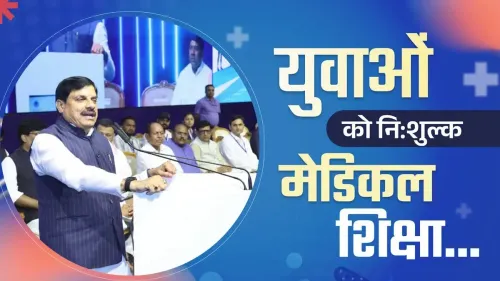
The logic is straightforward: Madhya Pradesh has been opening new government medical colleges at pace — a push that began in earnest between 2018 and 2023 to expand MBBS seats and extend healthcare access into rural districts. More colleges, however, mean more students needing affiliation, accreditation, and academic oversight. One university can only stretch so far. CM Yadav's announcement of a second medical university directly addresses that bottleneck, promising, in his words, that students in these new colleges receive 'uchch gunavatta ki shiksha' — 'high-quality education.'
The state currently has one medical university anchoring its system. A second institution would distribute the academic load and, in principle, sharpen standards rather than dilute them. The precise location and operational timeline for the new university have not yet been confirmed.
Eight Ayurvedic colleges and the traditional medicine push
Running parallel to the allopathic expansion is a quieter but significant investment in traditional medicine. Construction on eight new Ayurvedic colleges across the state has already begun — not announced, not planned, but physically underway. For a state with a large rural population that has long relied on Ayurvedic practitioners, this signals a deliberate effort to build the formal training pipeline that supports community-level healthcare, not just tertiary hospitals.
₹23,000 crore on roads — and what the numbers mean
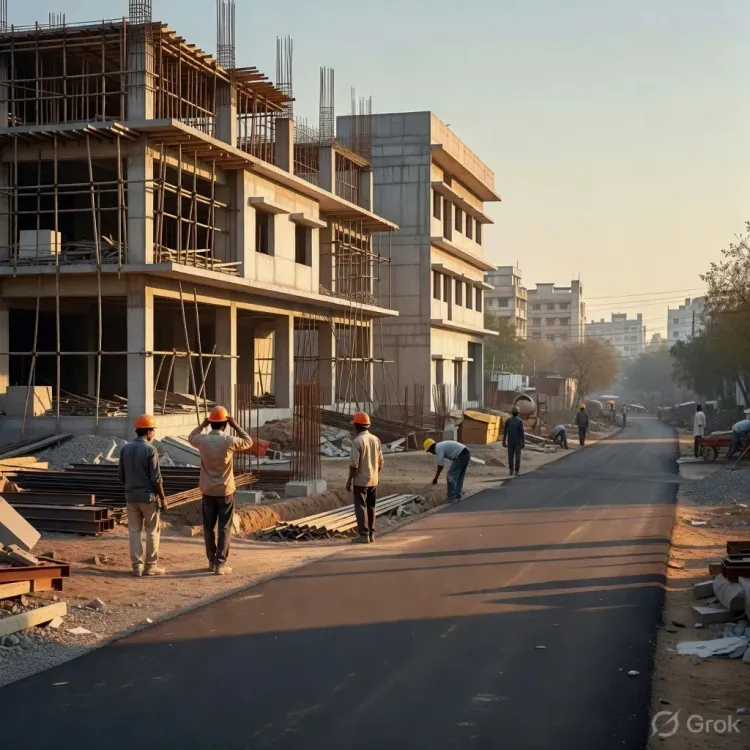
CM Yadav cited an investment of ₹23,000 crore to construct, upgrade, and strengthen more than 15,000 kilometres of roads across Madhya Pradesh over the past two and a half years. If the figures hold, that is a significant physical transformation of the state's connectivity backbone — the kind of infrastructure that determines whether a new medical college in a district town is actually reachable for a patient in a village twenty kilometres away. Roads and health infrastructure, in that sense, are not separate announcements; they are the same announcement.
Metropolitan ambitions: Bhopal and Indore first, then Jabalpur and Gwalior
Bhopal and Indore are already advancing under metropolitan region development frameworks — structured urban planning that coordinates land use, transport, and services across a city and its surrounding districts. The CM confirmed that Jabalpur and Gwalior, the state's third and fourth largest cities, will be brought into the same model. This matters because metropolitan region status unlocks a different tier of infrastructure planning and central government funding eligibility, moving these cities beyond ad hoc expansion into coordinated growth.
The Simhastha 2028 clock is ticking
Every twelve years, Ujjain hosts the Simhastha Kumbh Mela — one of the largest religious gatherings on earth. The last edition, in 2016, required the state to rebuild roads, sanitation systems, and accommodation infrastructure on a war footing. With 2028 approaching, CM Yadav signalled that preparations are now moving at speed. The road network being laid today is, in part, the Simhastha infrastructure of the day after tomorrow.
Five fronts, one message: Madhya Pradesh is building — hospitals, colleges, roads, cities, and a pilgrimage that will draw millions. Whether delivery matches the declaration is the question the next two years will answer.
Point of View
Infrastructure, urban, and religious-tourism announcements into a single high-visibility moment. The decision to open a second medical university directly responds to a structural problem created by the state's own rapid college expansion, suggesting the policy is at least internally consistent. The Simhastha 2028 thread ties the infrastructure spending to a hard deadline, which historically has been the most reliable accelerant for delivery in Indian state governance. The metropolitan push to Jabalpur and Gwalior, if followed through with formal notifications, would mark a genuine shift in how Madhya Pradesh manages secondary-city growth — a space where most states still rely on uncoordinated municipal bodies.
NationPress
15 Aug 2026
Frequently Asked Questions
Why is Madhya Pradesh opening a second medical university?
Madhya Pradesh has been rapidly opening new government medical colleges to expand MBBS seats and rural healthcare access. A second medical university is needed to provide academic oversight and maintain quality standards for the growing number of students in these new institutions.
Where will the new medical university in Madhya Pradesh be located?
The precise location of the second medical university has not yet been officially confirmed. CM Dr. Mohan Yadav announced the decision on Independence Day 2026; further details on location and timeline are awaited.
What is Simhastha Kumbh Mela 2028 and why is MP preparing for it?
Simhastha Kumbh Mela is a major Hindu pilgrimage held every 12 years in Ujjain, Madhya Pradesh, drawing millions of devotees. The state is accelerating infrastructure preparations — roads, sanitation, and accommodation — ahead of the 2028 edition, following the model of the 2016 event.
Which cities in Madhya Pradesh will get metropolitan region status?
Bhopal and Indore are already developing under a metropolitan region framework. CM Yadav announced that Jabalpur and Gwalior will be developed on the same model in the future, enabling coordinated urban planning and infrastructure investment.
How many kilometres of roads has Madhya Pradesh built in the last 2.5 years?
According to CM Dr. Mohan Yadav's Independence Day address, more than 15,000 kilometres of roads have been constructed, upgraded, and strengthened across Madhya Pradesh at a cost of ₹23,000 crore over the past two and a half years.