MP CM Yadav Moves 488 Blackbucks to Kuno in Phase 2
Synopsis
Madhya Pradesh's Phase 2 blackbuck translocation campaign has moved 488 animals to Kuno National Park so far, with CM Dr. Mohan Yadav targeting 2,000 relocations to cut crop-raiding and ease human-wildlife conflict across the state.
Key Takeaways
488 blackbucks have already been dispatched to Kuno National Park under Phase 2 of Madhya Pradesh's krishna-mrig translocation campaign.
The Phase 2 target is 2,000 blackbucks to be relocated to suitable forest zones across the state.
The campaign's twin goals are protecting farmers' crops from grazing damage and boosting wildlife conservation in protected areas.
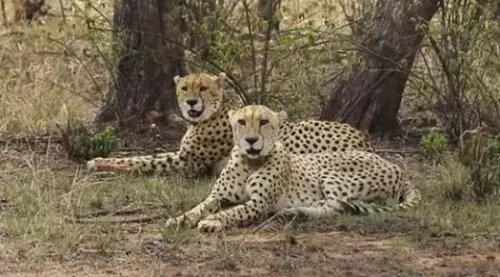
Kuno National Park (Sheopur district) already hosts India's reintroduced cheetah population; a larger blackbuck prey base supports that ecosystem.
The Madhya Pradesh Forest Department is executing live-capture and soft-release protocols for each animal.
Mohan Yadav framed the initiative as ensuring both rural livelihoods and wildlife coexist — not a trade-off between them.
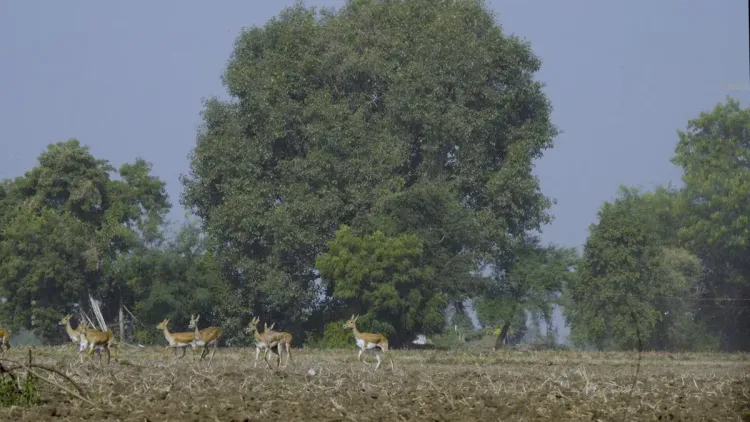
A herd of 488 blackbucks is already on the move — and Madhya Pradesh is not done yet. The Chief Minister's Office of Madhya Pradesh announced on Friday, 16 October 2026 that the second phase of the state's blackbuck (krishna-mrig) translocation campaign is actively under way, with Chief Minister Dr. Mohan Yadav setting a target of relocating 2,000 blackbucks to suitable forest zones across the state.
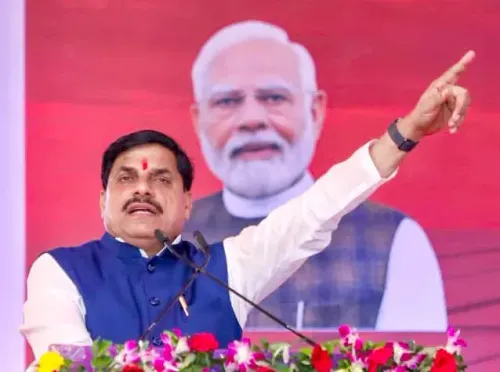
Quoting CM Yadav directly, the post stated: 'Our effort is to keep farmers' livelihoods secure and also ensure the conservation of wildlife.' The dual mandate — protecting crops and protecting animals — frames this not as a concession to one side, but as a single integrated mission.
Why Blackbucks Became a Crisis for Farmers
Blackbucks are swift, prolific grazers. When their populations grow unchecked outside protected zones, the damage to standing crops — wheat, soybean, chickpea — can wipe out a smallholder's entire season overnight. Across central India, human-wildlife conflict involving herbivores like blackbucks has quietly escalated alongside expanding cultivation, turning what conservationists celebrate as a biodiversity success into a source of very real rural anger.
Madhya Pradesh's response has been translocation: move surplus animals from conflict-heavy areas into forest habitats where prey populations can thrive without raiding farmland. It is a strategy increasingly adopted by Indian states under the framework of the Wildlife Protection Act — firm on conservation, but responsive to ground-level agrarian distress.
Kuno National Park as the Anchor Destination
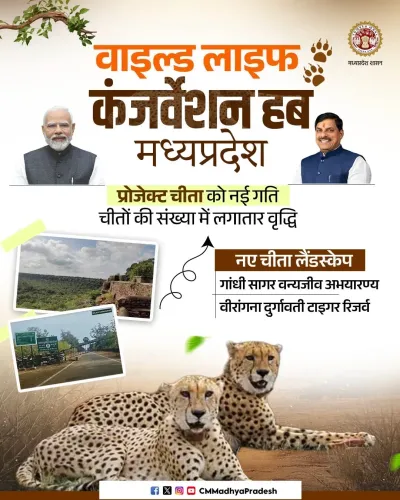
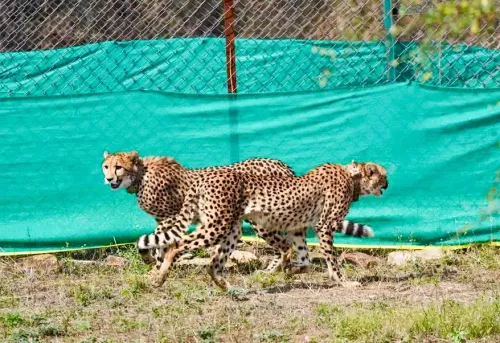
Kuno National Park, tucked in the Sheopur district of northern Madhya Pradesh, is already one of India's most watched wildlife arenas. Since 2022, it anchored the nation's cheetah reintroduction project — the first return of the big cat to Indian soil in seven decades. Adding a robust blackbuck population to Kuno's ecosystem is not incidental: blackbucks are natural prey, strengthening the prey base that large predators depend on, and signalling a broader rewilding ambition for the park.
The Madhya Pradesh Forest Department is executing the translocation with live-capture and soft-release protocols designed to minimise animal stress and maximise survival rates in new habitats. The first phase of the campaign laid the operational groundwork; phase two scales it dramatically — from proof-of-concept to landscape-level intervention.
The 2,000-Animal Target and What It Means on the Ground
Getting to 2,000 translocated blackbucks is a logistical undertaking of real scale. Each animal must be captured, health-checked, transported, and released into a zone assessed for carrying capacity and conflict potential. Survival rates post-release and the actual reduction in crop-raiding incidents will be the metrics that ultimately judge the campaign — and both will take seasons to fully measure.
For the farmers of conflict-affected villages, the proof will be simpler: a harvest that stays intact. For conservationists, it will be herd counts inside the new forest zones. CM Yadav's framing — livelihoods and wildlife together, not in opposition — sets an expectation that both scoreboards will be watched.
With 488 animals already dispatched and 1,512 more to go, Madhya Pradesh has moved past announcement and into execution. The next milestone to watch is whether the translocation pipeline holds pace — and whether the farmers who have lived alongside crop-raiding herds start to see their fields left alone.
Point of View
The state is layering the campaign onto an already high-profile rewilding site, amplifying both the ecological rationale and the political visibility. The 2,000-animal target signals ambition beyond pilot scale, but the credibility of the initiative will ultimately rest on post-release survival data and measurable reductions in crop-raiding incidents — metrics the state has yet to publicly commit to tracking in a transparent, time-bound manner. CM Yadav's dual-mandate framing is politically astute, but it also raises the bar: farmers and conservationists alike will now hold the government to both halves of that promise.
NationPress
16 Oct 2026
Frequently Asked Questions
What is the blackbuck translocation campaign in Madhya Pradesh?
It is a state government initiative to capture blackbucks from areas where they damage crops and relocate them to protected forest zones, reducing human-wildlife conflict while supporting wildlife conservation.
How many blackbucks have been moved in Phase 2 so far?
488 blackbucks have been dispatched to Kuno National Park so far under the second phase of the campaign, against a total target of 2,000 animals.
Why is Kuno National Park chosen for blackbuck relocation?
Kuno National Park in Sheopur district already hosts India's reintroduced cheetah population and has suitable habitat; adding blackbucks strengthens the prey base and overall ecosystem health of the park.
How does blackbuck translocation help farmers in Madhya Pradesh?
Blackbucks grazing outside protected areas can devastate crops like wheat and soybean. Relocating them to forest zones reduces this crop-raiding, directly protecting the livelihoods of small and marginal farmers.
What was Phase 1 of the krishna-mrig translocation campaign?
Phase 1 established the operational framework for the translocation campaign. Phase 2 is a significant scale-up, targeting 2,000 animals across suitable forest areas in Madhya Pradesh.