MP CM Office Highlights Senior Citizen Ashrams, 2007 Act Push
Synopsis
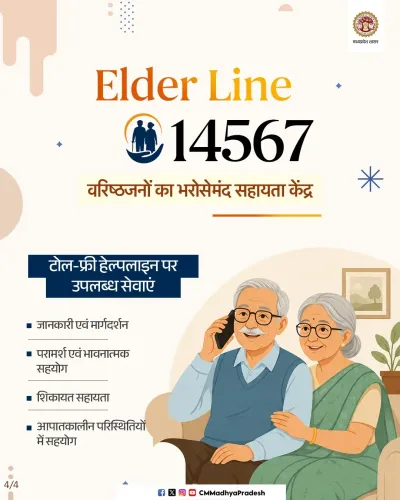
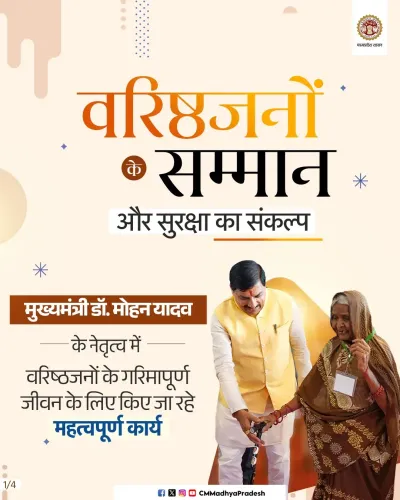
The Chief Minister's Office of Madhya Pradesh on 23 June 2026 spotlighted ashrams for senior citizens being run through local bodies and institutions, calling for effective implementation of the Maintenance and Welfare of Parents and Senior Citizens Act, 2007, under CM Dr. Mohan Yadav's leadership.
Key Takeaways
The Chief Minister's Office of Madhya Pradesh posted on 23 June 2026 about running senior citizen ashrams through local bodies and various institutions.
The post calls for effective implementation of the Maintenance and Welfare of Parents and Senior Citizens Act, 2007 , a central legislation mandating care and maintenance for elderly citizens.
Mohan Yadav , in office since December 2023 , and the Madhya Pradesh Social Welfare Department were directly tagged, signalling accountability at the top.
The decentralised model routes elder care through panchayats and urban local bodies rather than exclusively state-run facilities, aligning with national directives.
Senior citizens without family support are the primary beneficiaries, with the 2007 Act also providing tribunal-based legal recourse for maintenance claims.
District-level ashram data and state budget allocations for elder welfare remain key metrics to watch going forward.
The Chief Minister's Office of Madhya Pradesh on Tuesday, 23 June 2026 highlighted the state government's drive to run ashrams for senior citizens through local bodies and various institutions, while emphasising effective implementation of the Maintenance and Welfare of Parents and Senior Citizens Act, 2007. The post, addressed to Chief Minister Dr. Mohan Yadav and the Madhya Pradesh Social Welfare Department, signals a renewed push toward decentralised elder care across the state.
Context
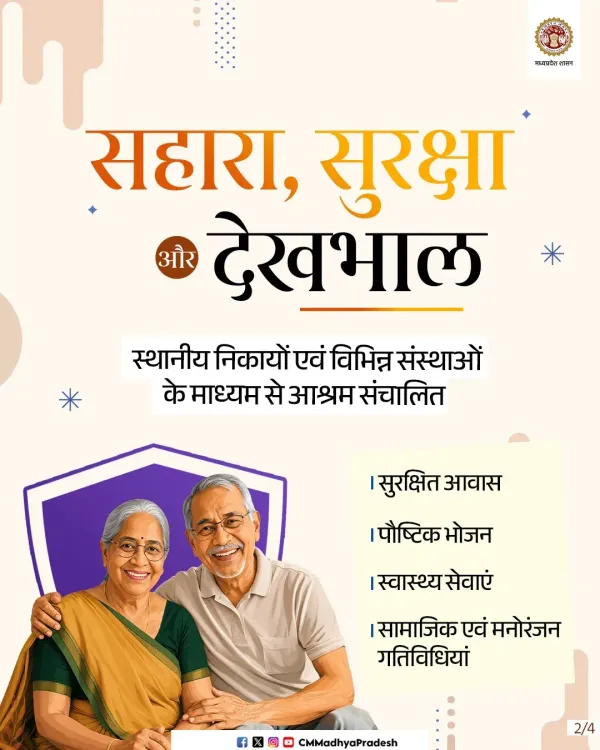
The CMO's post, in Hindi, reads: 'स्थानीय निकायों एवं विभिन्न संस्थाओं के माध्यम से आश्रम संचालित' — meaning 'ashrams operated through local bodies and various institutions' — alongside a call for effective enforcement of the 2007 Act. The message was directed at Chief Minister Dr. Mohan Yadav and the state's social welfare machinery, indicating an intent to mainstream elder care delivery through existing civic infrastructure rather than solely state-run facilities.
Policy Backdrop
The Maintenance and Welfare of Parents and Senior Citizens Act, 2007 is a central legislation that mandates adult children to provide maintenance to parents and senior citizens, and establishes tribunals for redressal of grievances. It also provides a framework for states to set up old-age homes for indigent senior citizens. Madhya Pradesh, under Chief Minister Dr. Mohan Yadav — who has led the state since December 2023 — has been aligning its elder care delivery with national directives that encourage decentralised implementation through panchayats and municipalities.
Across India, states have progressively involved local bodies in running old-age homes as demographic pressures mount from a rapidly ageing population. The shift toward community-level institutions is seen as a way to expand coverage and reduce dependence on centralised state facilities.
Stakeholders and Impact
The primary beneficiaries of this initiative are senior citizens and elderly parents in Madhya Pradesh who are without adequate family support or financial means. By routing ashram operations through local bodies, the state aims to bring care facilities closer to communities, potentially improving accessibility in rural and semi-urban areas.
The Madhya Pradesh Social Welfare Department, tagged in the original post, is the nodal agency responsible for coordinating these programmes. Effective enforcement of the 2007 Act also empowers senior citizens to seek legal maintenance from adult children through designated tribunals, adding a rights-based dimension to the welfare push.
What's Next
Observers will watch for district-level reports on the number of ashrams sanctioned or newly operationalised under this drive, as well as any dedicated budget allocations for senior-citizen welfare in the next state fiscal cycle. The involvement of local bodies will be a key metric — whether panchayats and urban local bodies receive adequate funds and training to run these facilities sustainably will determine the initiative's real-world reach.
With India's senior citizen population projected to grow significantly over the coming decades, Madhya Pradesh's decentralised model could serve as a reference point for other states seeking to scale elder care without proportionate expansion of state infrastructure.
Point of View
This fits a pattern where BJP-governed states have used the 2007 Act as a welfare optic, particularly as India's ageing demographic becomes an increasingly salient political constituency. The real test will be whether this social-media visibility translates into verifiable expansion of functional ashrams at the district level.
NationPress
22 Sept 2026
Frequently Asked Questions
What is the Maintenance and Welfare of Parents and Senior Citizens Act, 2007?
The Maintenance and Welfare of Parents and Senior Citizens Act, 2007 is a central Indian law that legally obligates adult children to provide maintenance to their parents and senior citizens, and establishes tribunals where elderly individuals can seek redressal. It also directs state governments to set up old-age homes for indigent senior citizens.
How is Madhya Pradesh implementing the Senior Citizens Act, 2007?
Madhya Pradesh is running ashrams for senior citizens through local bodies such as panchayats and urban local bodies, as well as various institutions, under the framework of the 2007 Act. The Madhya Pradesh Social Welfare Department is the nodal agency overseeing this implementation.
Who is the Chief Minister of Madhya Pradesh in 2026?
Dr. Mohan Yadav is the Chief Minister of Madhya Pradesh, having assumed office in December 2023. He was tagged in the CMO's post on senior citizen welfare dated 23 June 2026.
What are old-age ashrams in Madhya Pradesh?
Old-age ashrams in Madhya Pradesh are residential care facilities for senior citizens, particularly those without adequate family support or financial means. Under the 2007 Act framework, the state is now operating these through local civic bodies and institutions to decentralise delivery.
Why is Madhya Pradesh using local bodies to run senior citizen ashrams?
Involving local bodies such as panchayats and municipalities allows the state to expand elder care coverage closer to communities, especially in rural and semi-urban areas, without solely relying on centralised state-run facilities. This approach aligns with national directives on decentralised welfare delivery.