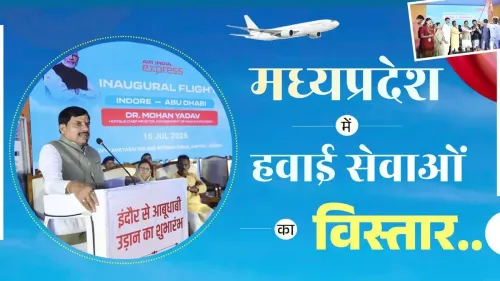
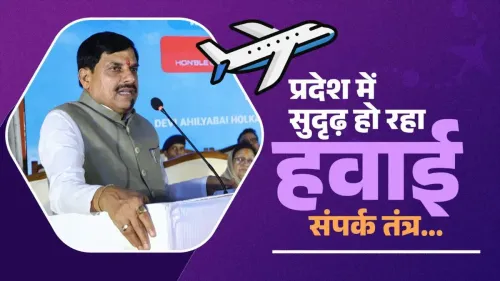
MP Expands Air Network to 8 Airports Under CM Mohan Yadav

Synopsis
Madhya Pradesh's Chief Minister's Office announced the state's aviation network has grown to 8 airports, with air services continuing to expand. CM Dr. Mohan Yadav's office framed the growth as unlocking new development possibilities through better connectivity, backed by the Central government's UDAN regional aviation scheme.
Key Takeaways
The Chief Minister's Office of Madhya Pradesh announced a network of 8 airports with continuously expanding air services as of 26 September 2026 .
Mohan Yadav , CM since December 2023, has positioned infrastructure and connectivity as central to the state's development agenda.
The expansion is linked to the Central government's UDAN scheme (launched 2016), which subsidises regional air routes and airport upgrades.
Better air connectivity is expected to benefit tourism, trade, and investment across Madhya Pradesh's Tier-2 and Tier-3 cities.
The state's geographic centrality — bordering six other states — makes aviation connectivity a strategic economic lever.
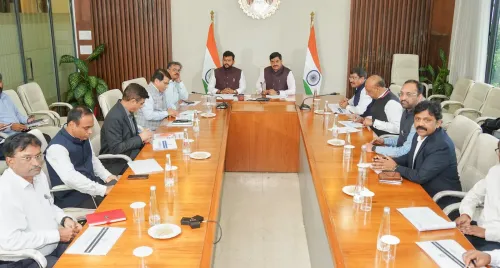
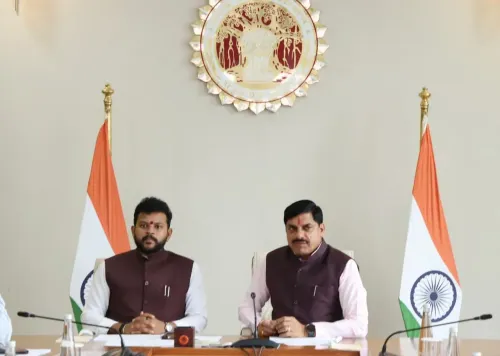
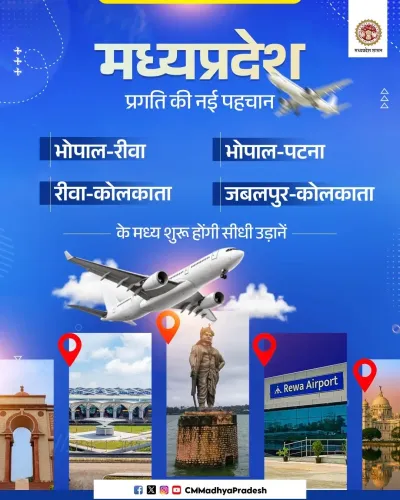
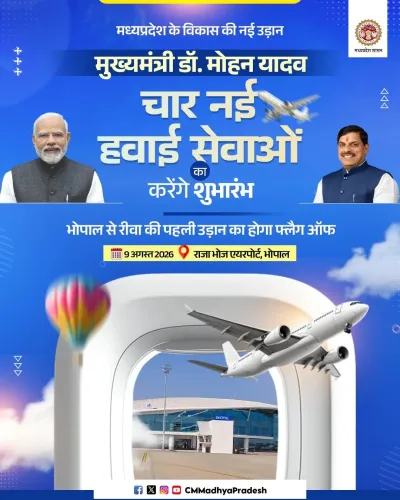
Madhya Pradesh is quietly rewriting its connectivity story — one runway at a time. The Chief Minister's Office of Madhya Pradesh announced on Saturday, 26 September 2026 that the state's aviation network has grown to 8 airports, with air services continuing to expand across the landlocked heartland state.
The post, shared on X and tagging Chief Minister Dr. Mohan Yadav, declared: 'Behtar connectivity ke saath vikas ki nayi sambhavanaein' — 'New possibilities for development with better connectivity' — framing the airport network as an engine of economic growth, not merely a transport upgrade.
Eight airports, one strategic ambition
For a state that sits at India's geographic centre, air connectivity has historically lagged behind its landmass and population. Madhya Pradesh borders six states, but much of its interior has remained difficult to reach quickly by air. A growing network of 8 operational airports signals a deliberate push to change that calculus — linking smaller cities to major commercial and tourism hubs without routing every traveller through Bhopal or Indore.
Dr. Mohan Yadav, who took charge as Chief Minister in December 2023, has consistently positioned infrastructure as the backbone of the state's growth agenda. Aviation expansion fits squarely into that framing: faster connectivity attracts investment, shortens supply chains, and makes the state's considerable tourism assets — from Khajuraho to Kanha — more accessible to domestic and international visitors alike.
UDAN's role in taking MP's aviation ambitions skyward
The backdrop to this expansion is the Central government's UDAN (Ude Desh ka Aam Naagrik) scheme, launched in 2016 under the National Civil Aviation Policy. The scheme subsidises regional routes and funds airport upgrades, making it economically viable for airlines to serve cities that would otherwise be ignored on commercial grounds. Madhya Pradesh has been an active participant, leveraging UDAN support to open routes connecting its Tier-2 and Tier-3 cities to larger networks.
The broader national pattern is unmistakable: Indian states have raced to operationalise airports beyond their primary metros, understanding that air connectivity is increasingly a prerequisite for attracting manufacturing investment, tech campuses, and high-value tourism. Madhya Pradesh's 8-airport network places it within that competitive tier of states serious about regional air access.
What tourism and trade stand to gain
The beneficiaries extend well beyond frequent flyers. A stronger airport grid means shorter travel times for business delegations, faster cargo movement for perishable goods like agricultural produce, and a smoother visitor experience for the tourists who fuel the local hospitality economy. Khajuraho Airport, for instance, already draws international charter traffic; more operational airports spread that benefit deeper into the state.
Watch for further route announcements and potential new airport operationalisations as the state-centre coordination under UDAN enters its next phase — each new route a small but concrete proof point in Madhya Pradesh's larger connectivity bet.
Point of View
Aviation expansion is a high-visibility proof point ahead of state investment summits and tourist season. The explicit linkage between 'connectivity' and 'vikas' (development) mirrors the BJP's national narrative of infrastructure as growth, giving the announcement both a policy and political dimension. The real test will be whether route additions translate into sustained passenger volumes and measurable economic impact in the state's interior districts.
NationPress
26 Sept 2026
Frequently Asked Questions
How many airports does Madhya Pradesh have in 2026?
According to the Chief Minister's Office of Madhya Pradesh, the state has a network of 8 airports as of September 2026, with air services continuing to expand.
What is the UDAN scheme and how does it help Madhya Pradesh?
UDAN (Ude Desh ka Aam Naagrik) is a Central government scheme launched in 2016 that subsidises regional air routes and funds airport upgrades, making it viable for airlines to connect smaller cities. Madhya Pradesh has used UDAN support to open routes linking its Tier-2 and Tier-3 cities to larger networks.
Who is the Chief Minister of Madhya Pradesh?
Dr. Mohan Yadav has been the Chief Minister of Madhya Pradesh since December 2023, with a stated focus on state infrastructure development including aviation expansion.
Which major tourist destinations in Madhya Pradesh benefit from airport connectivity?
Destinations such as Khajuraho, which already attracts international charter traffic, and wildlife areas like Kanha stand to benefit as the state's airport network expands, reducing travel times for domestic and international visitors.
Why is airport expansion important for a landlocked state like Madhya Pradesh?
Madhya Pradesh sits at India's geographic centre and borders six states, but much of its interior is difficult to reach quickly by air. Expanding the airport network reduces travel times, attracts investment, improves cargo logistics for agricultural produce, and makes the state's tourism assets more accessible.