MP Positions Itself as Global Filming Hub: CM Office

Synopsis
The Chief Minister's Office of Madhya Pradesh has declared the state a 'Global Filming Hub', spotlighting UNESCO heritage sites, tiger reserves, and world-class facilities as it competes for domestic and international film productions under CM Dr. Mohan Yadav's tourism-first agenda.
Key Takeaways
The Chief Minister's Office of Madhya Pradesh officially positioned the state as a 'Global Filming Hub' on 23 May 2026 .
Mohan Yadav was tagged in the announcement, signalling direct political backing for the initiative.
The state's pitch rests on UNESCO World Heritage Sites — including Khajuraho and Sanchi — and tiger reserves such as Kanha and Bandhavgarh .
Madhya Pradesh has offered filming location incentives and single-window clearances since the mid-2010s.
The move is part of a broader pattern of Indian states competing to attract film productions beyond Mumbai and Hyderabad .
The Departments of Tourism and Culture are the key agencies responsible for executing the filming-hub strategy.
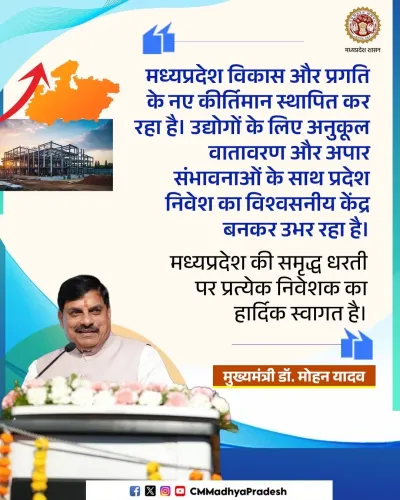
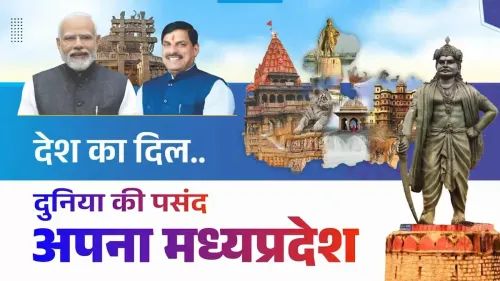
The Chief Minister's Office of Madhya Pradesh on Saturday, 23 May 2026, declared that the state is carving out a new identity as a 'Global Filming Hub', citing its historic heritage sites, spectacular natural landscapes, and world-class production infrastructure as its core strengths.
Context
The post, shared on the official CMO handle and tagging Chief Minister Dr. Mohan Yadav, the Department of Culture, Madhya Pradesh, and the Department of Tourism, Madhya Pradesh, positions the state as a premier destination for both domestic and international film productions. The original Hindi text reads: 'Aithasik dharohar, adbhut prakritik drishya aur vishwastareey suvidhaon ke saath Global Filming Hub ke roop mein nayi pehchaan bana raha Madhya Pradesh' — ('With historic heritage, breathtaking natural scenery, and world-class facilities, Madhya Pradesh is building a new identity as a Global Filming Hub.').
Policy Backdrop
Madhya Pradesh has been actively courting film productions since the mid-2010s, offering location incentives and single-window clearances to reduce logistical friction for filmmakers. The state's pitch is anchored in its rare concentration of assets: UNESCO World Heritage Sites such as the Khajuraho temples and the Sanchi Stupa, alongside celebrated wildlife reserves including Kanha and Bandhavgarh tiger reserves. This combination of built heritage and protected natural terrain gives the state a differentiated offering compared to conventional production centres.
The push mirrors a broader national trend in which several Indian states have introduced dedicated film policies since the 2010s to draw productions away from established hubs such as Mumbai and Hyderabad, spreading economic activity from the film industry into newer geographies. CM Dr. Mohan Yadav, who took office in December 2023, has made tourism and cultural promotion a visible pillar of his administration's agenda.
Stakeholders and Impact
The primary beneficiaries of a successful filming-hub strategy are film producers — both Bollywood and international — who gain access to diverse, cost-effective locations under a streamlined permissions framework. Tourism operators, hoteliers, and local service providers in districts near major heritage and forest zones stand to benefit from increased crew and equipment movement, which generates ancillary economic activity beyond the productions themselves.
The Department of Tourism and the Department of Culture are the nodal state agencies responsible for translating this positioning into operational infrastructure — from scouting databases to on-ground facilitation desks. Their coordination is central to whether the 'Global Filming Hub' branding converts into measurable production numbers.
What's Next
Attention will now turn to whether the state follows this communication with updated filming guidelines, new production-support facilities, or formal agreements with studio houses and international location scouts. The effectiveness of the strategy will ultimately be judged by reported volumes of national and international shoots completed in Madhya Pradesh over the coming years, and by the economic returns flowing to local communities in heritage and forest corridors. A concrete policy announcement or incentive revision from the CMO or the tourism department would be the next logical step in converting this branding exercise into a structured programme.
Point of View
Who has leaned heavily on cultural and tourism narratives since taking office in late 2023, this positions the administration as proactive on soft-power economy without requiring immediate fiscal outlay. The real test lies in execution: without a publicly announced incentive structure or measurable production targets, the announcement risks remaining aspirational. Observers will watch whether the Departments of Tourism and Culture follow up with substantive policy instruments that can be tracked against outcomes.
NationPress
7 Oct 2026
Frequently Asked Questions
Is Madhya Pradesh a good location for film shooting in India?
Yes, Madhya Pradesh offers a diverse range of filming locations including UNESCO World Heritage Sites like the Khajuraho temples and Sanchi Stupa, as well as tiger reserves such as Kanha and Bandhavgarh, making it attractive for both period dramas and wildlife-themed productions.
What is the Madhya Pradesh film shooting policy?
Madhya Pradesh has provided location incentives and single-window clearances for film productions since the mid-2010s, managed by the state's Departments of Tourism and Culture, though specific updated guidelines for 2026 are yet to be publicly detailed.
Who is the Chief Minister of Madhya Pradesh in 2026?
Dr. Mohan Yadav is the Chief Minister of Madhya Pradesh, having assumed office in December 2023, with tourism and cultural promotion among his administration's stated priorities.
Which heritage sites in Madhya Pradesh are popular for film shoots?
The Khajuraho temple complex and the Sanchi Stupa, both UNESCO World Heritage Sites, are among the most prominent heritage locations in Madhya Pradesh that attract film productions seeking authentic historical backdrops.
How does Madhya Pradesh compare to other Indian states for film production?
Madhya Pradesh competes with states like Rajasthan and Uttarakhand by offering a unique combination of UNESCO heritage monuments and protected forest areas, positioning itself as an alternative to established production centres like Mumbai and Hyderabad.