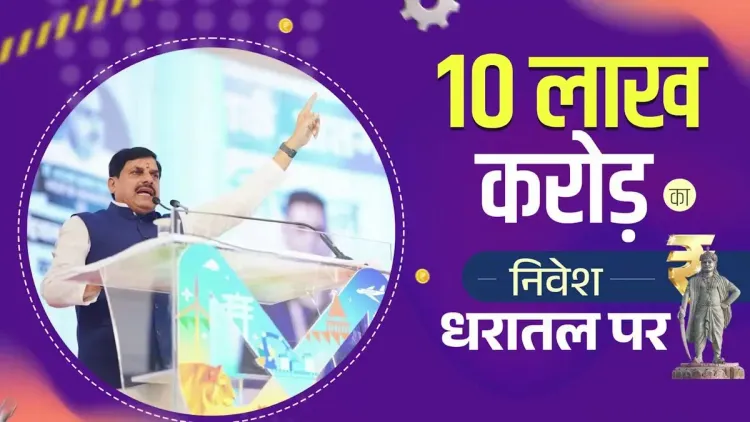
CM Mohan Yadav: ₹10L Cr of GIS Investment Now on Ground
Synopsis
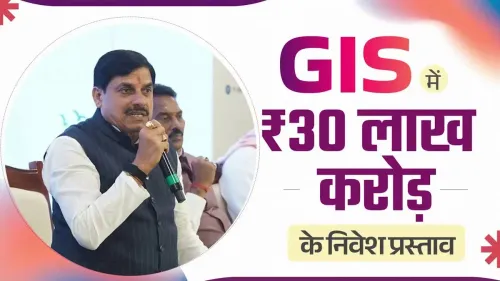
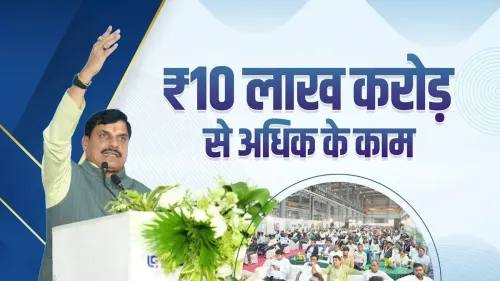
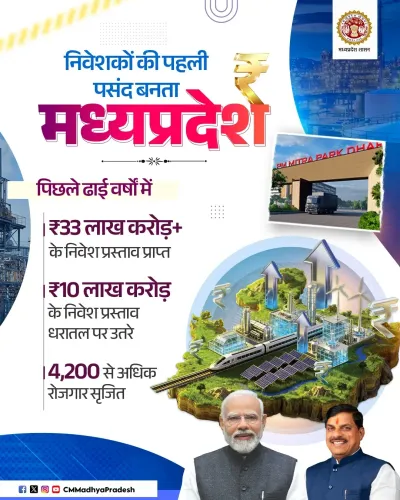
The Chief Minister's Office of Madhya Pradesh says the Global Investors Summit in Bhopal generated over ₹30 lakh crore in investment proposals, with ₹10 lakh crore already on the ground. CM Dr. Mohan Yadav cited the summit as a catalyst for the state's industrial growth.
Key Takeaways
The Global Investors Summit held in Bhopal received investment proposals worth over ₹30 lakh crore . ₹10 lakh crore of those proposals has already been realised as ground-level investment, per the Chief Minister's Office.
Mohan Yadav credited the summit with giving Madhya Pradesh's industrial development a new direction.
The announcement was made jointly with the Madhya Pradesh Industry Ministry handle on 6 July 2026.
The conversion of roughly one-third of proposals into executed projects is the metric the state government is highlighting as a delivery benchmark.
Official project-level disclosures and sector-wise data from the Industry Department are expected as the next verification step.
The Chief Minister's Office of Madhya Pradesh announced on Monday, 6 July 2026, that the Global Investors Summit (GIS) held in Bhopal has yielded over ₹30 lakh crore in investment proposals, of which ₹10 lakh crore has already been realised on the ground, with Chief Minister Dr. Mohan Yadav crediting the summit for giving the state's industrial development a new direction.
Context
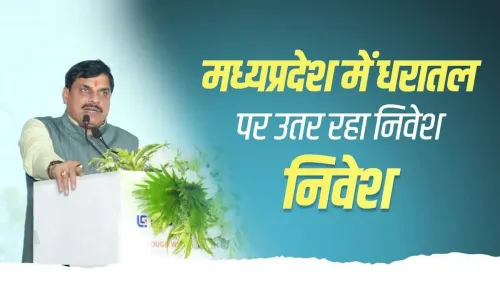
Sharing the update alongside the Industry Ministry handle, CM Dr. Mohan Yadav stated — 'इस समिट के माध्यम से ₹30 लाख करोड़ से अधिक के निवेश प्रस्ताव प्राप्त हुए, जिनमें से ₹10 लाख करोड़ का निवेश अब धरातल पर उतर चुका है' ('Through this summit, investment proposals of more than ₹30 lakh crore were received, of which ₹10 lakh crore in investment has now come down to the ground'). The statement positions the GIS as a turning point for Madhya Pradesh's industrial trajectory under the current administration.
The summit was organised in Bhopal, the state capital, as part of the government's sustained push to attract both domestic and foreign capital. The Chief Minister's Office framed the conversion of proposals into executed projects as a marker of delivery, not just intent.
Policy Backdrop
Madhya Pradesh has been staging investor summits and refreshing its industrial policy periodically since the early 2010s, using such events to improve its ease-of-doing-business standing and signal openness to large-scale manufacturing investment. Dr. Mohan Yadav, who took charge as Chief Minister in December 2023 succeeding Shivraj Singh Chouhan, has continued and expanded this outreach model.
The approach fits squarely within the competitive federalism dynamic visible across Indian states, where governments use high-profile summits to benchmark themselves against peers and attract capital flows aligned with the national Make in India framework. The key performance metric — the share of announced proposals that translate into actual ground-level investment — is precisely what the Chief Minister's Office has now cited publicly.
Stakeholders and Impact
Large domestic conglomerates, multinational manufacturers, and sector-specific investors across industries such as infrastructure, energy, and manufacturing are the primary stakeholders in any realised tranche of this scale. For Madhya Pradesh, a state that has historically lagged behind western and southern peers in industrial output, a claimed realisation of ₹10 lakh crore would represent a significant structural shift in its investment profile.
Local employment, ancillary industry development, and state revenue from industrial activity are downstream benefits that will be tracked by both the government and independent observers. The Industry Ministry's tagging in the post signals that follow-up communication on sector-wise deployment is likely.
What's Next
Attention will now turn to official progress reports, project-level disclosures, and any follow-up policy announcements from the Madhya Pradesh Industry Department that substantiate the ₹10 lakh crore realisation figure with granular data. Sector-wise breakdowns and district-level project maps are standard instruments states use to demonstrate delivery credibility after such announcements.
If verified through independent audit or government white papers, the conversion ratio — roughly one-third of announced proposals reaching the ground — would set a benchmark for other states measuring the effectiveness of their own investor summit pipelines and reinforce Madhya Pradesh's pitch as a credible investment destination in central India.
Point of View
Who inherited the investor-summit playbook from his predecessor, this announcement is an attempt to establish his own delivery credentials ahead of the state's next electoral cycle. The one-third conversion ratio, if independently verified, would be above the national average for such summits and could strengthen Madhya Pradesh's pitch in the competitive federalism race for capital. The tagging of the Industry Ministry signals a coordinated communications strategy, with more granular data releases likely to follow.
NationPress
5 Oct 2026
Frequently Asked Questions
What is the Global Investors Summit in Madhya Pradesh?
The Global Investors Summit is a state-organised investment promotion event held in Bhopal, designed to attract domestic and foreign capital into Madhya Pradesh's industrial sectors.
How much investment did the Madhya Pradesh Global Investors Summit receive?
According to the Chief Minister's Office, the summit received investment proposals worth over ₹30 lakh crore, of which ₹10 lakh crore has been realised on the ground.
Who is CM Mohan Yadav?
Dr. Mohan Yadav is the Chief Minister of Madhya Pradesh, who assumed office in December 2023 succeeding Shivraj Singh Chouhan.
What does 'investment on the ground' mean in the context of investor summits?
'Investment on the ground' refers to capital that has moved beyond signed agreements into actual project execution — meaning factories built, land acquired, or operations commenced — as opposed to letters of intent or MoUs.
What happens after the Global Investors Summit in Madhya Pradesh?
The Industry Department is expected to release sector-wise and district-level project data to substantiate the realisation figures; follow-up policy announcements and progress reports typically follow such high-profile investment summits.