CM Madhya Pradesh Highlights Ladli Bahna Yojana's Role in Women's Self-Reliance
Synopsis
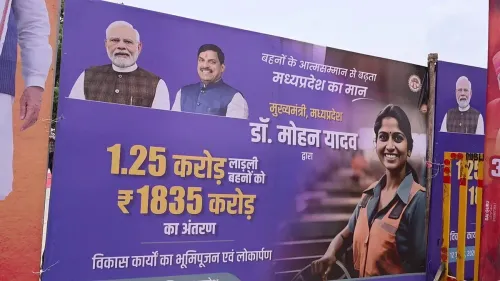
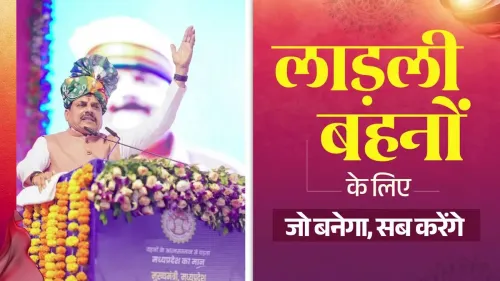
The Chief Minister's Office of Madhya Pradesh reaffirmed Ladli Bahna Yojana as a cornerstone of the state's women's welfare strategy on 12 July 2026, describing the monthly cash-transfer scheme as a reliable support for women in every need and a driver of self-reliance across the state.
Key Takeaways
The Chief Minister's Office of Madhya Pradesh publicly reaffirmed Ladli Bahna Yojana on 12 July 2026 as central to the state's women's empowerment agenda.
Ladli Bahna Yojana was launched in 2023 , providing a monthly cash transfer of Rs 1,000 to women from low-income households via direct benefit transfer.
The scheme was initiated under former Chief Minister Shivraj Singh Chouhan and has continued under Dr.
Mohan Yadav , who took office in December 2023 .
Mohan Yadav was directly tagged in the post, reinforcing his personal association with the scheme's promotion.
Madhya Pradesh has established a pattern of gender-targeted direct cash-transfer schemes, with Ladli Bahna among the most prominent.
Future state budget allocations and independent evaluations will determine the scheme's expansion and long-term impact on women's financial inclusion.
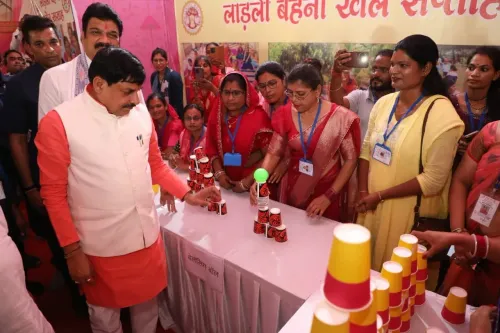
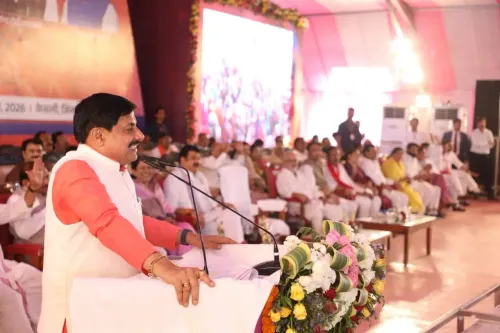
The Chief Minister's Office of Madhya Pradesh on Sunday, 12 July 2026, invoked the state's flagship women's welfare scheme, Ladli Bahna Yojana, describing it as a steadfast support system for women across every need — big and small — and reaffirming the scheme's central role in the state's vision of female empowerment and self-reliance.
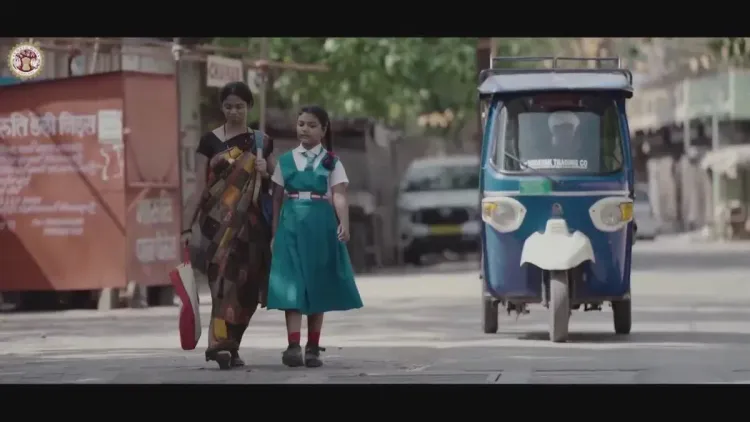
The post, shared by @CMMadhyaPradesh and tagging Chief Minister Dr. Mohan Yadav and the state's Women and Child Development Department (@mp_wcdmp), carried the message: 'Aatmanirbhar banti bahnen, sashakt hota Madhya Pradesh' ('Sisters becoming self-reliant, Madhya Pradesh growing stronger'). It described Ladli Bahna Yojana as a 'strong support for sisters in every small and big need.'
Context
Ladli Bahna Yojana was launched in 2023 by the Madhya Pradesh government to provide a monthly cash transfer of Rs 1,000 to women from low-income households. The scheme was designed as a direct benefit transfer to address economic vulnerability and promote financial inclusion among women across the state. It was introduced under then Chief Minister Shivraj Singh Chouhan and has continued under the current administration led by Dr. Mohan Yadav, who assumed office in December 2023.
The scheme targets women who lack access to formal income sources, positioning monthly transfers as a tool for day-to-day financial security. Madhya Pradesh, a large central Indian state, has consistently pursued gender-targeted direct benefit transfer programmes as a pillar of its social welfare architecture.
Policy Backdrop
Ladli Bahna Yojana sits within a broader national and state-level trend of cash-transfer schemes aimed at women. Comparable programmes have been rolled out in several neighbouring states, reflecting a wider pattern of gender-focused welfare delivery across central India. The political salience of such schemes has grown considerably, with state governments across the country framing direct transfers to women as both an economic and social empowerment measure.
The scheme's continuity across two administrations in Madhya Pradesh signals institutional entrenchment — it has moved from a campaign promise to a standing budgetary commitment. The Women and Child Development Department's involvement in amplifying the message underlines the programme's cross-departmental ownership within the state government.
Stakeholders and Impact
The primary beneficiaries are women from low-income households across Madhya Pradesh, for whom the monthly transfer provides a predictable income floor. For many, particularly in rural areas, the scheme represents one of the few structured sources of direct financial support accessible without intermediaries.
The tagging of Dr. Mohan Yadav in the official post signals the Chief Minister's personal association with the scheme's ongoing promotion, reinforcing its status as a flagship initiative of the current government. Civil society groups and women's organisations tracking welfare delivery in the state have noted the scheme's reach into districts with limited formal employment opportunities for women.
What's Next
Attention will turn to state budget allocations in upcoming fiscal cycles to assess whether the scheme sees expansion in coverage or an upward revision in transfer amounts. Independent evaluations of beneficiary uptake, economic outcomes, and administrative efficiency will be critical to understanding the scheme's longer-term impact on women's financial independence in Madhya Pradesh. The government's continued public communication around Ladli Bahna suggests it intends to keep the scheme at the centre of its welfare narrative ahead of future electoral cycles.
Point of View
' the messaging subtly shifts the narrative from charity to empowerment, a distinction that carries political weight. The scheme's continuity across two chief ministers signals that direct cash transfers to women have become structurally embedded in Madhya Pradesh's welfare model, not just an electoral instrument. This pattern mirrors a broader competition among state governments to own the 'women's welfare' space as a durable political asset.
NationPress
11 Oct 2026
Frequently Asked Questions
What is Ladli Bahna Yojana in Madhya Pradesh?
Ladli Bahna Yojana is a state welfare scheme in Madhya Pradesh that provides a monthly cash transfer of Rs 1,000 to women from low-income households, aimed at promoting financial independence and self-reliance.
Who launched Ladli Bahna Yojana?
The scheme was launched in 2023 by then Chief Minister Shivraj Singh Chouhan and has continued under the current Chief Minister Dr. Mohan Yadav , who took office in December 2023 .
Who is eligible for Ladli Bahna Yojana?
The scheme targets women from low-income households in Madhya Pradesh . Detailed eligibility criteria are set by the state's Women and Child Development Department.
How much money do women get under Ladli Bahna Yojana?
Eligible women receive a monthly direct benefit transfer of Rs 1,000 under the scheme, as established at its launch in 2023 .
Is Ladli Bahna Yojana still active in 2026?
Yes. The Chief Minister's Office of Madhya Pradesh reaffirmed the scheme's active status on 12 July 2026 , describing it as a continuing support system for women across the state.