MP trains 12,000 volunteers, clears de-addiction centres in 11 districts
Synopsis
Madhya Pradesh is scaling its anti-drug push beyond policing — 12,000 trained volunteers are now working at the community level, and financial approvals are in place for new de-addiction centres across 11 districts. The state's pivot to social mobilisation under Nasha Mukt Bharat Abhiyan could set a replicable model if implementation holds.
Key Takeaways
Madhya Pradesh has trained 12,000 master volunteers to spread anti-drug awareness at the community level.
Financial approvals have been granted for de-addiction centres in 11 districts , including Bhopal , Indore , Jabalpur , and Gwalior .
The state already runs 13 IRCAs , 7 ODICs , and 3 CPLI centres for treatment and rehabilitation.
The campaign is part of the national Nasha Mukt Bharat Abhiyan , expanded to include schools, religious bodies, and youth groups.
State police are running parallel awareness drives under the slogan 'Nashe se Doori hai Bahut Zaroori' .
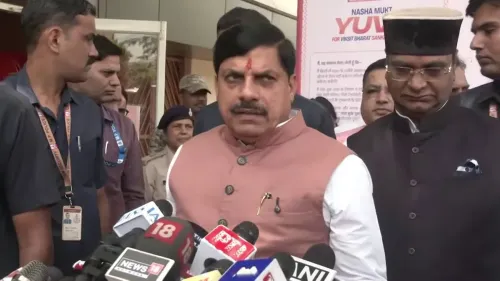
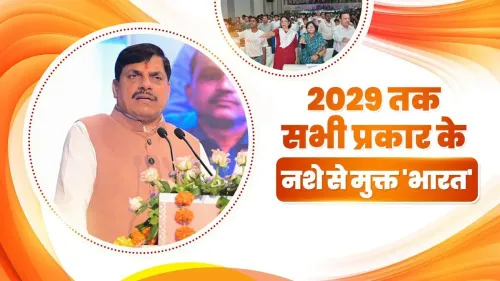
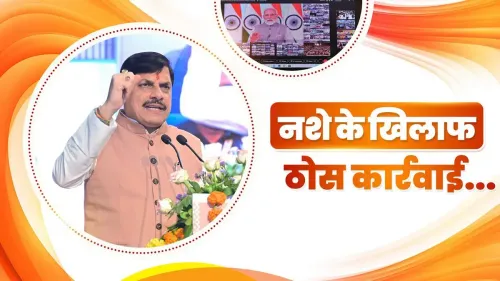
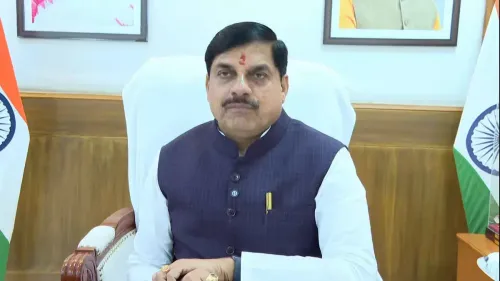
The Madhya Pradesh government has trained 12,000 master volunteers to carry its anti-drug campaign into communities across the state, and has granted financial approvals to establish de-addiction centres in 11 districts. The measures, announced on 31 August, form part of the Centre's Nasha Mukt Bharat Abhiyan, which the state is working to transform into a broad-based social movement.
The Volunteer Network
The 12,000 master volunteers are deployed to raise awareness about the dangers of substance abuse, encourage those struggling with addiction to seek treatment and counselling, and link young people and families to de-addiction activities at the local level. The state government framed their role as essential, noting that administrative action alone cannot resolve the addiction crisis.
'The problem of drug addiction cannot be solved only through law and administration. Active participation of families, society and communities is necessary,' the government said in an official statement.
New De-Addiction Centres Approved
Financial approvals have been cleared for new de-addiction centres in Bhopal, Sagar, Indore, Jabalpur, Rewa, Gwalior, Narsinghpur, Satna, Barwani, and Ujjain — covering 10 named districts under the approved list. The state already operates 13 Integrated Rehabilitation Centres for Addicts (IRCA), 7 Outreach and Drop-In Centres (ODIC), and 3 Community-Based Peer-Led Intervention (CPLI) centres.
Treatment and Rehabilitation Focus
State officials emphasised that rehabilitation is central to the campaign's design, not an afterthought. 'The objective is not only to help people come out of addiction but also to reintegrate them into the mainstream through treatment, counselling and rehabilitation,' the government said. The existing facilities are aimed at providing end-to-end support — from treatment to social reintegration — for those affected by substance abuse.
Broader Social Mobilisation
The campaign has drawn in educational institutions, religious and social organisations, voluntary groups, and student bodies. State police have reinforced the effort through public awareness drives built around the message 'Nashe se Doori hai Bahut Zaroori' — 'Staying away from drugs is very important.' This multi-stakeholder approach signals a shift from enforcement-led to community-led intervention, a model increasingly endorsed by public health practitioners. With new centres funded and a volunteer corps already active, the next phase will test whether ground-level implementation matches the scale of the stated ambition.
Point of View
000 volunteers is a meaningful operational step, but the real measure will be retention and reach — volunteer-led campaigns in India have historically suffered from attrition once initial momentum fades. The approval of de-addiction centres in 11 districts addresses supply, yet the demand side — stigma around seeking treatment — remains largely unaddressed in the government's framing. Notably, the state's existing 13 IRCAs and 10 other centres have been operational without a clear public accounting of their outcomes. Without published data on treatment completion rates and relapse figures, it is difficult to assess whether the infrastructure expansion is calibrated to actual need or driven by optics.
NationPress
31 Aug 2026
Frequently Asked Questions
What is the Nasha Mukt Bharat Abhiyan in Madhya Pradesh?
Nasha Mukt Bharat Abhiyan is a national anti-drug campaign that Madhya Pradesh is implementing through community volunteers, de-addiction centres, and public awareness drives. The state is working to turn it into a mass movement involving families, educational institutions, and social organisations.
How many volunteers has Madhya Pradesh trained for its anti-drug campaign?
The Madhya Pradesh government has trained 12,000 master volunteers to spread awareness about drug abuse, encourage affected individuals to seek treatment, and connect communities with local de-addiction activities.
Which districts will get new de-addiction centres in Madhya Pradesh?
Financial approvals have been granted for de-addiction centres in Bhopal, Sagar, Indore, Jabalpur, Rewa, Gwalior, Narsinghpur, Satna, Barwani, and Ujjain — covering 11 districts in total.
What rehabilitation facilities does Madhya Pradesh currently have?
The state currently operates 13 Integrated Rehabilitation Centres for Addicts (IRCA), 7 Outreach and Drop-In Centres (ODIC), and 3 Community-Based Peer-Led Intervention (CPLI) centres focused on treatment, counselling, and social reintegration.
How is the Madhya Pradesh police involved in the anti-drug campaign?
State police are supporting the campaign through public awareness drives carrying the message 'Nashe se Doori hai Bahut Zaroori' — staying away from drugs is very important — complementing the community-level volunteer effort.