MP CM Office: Industries Reaching Every District
Synopsis
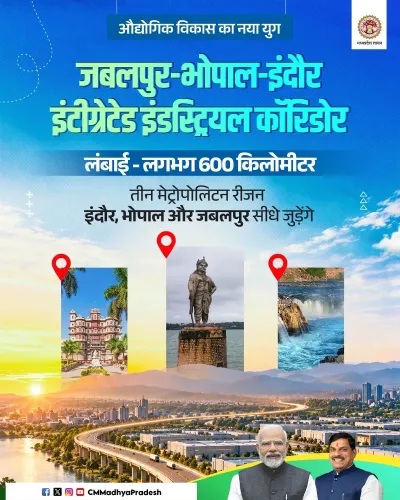
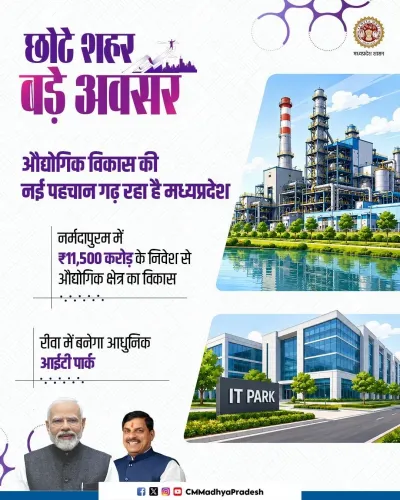
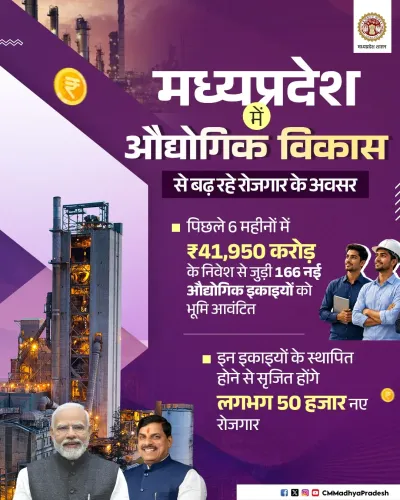
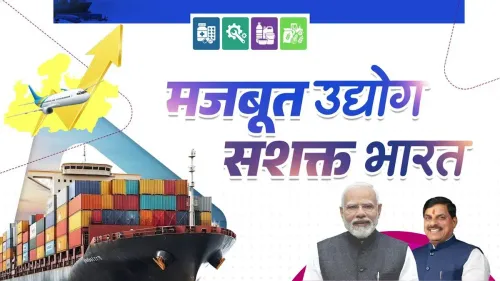
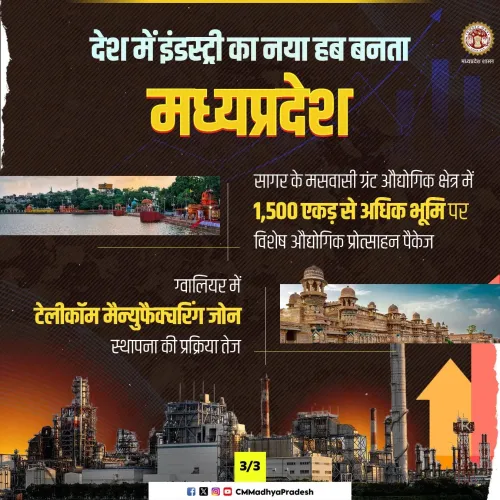
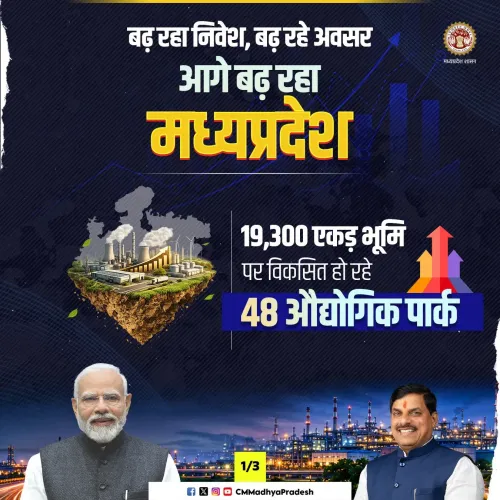
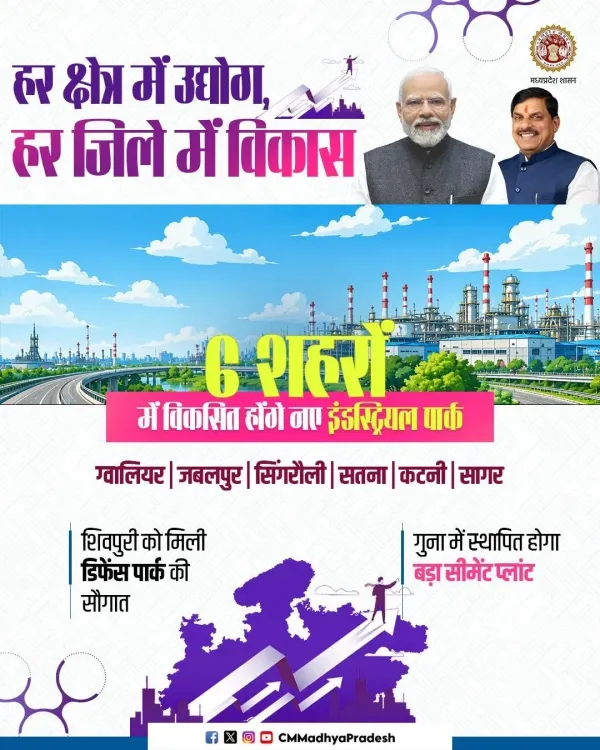
The Chief Minister's Office of Madhya Pradesh on 23 July 2026 declared that industries are reaching every district of the state, positioning decentralised manufacturing growth as the defining identity of each region and reinforcing the state's alignment with India's ODOP framework.
Key Takeaways
The Chief Minister's Office of Madhya Pradesh posted on 23 July 2026 that industries are now reaching every district of the state.
The message frames district-level development as the 'identity' of each region, signalling a deliberate policy narrative around decentralised growth.
The push aligns with India's national One District One Product (ODOP) scheme, launched in 2018 to anchor manufacturing in each district.
Primary beneficiaries include local MSMEs , district-level manufacturers, and workers who gain formal employment closer to home.
Madhya Pradesh has 55 districts , making the scale of this decentralisation effort significant for the state's economic geography.
Future indicators to watch include state budget allocations, new investment announcements, and employment figures at the district level.
The Chief Minister's Office of Madhya Pradesh on Thursday, 23 July 2026, shared a message underscoring the state government's push to spread industrial activity to every district, framing decentralised growth as the defining identity of each region.
Context
The post, in Hindi, declared: 'Udyog pahunch rahe hain har jile tak, vikas ban raha hai har kshetra ki pahchaan' — ('Industries are reaching every district, development is becoming the identity of every region'). The statement positions district-level industrialisation as a deliberate policy outcome rather than an incidental trend. It signals the state government's intent to make manufacturing and economic activity a hallmark of regions beyond Bhopal, Indore, and other established urban centres.Policy Backdrop
The message aligns with India's broader One District One Product (ODOP) framework, launched nationally in 2018, which seeks to identify and promote a distinctive local product from each district to anchor manufacturing and employment. Madhya Pradesh, a large central Indian state with significant rural and semi-urban geography, has been among the states working to leverage such schemes to attract investment beyond metros. State governments across India have since the mid-2010s used targeted incentives and single-window clearance mechanisms to draw industry into smaller districts, aiming to reduce regional economic imbalances and generate local employment.Stakeholders and Impact
The primary beneficiaries of this push are local manufacturers, district-level MSMEs (micro, small, and medium enterprises), and workers in smaller towns and rural areas who gain proximity to formal employment. When industries establish units in smaller districts, they reduce the pressure on workers to migrate to large cities for livelihoods. For district administrations, the arrival of industry also broadens the local tax base and supports ancillary services. The framing of 'development as identity' suggests the government is also seeking to build civic and electoral resonance around this economic narrative.What's Next
Attention will now turn to state budget allocations and specific rollout updates for district-level industrial units in the coming fiscal cycles. Analysts and local stakeholders will watch for concrete investment announcements, employment figures, and the pace at which manufacturing units are commissioned across Madhya Pradesh's 55 districts. The sustainability of this decentralisation drive will ultimately depend on infrastructure upgrades — roads, power, and logistics — that make smaller districts viable for industry over the long term.Point of View
The government is simultaneously making an economic claim and a political one, tying local pride to industrial presence. This aligns with the national ODOP framework but also reflects a competitive dynamic among states to attract investment into their hinterlands. The real test will be whether infrastructure and governance capacity in smaller districts can match the ambition of the messaging.
NationPress
21 Oct 2026
Frequently Asked Questions
What did the Madhya Pradesh CM Office say about industries in districts?
The Chief Minister's Office of Madhya Pradesh stated on 23 July 2026 that industries are reaching every district of the state and that development is becoming the defining identity of each region.
What is the One District One Product scheme in Madhya Pradesh?
The One District One Product (ODOP) scheme, launched nationally in 2018, identifies and promotes a distinctive local product from each district to support manufacturing and employment. Madhya Pradesh has been working to leverage this framework to attract investment beyond its major cities.
How many districts does Madhya Pradesh have?
Madhya Pradesh has 55 districts , making its decentralised industrialisation drive one of the larger such efforts among Indian states.
Who benefits from industries reaching smaller districts in MP?
The primary beneficiaries are local MSMEs, district-level manufacturers, and workers in smaller towns and rural areas who gain access to formal employment without migrating to large cities.
What should we watch for next in Madhya Pradesh's industrial push?
Key indicators to monitor include state budget allocations for district-level industrial units, new investment announcements, employment figures, and infrastructure upgrades in roads, power, and logistics across smaller districts.