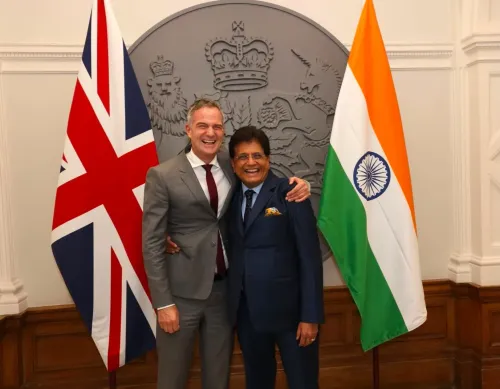
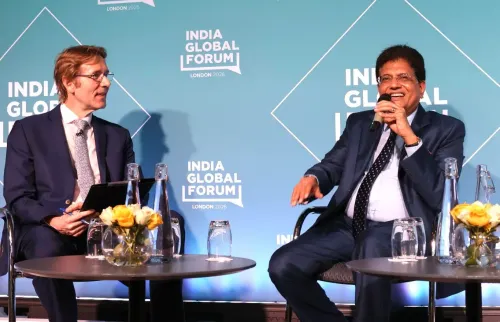
Goyal meets Scotland's First Minister, eyes CETA gains
Synopsis
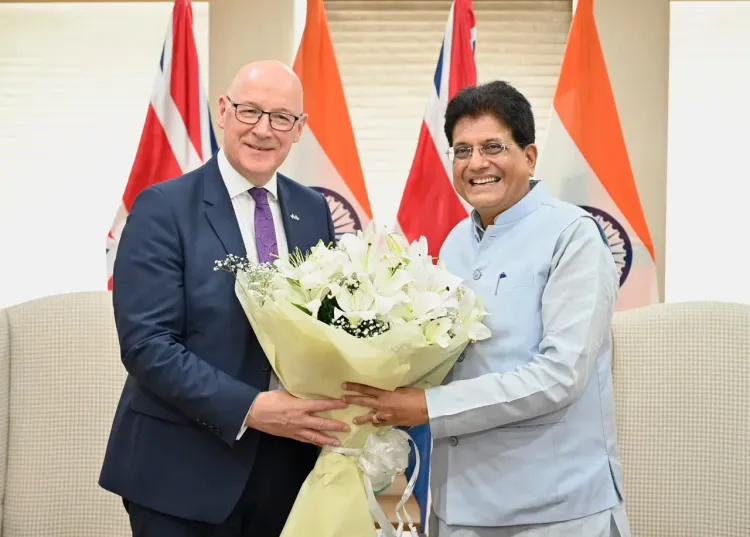
Commerce Minister Piyush Goyal met Scottish First Minister John Swinney on October 21, 2026, holding talks on trade, investment and innovation under the India-UK CETA framework, with focus on semiconductors, data centres, renewable energy and higher education.
Key Takeaways
Piyush Goyal met First Minister of Scotland John Swinney on October 21, 2026 for bilateral trade discussions.
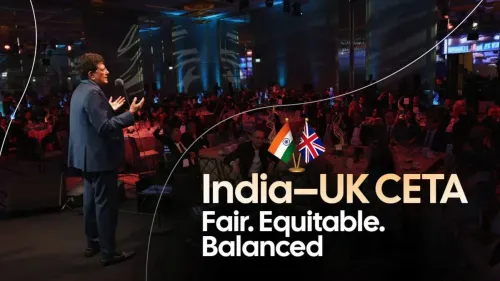
Both sides agreed to anchor India-Scotland ties within the India-UK Comprehensive Economic and Trade Agreement (CETA) framework.
Key sectors on the agenda: higher education, renewable energy, semiconductors, data centres, science, space and tourism .
India and the UK formally launched FTA negotiations in January 2022 ; Scotland is now being positioned as a sector-specific delivery channel.
Goyal emphasised building industry-to-industry partnerships , not just government-level agreements.
Next milestones to watch: follow-up MoUs on semiconductors or data centres and the next formal round of India-UK CETA talks.
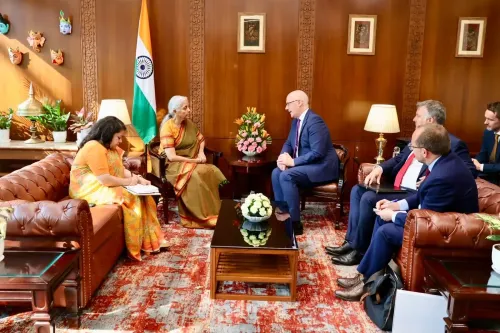
Scotland just entered India's trade map in a meaningful way. Union Commerce and Industry Minister Piyush Goyal met First Minister of Scotland John Swinney on Wednesday, October 21, 2026, holding what both sides described as productive talks aimed at embedding India-Scotland economic ties within the larger architecture of the proposed India–UK Comprehensive Economic and Trade Agreement (CETA).
Scotland's seat at the India-UK trade table
Goyal's post framed the conversation explicitly around the CETA framework — a signal that New Delhi views the devolved Scottish administration not merely as a goodwill stop but as a delivery mechanism for specific sectoral wins. India and the United Kingdom formally launched negotiations for a bilateral free trade agreement in January 2022, and the talks have since encompassed goods, services and investment across the two economies.
Scotland brings tangible assets to that table. The Scottish Government maintains independent trade and investment promotion offices targeting emerging markets, including India, and has a credible presence in several of the sectors Goyal named — higher education, renewable energy, and life sciences among them. Plugging Scotland into the CETA conversation means sectoral gains could be banked even as the central FTA negotiation grinds through its rounds.
Semiconductors, data centres and the innovation agenda
The range of topics on the agenda was striking. According to Goyal's post, discussions spanned higher education, renewable energy, semiconductors, data centres, science, space and tourism — a list that reads less like a courtesy call and more like a structured scoping exercise for future MoUs.
The semiconductor and data-centre entries are the most forward-leaning. Scotland has invested in positioning itself as a destination for advanced manufacturing and digital infrastructure, and India's appetite for semiconductor supply-chain diversification — sharpened by its own domestic chip-push — makes that overlap commercially interesting. Renewable energy ties are equally natural: Scotland's offshore wind capacity and India's aggressive green-transition targets share an obvious logic.
Industry-to-industry links, not just government handshakes
Goyal specifically flagged 'stronger industry-to-industry partnerships' as a goal — a phrase that signals intent to move beyond government-level memoranda toward commercial relationships between firms. Scottish universities, which carry global rankings and a long history of Indian student enrolment, are another constituency watching this track closely: any higher-education chapter in the CETA could reshape mobility, research collaboration and qualification recognition.
The next concrete test will be whether follow-up MoUs or joint working groups materialise on semiconductors, data centres or education before the next formal round of India-UK CETA negotiations. If they do, the Goyal-Swinney meeting will be remembered as the moment Scotland stopped being a footnote in India's UK strategy and became a chapter of its own.
Point of View
Not a diplomatic courtesy. If MoUs follow, the meeting could mark the moment India formally disaggregated its UK trade strategy by region.
NationPress
21 Oct 2026
Frequently Asked Questions
What did Piyush Goyal and John Swinney discuss?
They discussed advancing the India-Scotland economic and trade partnership under the India-UK CETA framework, covering higher education, renewable energy, semiconductors, data centres, science, space and tourism.
What is the India-UK CETA?
The India-UK Comprehensive Economic and Trade Agreement (CETA) is a proposed bilateral free trade agreement aimed at reducing tariffs and expanding market access in goods, services and investment; negotiations were formally launched in January 2022.
Why is Scotland involved in India's UK trade talks?
Scotland's devolved government runs its own trade and investment promotion offices targeting markets like India, and has sectoral strengths in renewable energy, higher education and advanced manufacturing that align with Indian priorities.
What sectors did India and Scotland focus on in the 2026 talks?
The discussions focused on higher education, renewable energy, semiconductors, data centres, science, space and tourism, along with broader trade and investment opportunities.
What comes next after the Goyal-Swinney meeting?
The key markers to watch are follow-up MoUs on sectors like semiconductors or data centres and the next formal round of India-UK CETA negotiations.