Goyal meets HSBC on India-UK trade deal finance role
Synopsis
Commerce Minister Piyush Goyal met HSBC's Head of Global Trade Solutions on 26 June 2026 to explore how the proposed India-UK CETA can be backed by robust trade finance and cross-border banking infrastructure, signalling active private-sector engagement ahead of the deal's conclusion.
Key Takeaways
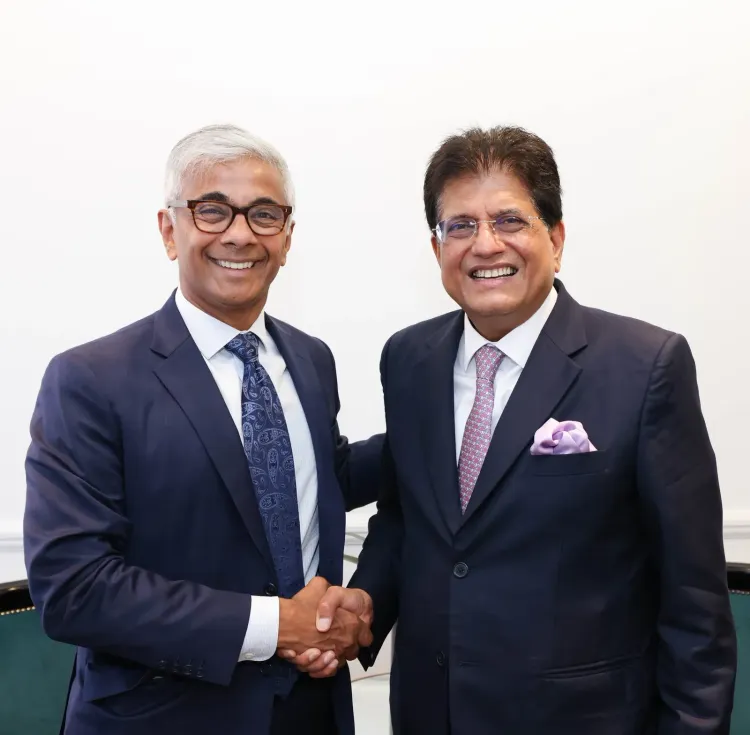
Piyush Goyal held a meeting with Vivek Ramachandran , Head of Global Trade Solutions at HSBC , on 26 June 2026 .
Discussions centred on the India-UK Comprehensive Economic and Trade Agreement (CETA) and its potential to create an enabling environment for business expansion.
The minister stressed the role of financial institutions in providing trade finance and cross-border banking solutions to help businesses access new markets.
India-UK CETA negotiations were formally launched in January 2022 following a bilateral summit between the two prime ministers.
India has concluded similar deals — the India-UAE CEPA and India-Australia ECTA — both in 2022 , as part of an accelerated bilateral trade agenda.
HSBC has significant operational presence in both India and the UK, making it a key potential facilitator of post-CETA trade financing.
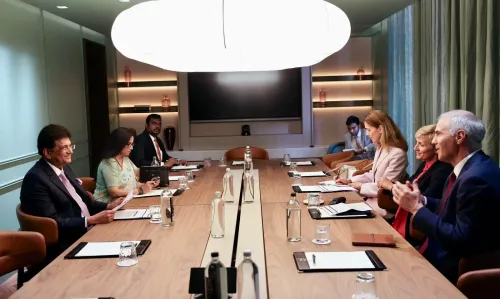
Union Commerce and Industry Minister Piyush Goyal met Vivek Ramachandran, Head of Global Trade Solutions at HSBC, on Friday, 26 June 2026, to discuss how the proposed India-UK Comprehensive Economic and Trade Agreement (CETA) can open new avenues for business expansion and the critical financing infrastructure needed to support it.
Context
In his post, Minister Goyal described the meeting as productive, noting that the two sides 'discussed how the India-UK CETA will create an enabling environment for businesses to expand.' He also 'highlighted the vital role financial institutions will play in helping businesses navigate new markets through stronger trade finance and cross-border banking solutions.'
HSBC is one of the world's largest banking groups, with deep operational footprints in both India and the United Kingdom, and established trade finance capabilities that serve exporters and importers across both economies.
Policy Backdrop
Formal negotiations for the India-UK CETA were launched in January 2022 following a virtual summit between the two prime ministers, with the agreement envisaged to reduce tariffs and expand bilateral flows of goods, services, and investment. The talks form part of a broader acceleration of India's bilateral free trade agenda since 2020, which has already yielded concluded deals — the India-UAE Comprehensive Economic Partnership Agreement (CEPA) and the India-Australia Economic Cooperation and Trade Agreement (ECTA), both signed in 2022.
The engagement with international banks such as HSBC reflects a deliberate effort by the government to build the financing ecosystem that will allow Indian exporters and businesses to fully utilise the market access created by new trade agreements. Trade finance and cross-border banking solutions are often cited as practical bottlenecks that prevent smaller firms from capitalising on preferential tariff arrangements.
Stakeholders and Impact
Indian exporters — particularly in sectors such as textiles, pharmaceuticals, engineering goods, and IT services — stand to benefit most directly from a concluded India-UK CETA, which would lower barriers to one of India's most significant trading partners. Financial institutions with India-UK exposure, including both global banks and domestic lenders, are being positioned as enablers rather than mere intermediaries in this process.
For HSBC specifically, deeper India-UK trade ties represent a commercial opportunity in trade finance, letters of credit, and cross-border treasury solutions. The minister's direct engagement with the bank's global trade solutions head signals that the government is actively working to align private financial infrastructure with its trade policy objectives ahead of any final agreement.
What's Next
Attention will now turn to the next formal round of India-UK CETA negotiations and whether the government announces any specific trade-finance facilitation mechanisms or frameworks in conjunction with the deal's conclusion. The involvement of major global banks in pre-agreement consultations suggests the government is laying the groundwork for rapid operationalisation once a deal is signed. Any progress on the agreement's timeline or on dedicated financing corridors will be closely watched by Indian exporters and the broader financial sector.
Point of View
Avoiding the utilisation gaps that have sometimes blunted the impact of earlier agreements. By engaging a global bank with deep India-UK exposure, the government signals to the business community that market access on paper will be matched by accessible financing on the ground. This fits a broader pattern in which New Delhi has moved from simply negotiating tariff schedules to actively cultivating the services and financial ecosystems that make trade deals commercially meaningful. The outreach also keeps institutional momentum alive around the CETA at a time when its final timeline remains subject to negotiation.
NationPress
25 Sept 2026
Frequently Asked Questions
What is the India-UK CETA?
The India-UK Comprehensive Economic and Trade Agreement (CETA) is a proposed bilateral free trade deal aimed at reducing tariffs and expanding flows of goods, services, and investment between India and the United Kingdom. Formal negotiations were launched in January 2022.
Why did Piyush Goyal meet HSBC?
Commerce Minister Piyush Goyal met Vivek Ramachandran, Head of Global Trade Solutions at HSBC, on 26 June 2026 to discuss how financial institutions can support Indian businesses in accessing new markets through trade finance and cross-border banking solutions once the India-UK CETA is in place.
What is the current status of India-UK free trade agreement talks?
Negotiations for the India-UK CETA were launched in January 2022. The precise status of talks beyond early 2023 has not been officially confirmed, but the government continues to engage stakeholders including financial institutions in preparation for a concluded deal.
How does trade finance help Indian exporters benefit from free trade agreements?
Trade finance instruments such as letters of credit and working-capital facilities help businesses — especially smaller exporters — manage the cash-flow and risk challenges of entering new markets. Without adequate financing, firms may be unable to fully utilise the preferential tariff access created by agreements like the India-UK CETA.
What other trade deals has India concluded recently?
India has concluded the India-UAE Comprehensive Economic Partnership Agreement (CEPA) and the India-Australia Economic Cooperation and Trade Agreement (ECTA), both signed in 2022, as part of an accelerated push to diversify and deepen bilateral trade relationships.