India-UK CETA: Piyush Goyal meets Rolls-Royce, HSBC on trade and investment
Synopsis
Commerce Minister Piyush Goyal's London visit signals a shift from negotiating the India-UK CETA to activating it — with Rolls-Royce and HSBC among the first global majors being pulled into the conversation on manufacturing, technology, and trade finance. The private sector is being engaged before the ink is dry.
Key Takeaways
Commerce Minister Piyush Goyal held business meetings in London on 26 June to discuss the India-UK CETA .
He met Nicola Grady-Smith , Chief Transformation Officer at Rolls-Royce , on India's role as an advanced manufacturing hub.
A separate meeting with Vivek Ramachandran , Head of Global Trade Solutions at HSBC , focused on trade finance and cross-border banking under the CETA.
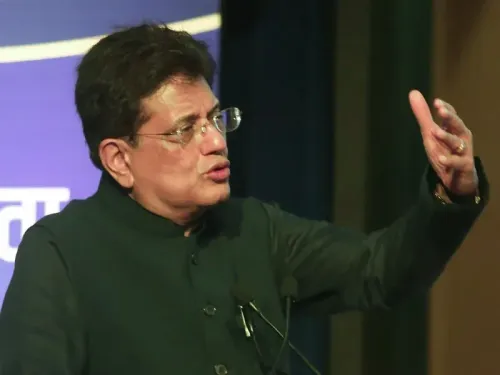
Goyal said the agreement would deepen investments, accelerate technology partnerships, and build resilient supply chains.
Financial institutions are expected to play a central role in helping businesses navigate new markets under the trade pact.
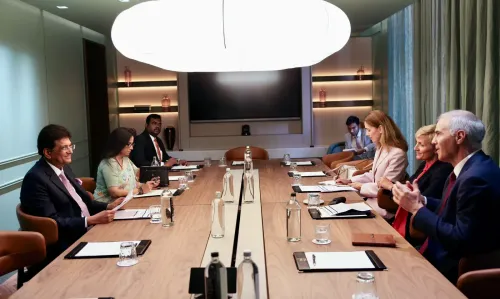
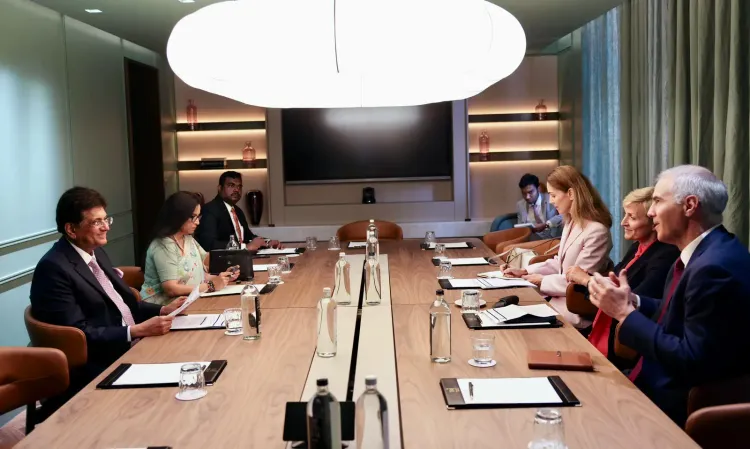
Commerce and Industry Minister Piyush Goyal on Friday, 26 June held a series of high-level meetings in London with global business leaders to explore investment and trade opportunities under the India-UK Comprehensive Economic and Trade Agreement (CETA). The minister said the agreement would deepen investments, accelerate technology partnerships, and build resilient supply chains that benefit businesses in both countries.
Meeting with Rolls-Royce Leadership
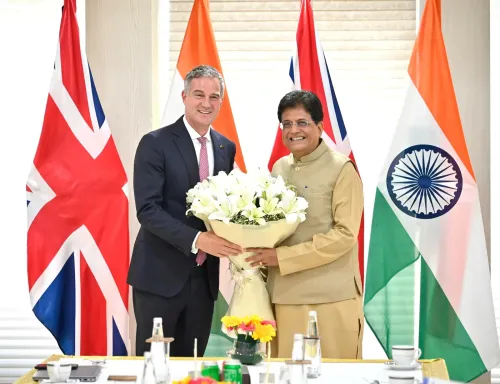
Goyal met a delegation led by Nicola Grady-Smith, Chief Transformation Officer at Rolls-Royce, to discuss India's expanding role as a global hub for advanced manufacturing and engineering. The discussions centred on how the India-UK trade pact could unlock new avenues for collaboration in high-technology sectors.
'Held a productive meeting with a delegation led by Nicola Grady-Smith, Chief Transformation Officer at Rolls Royce. Exchanged views on how India is rapidly emerging as a global hub for advanced manufacturing and engineering,' Goyal stated in a post on social media platform X.
HSBC Talks on Trade Finance and Cross-Border Banking
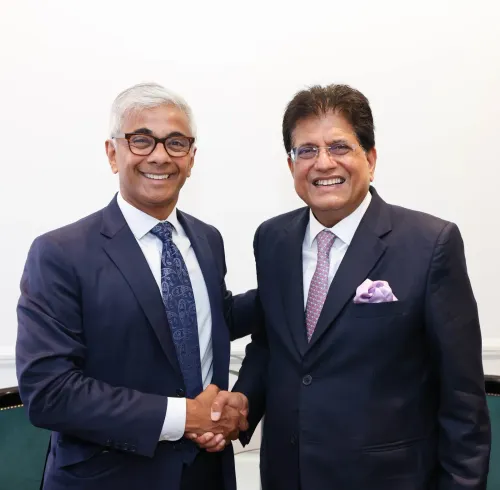
The minister also met Vivek Ramachandran, Head of Global Trade Solutions at HSBC, to assess the potential impact of the CETA on trade flows and business expansion. Goyal underscored that financial institutions would be central to helping companies navigate new markets through stronger trade finance mechanisms and enhanced cross-border banking solutions.
'Good meeting with Vivek Ramachandran, Head of Global Trade Solutions at HSBC. Discussed how the India-UK Comprehensive Economic and Trade Agreement (CETA) will create an enabling environment for businesses to expand,' he said.
What the India-UK CETA Promises
According to Goyal, the agreement is designed to create an enabling environment for companies in both nations to access new markets and scale operations. He highlighted the agreement's potential to accelerate technology collaborations and build supply chains that are more resilient to global disruptions.
This comes amid growing momentum around the India-UK trade deal, which has been in negotiation for several years and is widely seen as one of the most significant bilateral trade agreements India has pursued with a major Western economy. Notably, the London meetings signal a shift from negotiation to implementation-readiness, with the private sector being brought into the conversation early.
Broader Significance for India-UK Trade
The CETA is expected to cover a wide range of sectors, with advanced manufacturing, financial services, and technology among the primary beneficiaries. Industry observers note that engagement with firms like Rolls-Royce and HSBC reflects the agreement's ambition to go beyond tariff reduction and embed deeper structural economic ties between India and the United Kingdom.
As the agreement moves closer to finalisation, further sectoral consultations and stakeholder engagements are expected to follow in the weeks ahead.
Point of View
Not just assembly; HSBC signals that trade finance infrastructure, not just tariff schedules, will determine whether the CETA delivers on paper or in practice. What is missing from these meetings is any public detail on timelines, sector-specific commitments, or enforcement mechanisms. Bilateral trade agreements have a long history of generating headline meetings without binding outcomes. The real test of the India-UK CETA will be whether it produces verifiable investment flows and technology transfers — not just productive conversations.
NationPress
25 Sept 2026
Frequently Asked Questions
What is the India-UK CETA?
The India-UK Comprehensive Economic and Trade Agreement (CETA) is a bilateral trade pact being negotiated between India and the United Kingdom, aimed at deepening investments, expanding market access, and building resilient supply chains across key sectors including manufacturing, financial services, and technology.
Who did Piyush Goyal meet in London on 26 June?
Commerce and Industry Minister Piyush Goyal met Nicola Grady-Smith, Chief Transformation Officer at Rolls-Royce, and Vivek Ramachandran, Head of Global Trade Solutions at HSBC, during his visit to London on 26 June to discuss trade and investment opportunities under the India-UK CETA.
What role will financial institutions play under the India-UK CETA?
According to Goyal, banks and financial institutions will play a crucial role in helping businesses navigate new markets through stronger trade finance mechanisms and enhanced cross-border banking solutions, facilitating the expansion of companies from both countries.
Why is India's manufacturing sector relevant to the India-UK trade talks?
India is increasingly being positioned as a global hub for advanced manufacturing and engineering. Discussions with Rolls-Royce highlighted this potential, with the India-UK CETA seen as a vehicle to accelerate technology collaborations and attract investment into high-value manufacturing sectors.
What happens next after Goyal's London meetings?
The London meetings are part of broader stakeholder consultations as the India-UK CETA moves toward finalisation. Further sectoral engagements with industry and financial bodies are expected in the weeks ahead, as both sides work to translate the agreement's framework into actionable business opportunities.