Goyal, UK's Peter Kyle chart next phase of India-UK trade ties post-CETA
Synopsis
Piyush Goyal's sit-down with UK's Peter Kyle signals that India-UK CETA is moving from signature to execution. With FTA-partner trade up 92% over four years versus 41.5% for the rest, New Delhi is betting its growth engine on deeper bilateral pacts — and London is now its biggest test case in the developed world.
Key Takeaways
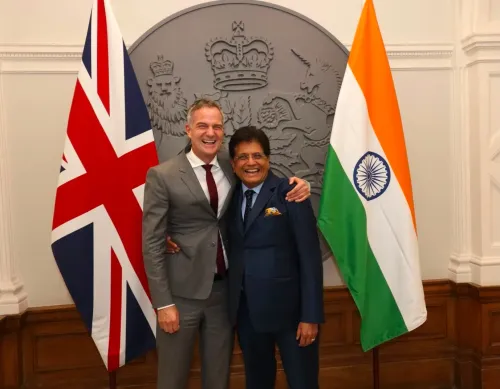
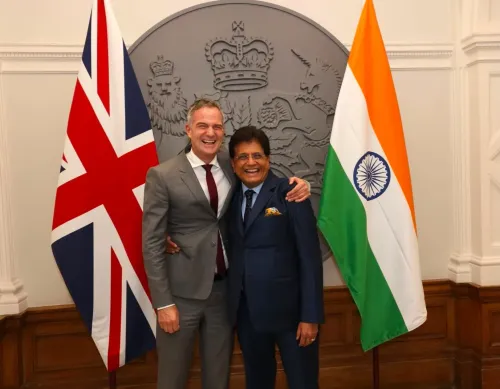
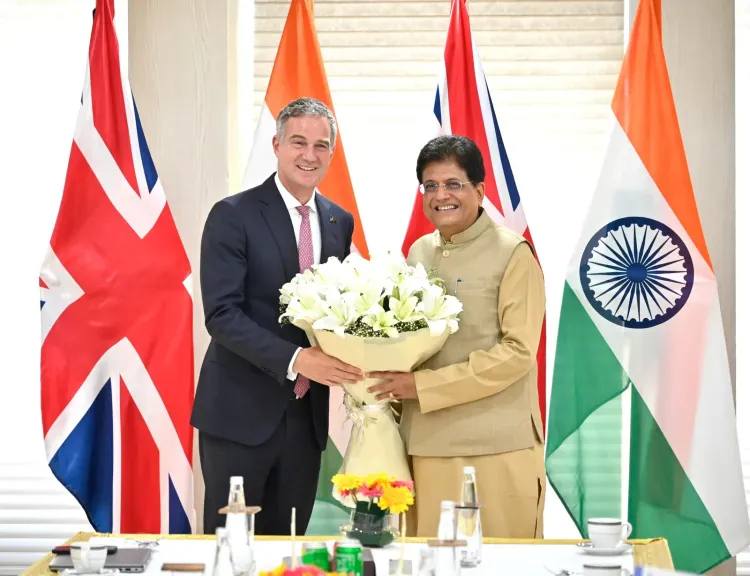
Piyush Goyal met UK Secretary of State for Business and Trade Peter Kyle in New Delhi on 2 June .
Talks focused on the next phase of India-UK economic engagement post the India-UK CETA signed in July 2025 .
India's trade with strategic FTA partners grew 92% between FY21 and FY25 , versus a 41.5% rise in overall merchandise trade.
India has nine FTAs covering 38 countries , including the UAE, Australia, EFTA, UK, Oman, New Zealand and EU.
Goyal also recently pushed for a WTO that better reflects developing-country and LDC concerns.
Union Commerce and Industry Minister Piyush Goyal on Tuesday, 2 June, said he held “great conversations” with UK Secretary of State for Business and Trade Peter Kyle in New Delhi on charting the next phase of India-UK economic engagement, advancing shared business priorities and strengthening what he described as a “robust and forward-looking partnership” between the two nations.
What the minister said
In a post on social media platform X, Goyal welcomed Kyle and his delegation to India. ‘Delighted to welcome my friend, UK Secretary of State for Business and Trade, Peter Kyle, and his delegation to India,' he wrote. ‘Had great conversations on charting the next phase of India-UK economic engagement, advancing shared business priorities, and further strengthening our robust and forward-looking partnership,' the minister added.
Context: the CETA momentum
The meeting comes amid deepening economic and trade cooperation between India and the United Kingdom following the signing of the India-UK Comprehensive Economic and Trade Agreement (CETA) in July 2025. Earlier last month, Goyal had held a virtual interaction with the UK trade minister to explore ways to deepen bilateral trade and investment ties while fully leveraging opportunities under the CETA framework.
India's expanding FTA footprint
India has been actively widening its network of free trade agreements (FTAs) as part of a broader strategy to embed itself more deeply in global supply chains. According to a recent report, India's trade with strategic FTA partners grew 92 per cent between FY21 and FY25, significantly outpacing the 41.5 per cent rise in India's overall merchandise trade with the rest of the world.
India currently has nine FTAs covering 38 countries, including agreements with the UAE, Australia, EFTA nations, the UK, Oman, New Zealand and the European Union.
WTO and the developing-country agenda
Last month, Goyal also underlined the importance of a balanced and responsive World Trade Organization (WTO) that effectively addresses the concerns and aspirations of developing countries and Least Developed Countries (LDCs) — a position India has consistently pushed in multilateral forums.
What's next
With CETA implementation entering an operational phase, both sides are expected to focus on sectoral rollouts, services market access, and investment facilitation in the coming quarters.
Point of View
But the UK deal — covering services, mobility and investment — is a harder negotiation than goods-heavy pacts with the UAE or EFTA. The real test is whether British firms get tangible market access in Indian financial and legal services, and whether Indian professionals see promised mobility windows actually open. Until those operational details land, ‘robust and forward-looking' remains diplomatic shorthand, not measurable outcome.
NationPress
22 Oct 2026
Frequently Asked Questions
What did Piyush Goyal and Peter Kyle discuss?
Union Commerce Minister Piyush Goyal and UK Secretary of State for Business and Trade Peter Kyle discussed the next phase of India-UK economic engagement, shared business priorities, and ways to strengthen bilateral ties. The meeting took place in New Delhi on 2 June.
When was the India-UK CETA signed?
The India-UK Comprehensive Economic and Trade Agreement (CETA) was signed in July 2025. The Goyal-Kyle meeting is part of follow-up engagement to operationalise the deal.
How much has India's trade with FTA partners grown?
India's trade with strategic FTA partners grew 92 per cent between FY21 and FY25, according to a recent report. This significantly outpaced the 41.5 per cent rise in India's overall merchandise trade with the rest of the world over the same period.
How many FTAs does India currently have?
India currently has nine FTAs covering 38 countries. These include agreements with the UAE, Australia, EFTA nations, the UK, Oman, New Zealand and the European Union.
What is India's position at the WTO?
India has been pushing for a balanced and responsive World Trade Organization that addresses the concerns of developing countries and Least Developed Countries. Goyal reiterated this stance last month in multilateral discussions.