MP CM Launches Yashoda Dugdha Praday Yojana for Child Nutrition

Synopsis
The Chief Minister's Office of Madhya Pradesh unveiled the Yashoda Dugdha Praday Yojana on 24 June 2026, a milk supplementation scheme aimed at improving child nutrition through a convergent model spanning anganwadi centres and government schools, building on the state's long-standing POSHAN commitments.
Key Takeaways
The Chief Minister's Office of Madhya Pradesh announced the Yashoda Dugdha Praday Yojana on 24 June 2026 .
The scheme is described as 'a strong step toward better nutrition, a healthy childhood, and a bright future' for children.
Both the Department of Women and Child Development and the School Education Department are tagged, indicating a dual-delivery model covering anganwadis and government schools.
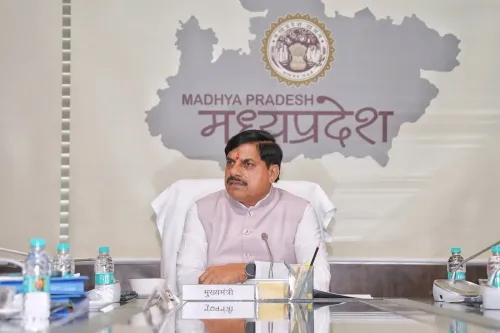
Mohan Yadav holds portfolio oversight of women and child development and is the political face of the initiative.
The scheme builds on existing frameworks including POSHAN Abhiyan (2018) , PM POSHAN , and the MP State Nutrition Mission (2010) .
District-wise rollout details and 2026-27 budget allocations remain to be announced.
The Chief Minister's Office of Madhya Pradesh announced the Yashoda Dugdha Praday Yojana on Wednesday, 24 June 2026, describing the milk supplementation scheme as a decisive step toward better nutrition, healthy childhoods, and a brighter future for children across the state. The post, shared from the official CMO account, tagged Chief Minister Dr. Mohan Yadav, the Department of Women and Child Development, and the School Education Department of Madhya Pradesh.
Context
The CMO's post described the scheme in Hindi as 'बच्चों के बेहतर पोषण, स्वस्थ बचपन और उज्ज्वल भविष्य की ओर एक सशक्त कदम' — 'a strong step toward better nutrition, a healthy childhood, and a bright future for children.' The involvement of both the Women and Child Development department and the School Education department signals that the scheme is intended to reach children across anganwadi centres and government schools simultaneously. The dual-department tagging suggests a convergent delivery model rather than a siloed programme.
Policy Backdrop
Madhya Pradesh has historically recorded elevated child malnutrition indicators, prompting successive state governments to layer supplementary nutrition programmes onto central frameworks. The POSHAN Abhiyan (2018) set a national architecture for reducing stunting and anaemia, while the Pradhan Mantri POSHAN Shakti Nirman scheme — the successor to the mid-day meal programme operational since 2001 — provides hot cooked meals in government schools. The Madhya Pradesh State Nutrition Mission (2010) created district-level malnutrition targets that remain active benchmarks. The Yashoda Dugdha Praday Yojana appears to extend this lineage by introducing a dedicated milk distribution component, addressing protein and micronutrient gaps that cooked-meal programmes alone may not fully close. Post-2023 state governments across central India have prioritised direct nutrition transfers in response to wasting and anaemia data reported in the National Family Health Survey-5.
Stakeholders and Impact
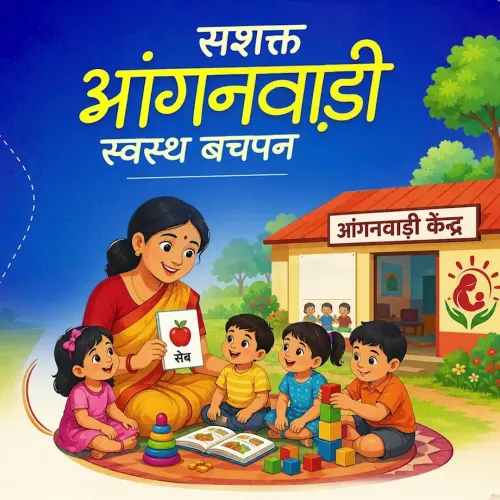
The scheme's primary beneficiaries are school-going children enrolled in government institutions and children registered at anganwadi centres under the Integrated Child Development Services network. The Department of Women and Child Development, Madhya Pradesh, which is the state's nodal agency for ICDS and POSHAN implementation, will likely anchor ground-level delivery through its anganwadi worker infrastructure. The School Education Department's inclusion indicates that older children — beyond the under-six cohort served by anganwadis — are also within the scheme's ambit, broadening its potential reach considerably. Families in rural and semi-urban districts with limited access to dairy nutrition stand to benefit most directly.
What's Next
Observers will watch for district-wise rollout orders and dedicated budget allocations in the 2026-27 Madhya Pradesh state budget to gauge the scheme's scale and funding architecture. Integration with existing PM POSHAN guidelines will be a key operational question, particularly around how milk distribution is scheduled alongside hot-cooked meal delivery. Chief Minister Dr. Mohan Yadav, who holds portfolio oversight of women and child development, is expected to remain the political face of the scheme's rollout. Successful implementation could position Madhya Pradesh as a model for milk supplementation within the national POSHAN framework.
Point of View
Layering state identity onto central POSHAN infrastructure. By tagging both the Women and Child Development and School Education departments simultaneously, the Madhya Pradesh government signals an intent to maximise coverage optics — though the scheme's real impact will hinge on whether fresh budget lines back the announcement or whether it draws on reallocated ICDS funds. Madhya Pradesh's NFHS-5 malnutrition indicators give the policy a genuine public-health rationale, lending the initiative credibility beyond political messaging. The 'Yashoda' branding — evoking the mythological foster mother of Krishna — is a deliberate cultural choice that connects child-nourishment to a widely resonant north Indian narrative.
NationPress
22 Sept 2026
Frequently Asked Questions
What is the Yashoda Dugdha Praday Yojana in Madhya Pradesh?
The Yashoda Dugdha Praday Yojana is a milk supplementation scheme announced by the Madhya Pradesh government on 24 June 2026, aimed at improving nutrition among children through anganwadi centres and government schools.
Who launched the Yashoda Dugdha Praday Yojana?
The scheme was announced by the Chief Minister's Office of Madhya Pradesh, with Chief Minister Dr. Mohan Yadav as the political face of the initiative.
Which departments will implement the Yashoda milk scheme in MP?
The Department of Women and Child Development and the School Education Department of Madhya Pradesh are both involved, suggesting the scheme will cover both anganwadi-enrolled children and school-going children.
How does the Yashoda Dugdha Praday Yojana relate to POSHAN Abhiyan?
The scheme builds on the POSHAN Abhiyan (2018) national framework and the PM POSHAN school meal scheme, adding a dedicated milk distribution component to address protein and micronutrient gaps.
When will the Yashoda Dugdha Praday Yojana be rolled out across Madhya Pradesh?
District-wise rollout orders and budget allocations are yet to be announced; observers expect details to emerge through 2026-27 state budget notifications and departmental orders.