CM Hemant Soren Pays Tribute to Martyr Nirmal Mahto
Synopsis
Jharkhand Chief Minister Hemant Soren paid solemn tribute to assassinated statehood martyr Nirmal Mahto on his martyrdom anniversary, honouring the activist's 1987 sacrifice and the broader struggle that led to Jharkhand's formation in 2000.
Key Takeaways
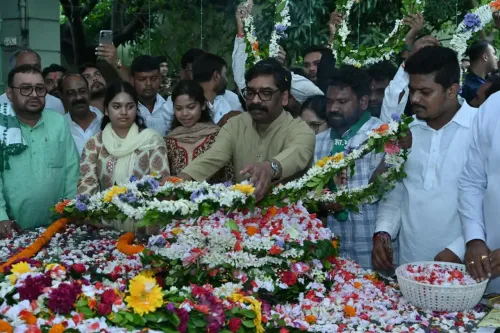
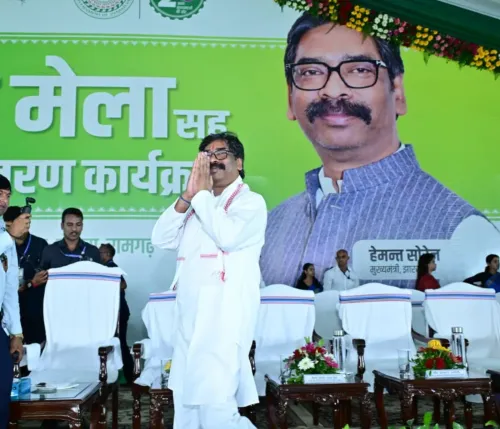
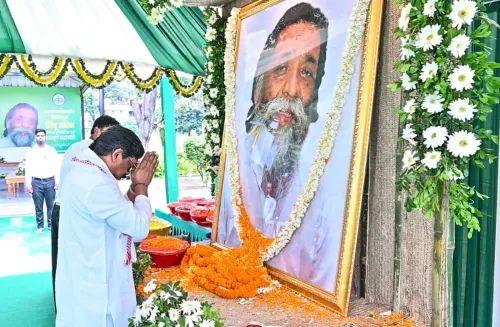
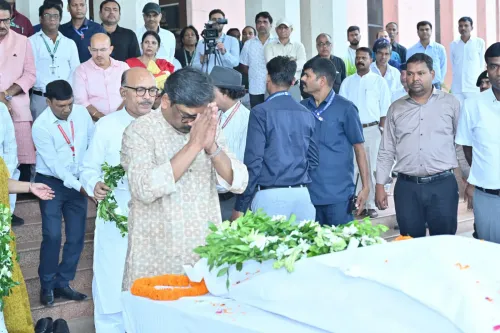
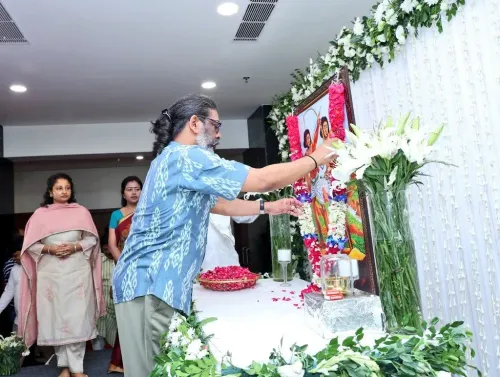
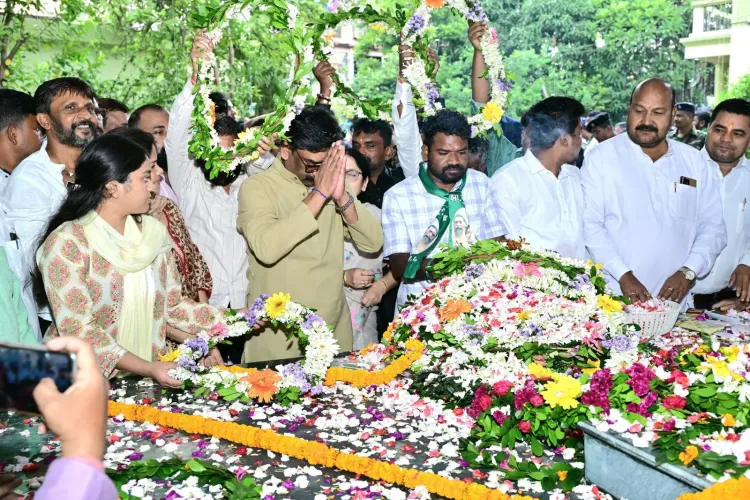
Hemant Soren led a public martyrdom-day observance for Nirmal Mahto on 8 August 2026 , drawing citizens from across Jharkhand.
Nirmal Mahto was assassinated in 1987 while fighting for Jharkhand statehood and Adivasi rights.
The Jharkhand Mukti Morcha , founded in 1972 , built the political movement that ultimately led to state formation.
Jharkhand was carved out of Bihar and inaugurated as a separate state on 15 November 2000 .
Soren described unity among the state's people as Jharkhand's 'greatest strength' and pledged that martyrs' ideals will continue to guide the state.
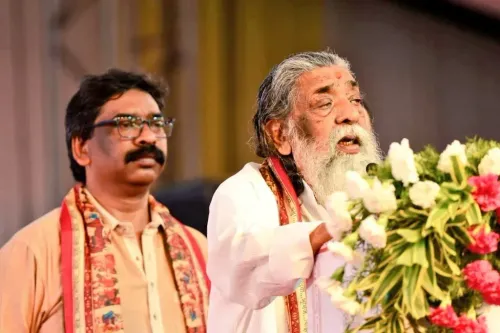
A name that echoes through the hills of Jharkhand — Nirmal Mahto — was honoured on his martyrdom anniversary on Saturday, 8 August 2026, as Jharkhand Chief Minister Hemant Soren led a solemn public remembrance, drawing citizens from villages, towns, and neighbourhoods across the state.
Soren offered tribute in Hindi, saying: 'Jab tak chand-suraj rahega, Nirmal Mahto tera naam rahega' — 'As long as the sun and moon endure, Nirmal Mahto, your name shall endure.' He described Mahto as a 'mitti ka lal' — a son of the soil — whose life was a permanent source of inspiration for society.
Who Was Nirmal Mahto — and Why His Name Still Resonates
Nirmal Mahto was one of the most consequential figures in the decades-long Jharkhand statehood movement. A fierce advocate for tribal rights and regional autonomy, he was assassinated in 1987, paying with his life for a cause that would not be realised for another thirteen years. His death became a rallying symbol for the movement he gave everything to.
The organisation at the heart of that struggle — the Jharkhand Mukti Morcha (JMM), founded in 1972 — built its identity around uniting Adivasi and indigenous communities against economic marginalisation and political neglect. Soren, who now leads both the JMM and the state government, is the direct inheritor of that legacy.
November 2000 and the Blood-Earned Map
Soren's address placed Mahto's sacrifice in the sweep of history: 'After a long struggle, the sacrifices and blood of activists, Jharkhand carved its distinct identity on the map of India in the year 2000.' That moment — 15 November 2000 — when Jharkhand was formally carved out of Bihar, represented the culmination of a movement that consumed generations of activists.
He acknowledged the countless unnamed who did not live to see statehood: 'Countless activists came among us, and countless did not remain among us — but they dedicated their lives to uniting the Adivasi and indigenous people of Jharkhand and fighting for their rights.' The tribute was as much for the movement's anonymous dead as for Mahto himself.
Unity as the State's Defining Strength
Soren closed with a forward-looking assertion: 'Our unity and mutual cooperation is the greatest strength of this state. The thoughts and ideals of brave martyrs will always guide us.' The gathering — farmers, women, revolutionary comrades and citizens from across Jharkhand — was itself a demonstration of that collective memory, alive and assembled a quarter-century after statehood.
In Jharkhand's political calendar, anniversaries like this one are not merely ceremonial. They are the thread that ties the founding struggle to present-day assertions of tribal rights, resource governance, and identity. As long as that thread holds, Nirmal Mahto's name will be spoken.
Point of View
Soren reinforces the JMM's founding-movement credentials at a time when tribal identity and resource rights remain contested political terrain. The annual observance is a deliberate act of narrative ownership — linking the ruling party's present governance to the blood-and-soil legitimacy of the pre-2000 agitation. It also signals to Adivasi constituencies that the sacrifices of movement-era leaders are not archived history but active political currency. Watch for how this framing intensifies around the state's foundation day on 15 November.
NationPress
8 Aug 2026
Frequently Asked Questions
Who was Nirmal Mahto?
Nirmal Mahto was a prominent activist in the Jharkhand statehood movement who championed tribal rights and regional autonomy. He was assassinated in 1987, becoming one of the most revered martyrs of the movement that eventually led to Jharkhand's creation in 2000.
When was Jharkhand formed and why?
Jharkhand was officially formed on 15 November 2000 when it was carved out of Bihar, following decades of protests and sacrifices by activists demanding a separate state to protect the rights and identity of Adivasi and indigenous communities.
What is the Jharkhand Mukti Morcha?
The Jharkhand Mukti Morcha (JMM) is a political party founded in 1972 to unite tribal communities and press for a separate Jharkhand state. It remains the dominant political force in Jharkhand and is currently led by Chief Minister Hemant Soren.
Why does Hemant Soren observe Nirmal Mahto's martyrdom day?
As executive president of the JMM and Chief Minister of Jharkhand, Soren observes the anniversary to honour the sacrifices of statehood-era leaders, reinforce the party's historical legacy, and affirm the ongoing commitment to Adivasi rights and welfare.
What did Hemant Soren say about Nirmal Mahto?
Soren quoted a tribute couplet — 'As long as the sun and moon endure, Nirmal Mahto, your name shall endure' — and said Mahto's life was dedicated to uniting Jharkhand's Adivasi and indigenous people and fighting for their rights, calling his ideals an eternal source of guidance.