CM Hemant Soren pays tribute to Nirmal Mahato on 39th martyrdom anniversary
Synopsis
Chief Minister Hemant Soren visited the Uliyan memorial in Jamshedpur on 8 August 2026 to garland the statue of AJSU co-founder Nirmal Mahato on his 39th martyrdom anniversary, renewing Jharkhand's official tribute to a leader assassinated in 1987 whose sacrifice helped birth the state.
Key Takeaways
Chief Minister Hemant Soren personally attended the 39th martyrdom anniversary of Nirmal Mahato on 8 August 2026 .
The commemoration was held at the Uliyan samadhi sthal in Jamshedpur , the memorial site dedicated to Mahato.
Nirmal Mahato co-founded the All Jharkhand Students Union (AJSU) and was assassinated in Jamshedpur in 1987 .
His death galvanised the Jharkhand statehood movement, which culminated in Jharkhand becoming a state on 15 November 2000 .
Official commemorations at Uliyan have become an annual tradition upheld by successive Chief Ministers regardless of party.
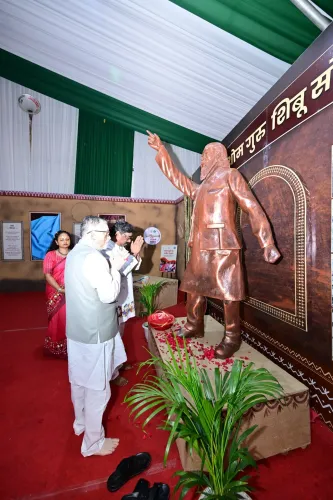
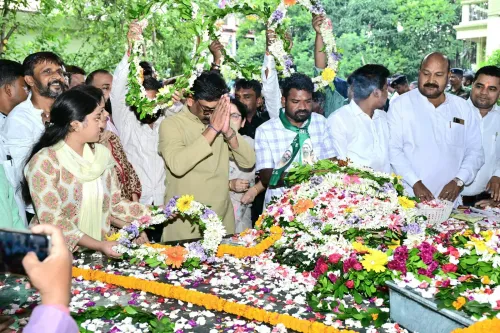
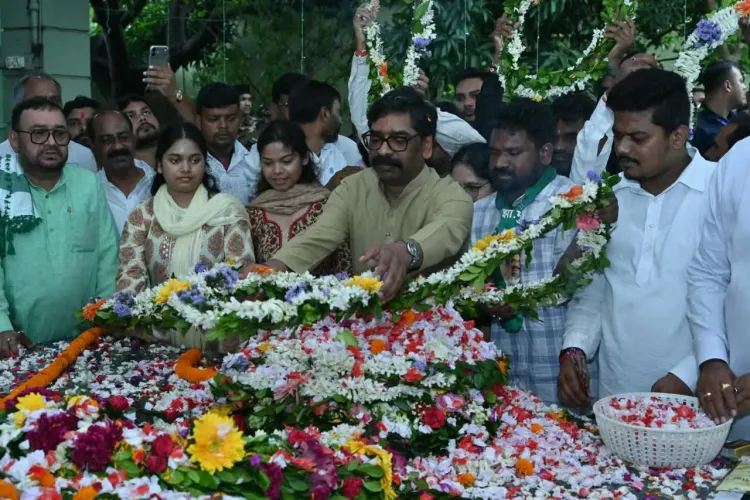
Thirty-nine years after his assassination, Nirmal Mahato — the labour leader and co-founder of the All Jharkhand Students Union (AJSU) who gave his life to the cause of a separate Jharkhand state — was remembered with full official honours on Saturday, 8 August 2026. Chief Minister Hemant Soren travelled to the memorial site at Uliyan, Jamshedpur, to personally offer floral tributes at Mahato's statue and samadhi sthal.
The Chief Minister's Office confirmed that Soren garlanded the statue of the slain leader — an act described in the official post as shhat-shhat naman (a hundredfold salute) — marking one of Jharkhand's most solemn annual commemorations. The tribute was accompanied by a moment of quiet reflection at the samadhi, the burial memorial that has become a pilgrimage point for those who trace the state's founding to the sacrifices of the movement era.
Who was Nirmal Mahato — and why Jamshedpur remembers
Nirmal Mahato was a towering figure in the decades-long agitation for a separate tribal and Adivasi homeland carved out of undivided Bihar. As a co-founder of AJSU, he mobilised students and workers across the Chota Nagpur plateau and the Santhal Parganas through the 1970s and 1980s. He was assassinated in Jamshedpur in 1987, a killing that galvanised the statehood movement rather than silencing it. Jharkhand eventually attained statehood on 15 November 2000, after a prolonged struggle that his death had helped define.
The Uliyan memorial in Jamshedpur has since become the symbolic heart of that legacy — a site where political leaders from across Jharkhand's spectrum have made a point of appearing on 8 August each year, regardless of party affiliation.
A ritual of state identity, renewed every August
Chief Minister Soren, who leads the Jharkhand Mukti Morcha (JMM) — a party that shared the statehood struggle's trenches with AJSU — has maintained the tradition of personally attending this commemoration. The gesture carries weight beyond ceremony: it anchors the ruling government's legitimacy in the founding narrative of the state itself. For Jharkhand's residents, particularly in the industrial belt around Jamshedpur, Mahato's martyrdom anniversary is not an abstraction but a lived memory, still close enough to touch.
As long as the statehood movement's sacrifices remain the bedrock of Jharkhand's political identity, the annual pilgrimage to Uliyan will endure — and every Chief Minister will make the journey.
Point of View
Blurring the line between state ceremony and political identity. By honouring an AJSU co-founder — a figure from a rival political lineage — Soren signals cross-movement solidarity, which broadens his coalition's symbolic appeal. The ritual also quietly reminds voters that the state they live in was paid for in blood, a frame that tends to insulate incumbents from purely technocratic accountability. As long as Jharkhand's statehood remains emotionally recent, these tributes will carry electoral as well as ceremonial weight.
NationPress
22 Sept 2026
Frequently Asked Questions
Who was Nirmal Mahato?
Nirmal Mahato was a labour leader and co-founder of the All Jharkhand Students Union (AJSU) who played a central role in the movement for a separate Jharkhand state. He was assassinated in Jamshedpur in 1987.
Why is 8 August significant for Jharkhand?
8 August marks the martyrdom anniversary of Nirmal Mahato, who was killed in 1987. It is observed annually with official tributes at his memorial in Uliyan, Jamshedpur.
Where is the Nirmal Mahato memorial located?
The samadhi sthal (memorial site) of Nirmal Mahato is located at Uliyan in Jamshedpur, Jharkhand, and is the focal point of annual commemorations.
What is AJSU and its role in Jharkhand's statehood?
The All Jharkhand Students Union (AJSU), co-founded by Nirmal Mahato, was one of the key organisations that agitated for a separate Jharkhand state. Jharkhand was finally carved out of Bihar on 15 November 2000.
Which party does Hemant Soren belong to?
Hemant Soren is the Chief Minister of Jharkhand and leads the Jharkhand Mukti Morcha (JMM), one of the principal parties associated with the Jharkhand statehood movement.