CM Hemant Soren Unveils Statue, Invokes Jharkhand's Revolutionary Icons
Synopsis
Jharkhand CM Hemant Soren unveiled a statue on August 4, 2026, honouring revolutionary icons including Birsa Munda, Sido-Kanhu, and his father Shibu Soren, while urging unity against divisive forces and reaffirming Jharkhand's identity as a land of resistance.
Key Takeaways
Jharkhand CM Hemant Soren presided over a statue unveiling ceremony on August 4, 2026 , declaring the day one for conscience, not formal speeches.
Soren honoured Bhagwan Birsa Munda , Sido-Kanhu , Nirmal Mahato , Vinod Bihari Mahato , and Shibu Soren as architects of Jharkhand's revolutionary identity.
He warned that battles on this 'land of heroes' must be directed against forces that seek to divide the people — not against each other.
Soren closed with a tribute to his father, Dishom Guru Shibu Soren , invoking the slogan Smriti Shesh Dishom Guru Shibu Soren Amar Rahen .
The crowd attended despite adverse weather, which Soren acknowledged with personal gratitude, ending with the Adivasi salutation Johar .
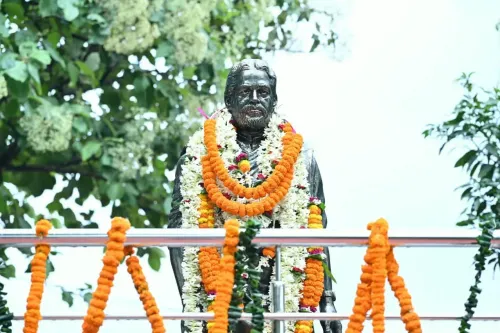
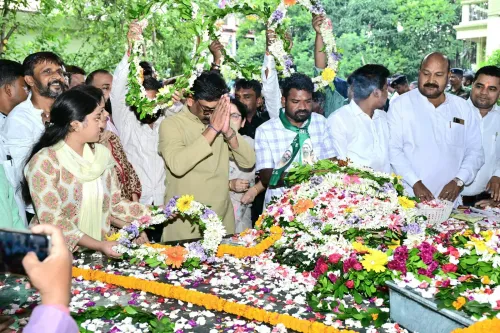
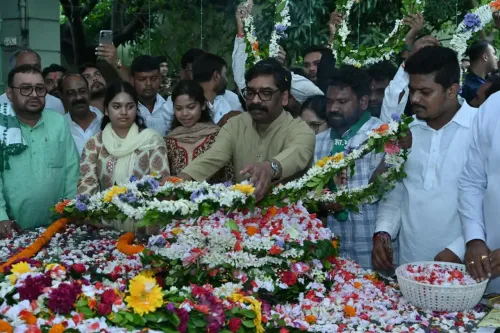
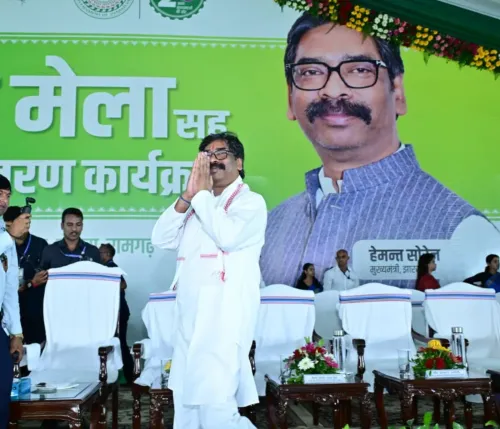
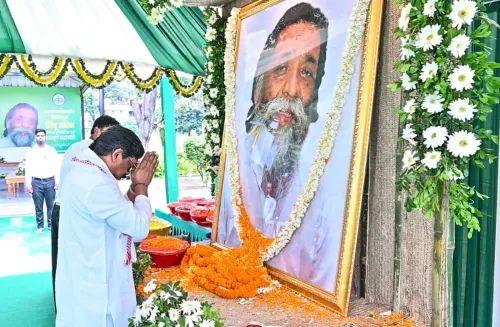
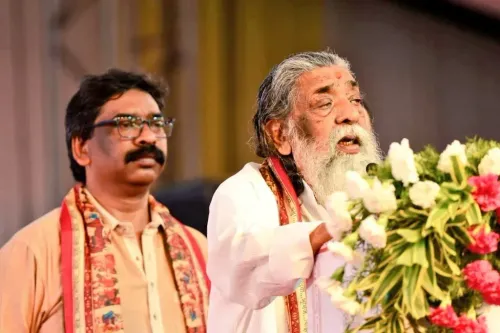
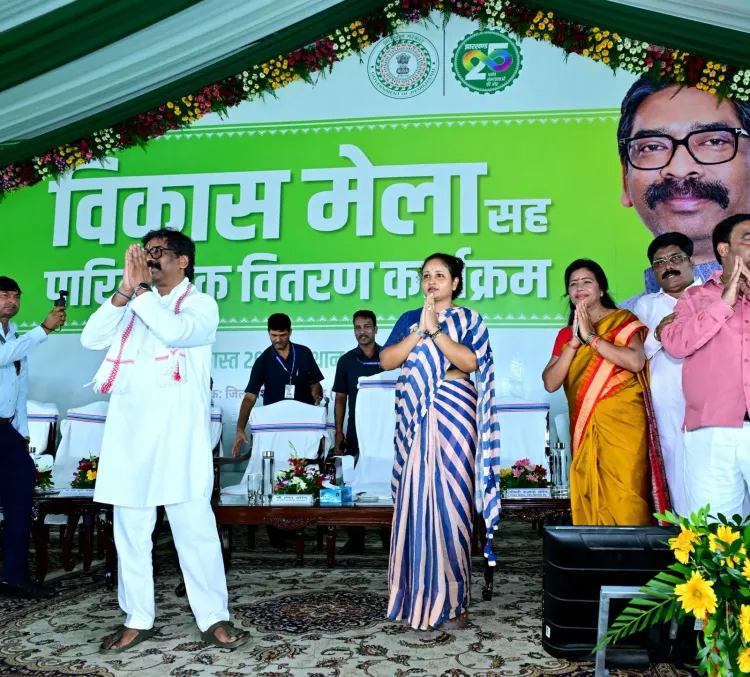
On a day he declared should belong not to speeches but to conscience, Jharkhand Chief Minister Hemant Soren presided over a statue unveiling ceremony on Tuesday, August 4, 2026, calling on the people of Jharkhand to enshrine the memory of the state's revolutionary forebears in their hearts — not merely in stone.
The Icons Soren Named — and Why They Matter
Standing before a crowd that had gathered despite what he described as adverse weather, Soren invoked a roll call of Jharkhand's most revered figures: Bhagwan Birsa Munda, the tribal freedom fighter who led the Ulgulan uprising against British colonial rule; Sido-Kanhu, the Santali brothers who sparked the Hul Rebellion of 1855; and labour leaders Nirmal Mahato and Vinod Bihari Mahato, who fought for the rights of workers and the identity of the region. He also paid tribute to 'aadaraniya Guruji' — the revered teacher — a reference widely understood as honouring Shibu Soren, his father and the founding patriarch of the Jharkhand Mukti Morcha, whose memory he invoked with the closing salutation: 'Smriti Shesh Dishom Guru Shibu Soren Amar Rahen' — 'May the memory of Dishom Guru Shibu Soren live forever.'
The breadth of that list was deliberate. Soren was stitching together tribal, Santali, and OBC working-class traditions into a single revolutionary lineage — framing Jharkhand not as an administrative unit but, in his words, as 'veeron ki pavan aur krantikari bhoomi' — 'the sacred and revolutionary land of the brave.'
A Warning Wrapped in a Tribute
The ceremony was ceremonial in form but combative in content. Soren used the occasion to deliver a pointed political message: that the real battle for Jharkhand's people must not be fought among themselves, but against forces that seek to divide them. 'Bahut se log hamaari taqat ko apne hit mein istemal karne ki koshish karte hain' — 'Many people try to use our strength for their own interests' — he said, urging the crowd never to forget their history, their struggles, or their great leaders.
It was a warning calibrated for the moment. Without naming any party or faction, Soren drew a line between authentic Jharkhandi identity — rooted in sacrifice and resistance — and those he implied would exploit that identity for narrow political gain. The subtext was unmistakable to anyone familiar with the state's fractious coalition politics and ongoing contests over tribal land and resource rights.
Shibu Soren's Shadow Over the Ceremony
The emotional centre of the event was the tribute to Dishom Guru Shibu Soren, the towering figure of the Jharkhand statehood movement who spent decades organising tribal communities before the state was carved out of Bihar in November 2000. For Hemant Soren, this was personal as much as political — a son publicly honouring a father whose legacy underpins the JMM's entire moral authority. The closing 'Johar!' — the traditional Adivasi greeting and salutation — grounded the speech firmly in the cultural idiom of the communities Soren leads.
Statues, in Jharkhand's political grammar, are not passive monuments. They are assertions of who belongs to this land's story. By unveiling one on this day, Soren was making a claim about continuity: that the struggles of Birsa Munda, Sido-Kanhu, and Shibu Soren flow directly into the present government's mandate.
The land of heroes, Soren reminded his audience, demands that its people remain worthy of it — united, clear-eyed, and impossible to divide.
Point of View
Reinforcing the party's claim to be the authentic custodian of Jharkhandi identity. In a state where land rights, forest laws, and demographic anxieties remain live fault lines, the call for unity 'against those who seek to divide us' carries a policy subtext well beyond the ceremonial. It signals that Soren intends to fight the next political cycle on identity and history — terrain where the JMM has a structural advantage.
NationPress
19 Sept 2026
Frequently Asked Questions
What statue did Hemant Soren unveil on August 4, 2026?
Hemant Soren presided over a statue unveiling ceremony on August 4, 2026, honouring Jharkhand's revolutionary figures. The event paid tribute to icons including Bhagwan Birsa Munda, Sido-Kanhu, Nirmal Mahato, Vinod Bihari Mahato, and Dishom Guru Shibu Soren.
Who is Dishom Guru Shibu Soren?
Shibu Soren, known as 'Dishom Guru' (Leader of the Land), is the founder of the Jharkhand Mukti Morcha and a central figure in the decades-long movement that led to Jharkhand becoming a separate state in November 2000. He is also the father of current Chief Minister Hemant Soren.
What did Hemant Soren mean by 'forces that want to divide us'?
Without naming any specific party or group, Soren warned that many actors try to exploit the strength of Jharkhand's people for their own interests. The remark is widely read as a political signal to stay united around Jharkhandi identity against divisive electoral or communal strategies.
Who were Sido and Kanhu?
Sido and Kanhu Murmu were Santali brothers who led the Hul Rebellion of 1855 against British colonial rule and exploitative zamindars in what is now Jharkhand. They are among the most revered freedom fighters in the state's tribal history.
What does 'Johar' mean in the context of Hemant Soren's speech?
'Johar' is a traditional greeting and salutation used by Adivasi communities across Jharkhand and neighbouring regions. Soren's use of it at the close of his address was a deliberate cultural affirmation of the tribal identity central to the JMM's political identity.