CM Mohan Yadav: MP Registers 3.44 Lakh New MSMEs in 2026-27
Synopsis
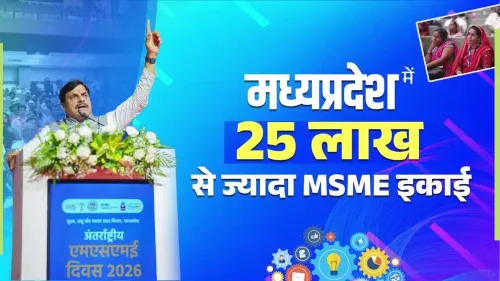
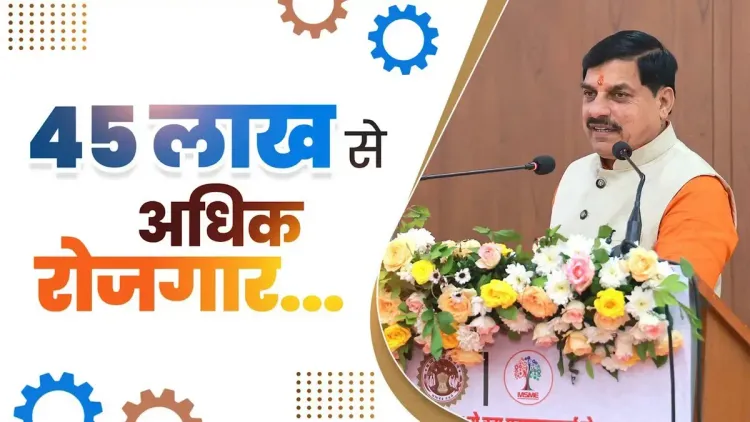
Madhya Pradesh CM Dr. Mohan Yadav announced that over 3.44 lakh new MSME units were registered in the state in 2026-27, with more than 45 lakh employment opportunities projected to be created through these enterprises.
Key Takeaways
3.44 lakh+ new MSME units registered in Madhya Pradesh during fiscal year 2026-27 , according to CM Dr.
The registrations are projected to generate over 45 lakh employment opportunities across the state.
MSME registrations flow through the Udyam Registration portal , launched by the Government of India in 2020 to formalise small enterprises.
Mohan Yadav has placed MSME expansion at the centre of the state's economic agenda since assuming office in December 2023 .
The announcement aligns with the national Atmanirbhar Bharat framework, which positions MSMEs as India's primary engine of non-farm employment.
Actual employment outcomes and supporting state budget allocations will be the key metrics to watch in coming quarters.
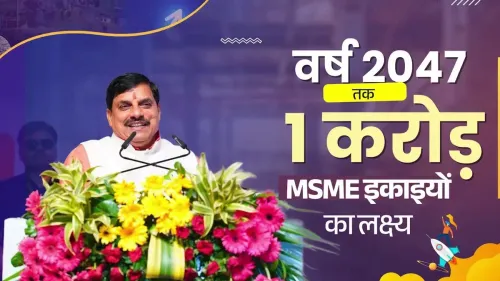
A single fiscal year, one sweeping number — and a signal about where Madhya Pradesh is placing its economic bets. Madhya Pradesh Chief Minister Dr. Mohan Yadav announced on Sunday, November 1, 2026 that the state has registered more than 3.44 lakh new MSME units in 2026-27, with projections that these enterprises will generate over 45 lakh employment opportunities across the state.
Posting in Hindi, the Chief Minister stated: 'मध्यप्रदेश में वर्ष 2026-27 में 3.44 लाख से अधिक नई MSME इकाइयां पंजीकृत हुई हैं, जिनके माध्यम से लगभग 45 लाख से अधिक रोजगार के अवसर सृजित होंगे।' ('In Madhya Pradesh, more than 3.44 lakh new MSME units have been registered in the year 2026-27, through which more than approximately 45 lakh employment opportunities will be created.')What 3.44 Lakh Registrations Actually Means
The numbers sit on a foundation built by the Udyam Registration portal, launched by the Government of India in 2020 to streamline MSME registration and bring informal enterprises into the formal economy. The portal simplified what was once a bureaucratic maze into a paperless, Aadhaar-linked process — and states across India have since reported surging registration counts as the system matured and post-pandemic recovery gathered pace.
For Madhya Pradesh, a landlocked central Indian state that has actively pursued industrial policy reforms under BJP governance, the scale of this claim is notable. Dr. Mohan Yadav, who took office in December 2023, has made MSME expansion and employment generation central planks of his administration's economic narrative.
MSMEs as MP's Employment Engine
Nationally, the MSME sector is widely recognised as India's largest non-farm employer and a cornerstone of the Atmanirbhar Bharat framework — the government's self-reliance initiative that has channelled policy support, credit guarantees, and procurement preferences toward small enterprises. Madhya Pradesh's push mirrors a broader inter-state competition to attract micro and small investment and translate registrations into durable jobs.
The critical question, as with every such announcement, is the conversion rate — how many of these 3.44 lakh registered units become operational, how quickly the projected 45 lakh jobs materialise, and whether state budget allocations in coming quarters will underpin the ambition with capital and infrastructure. Those numbers will define whether this fiscal year becomes a genuine inflection point for MP's workforce or remains a headline waiting to be tested.
Point of View
But the gap between registration counts and operational enterprises remains a persistent credibility challenge for such claims. Madhya Pradesh's push also reflects an intensifying competition among central Indian states to capture MSME investment flows diverted from costlier coastal clusters. The real test will come when employment-survey data and state GST collections either validate or complicate the 45 lakh projection.
NationPress
1 Nov 2026
Frequently Asked Questions
How many new MSME units were registered in Madhya Pradesh in 2026-27?
According to CM Dr. Mohan Yadav, more than 3.44 lakh new MSME units were registered in Madhya Pradesh during the fiscal year 2026-27.
How many jobs will be created by new MSMEs in Madhya Pradesh?
The Chief Minister's announcement projects that over 45 lakh employment opportunities will be generated through the newly registered MSME units in 2026-27.
What is the Udyam Registration portal and how does it relate to MP's MSME data?
The Udyam Registration portal was launched by the Government of India in 2020 to simplify MSME registration through a paperless, Aadhaar-linked process. State-level MSME counts, including Madhya Pradesh's figures, are drawn from this central system.
Who is Mohan Yadav and when did he become CM of Madhya Pradesh?
Dr. Mohan Yadav is the Chief Minister of Madhya Pradesh and a BJP leader who assumed office in December 2023 . He has prioritised industrial and MSME development as key economic goals of his administration.
Why are MSMEs important for Madhya Pradesh's economy?
MSMEs are the largest source of non-farm employment in India and are central to the national Atmanirbhar Bharat self-reliance initiative. For Madhya Pradesh, expanding the MSME base is a stated strategy to boost formal employment and attract small-scale investment to the state.