Odisha CMO: 75,855 Evacuated After Cyclone Arnab Floods

Synopsis
The Chief Minister's Office of Odisha reports 75,855 people evacuated, 396 relief camps active, 807 pregnant women hospitalised and 399 babies delivered safely, and over 96% of southern Odisha's power restored after Cyclone Arnab. A second Bay of Bengal cyclone is forecast near Andhra by 3 November.
Key Takeaways
75,855 people have been evacuated from vulnerable zones and placed in 396 relief camps in Ganjam and Kandhamal districts.
807 pregnant women were moved to hospitals; 399 safe deliveries have been recorded during the emergency.
Over 6,400 workers have restored more than 96% of power connections in southern Odisha; Baudh, Malkangiri, Rayagada and Brahmapur are at 100% .
2,575 hand pumps and 162 rural piped-water schemes sanitised; 70 MLD water supply restored in Brahmapur with tankers and water pouches.
Sand-dam construction at Janibali is ongoing with 120 workers and 3 excavators to reinforce drinking water infrastructure.
A second cyclone is expected to cross the Andhra coast by 3 November ; fishermen have received a strict warning to stay off the sea.
War-footing relief is under way across southern Odisha as the state administration races to restore normal life after Cyclone Arnab and the devastating floods it unleashed — and keeps one anxious eye on a second storm brewing in the Bay of Bengal. The Chief Minister's Office of Odisha posted a detailed operations update on Sunday, 1 November 2026, spelling out the scale of the response across the hardest-hit districts.
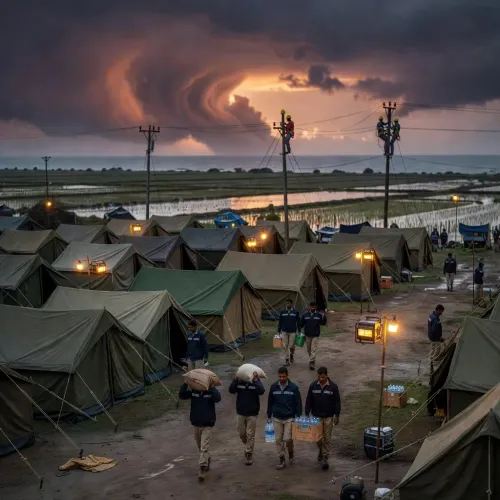
75,855 people moved, 396 relief camps running
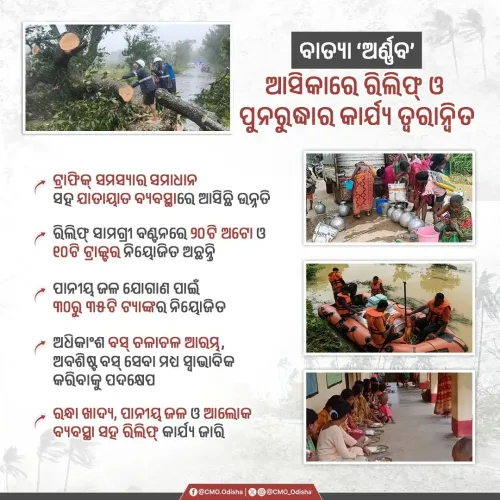
The single biggest number in the government's update: 75,855 people evacuated from vulnerable zones and housed across 396 relief camps, where food and essential supplies are being provided. The CMO's post, originally in Odia, states that the administration is taking 'all necessary emergency steps to restore normalcy' — particularly in the two worst-affected districts of Ganjam and Kandhamal.
Ganjam is a coastal district that has taken the brunt of successive Bay of Bengal storms, while Kandhamal, further inland, bore the brunt of the rainfall and flooding that followed the cyclone's landfall.
807 pregnant women hospitalised — 399 safe deliveries so far
One of the most striking operational details in the update concerns maternal health. Authorities shifted 807 pregnant women to hospitals from flood-hit areas; of those, 399 have already delivered safely. It is a figure that captures, in the most human terms possible, the sheer reach of a disaster-response machine that has had to function as a mobile healthcare system as much as a rescue operation.
96% of southern Odisha's power back on — four towns at 100%
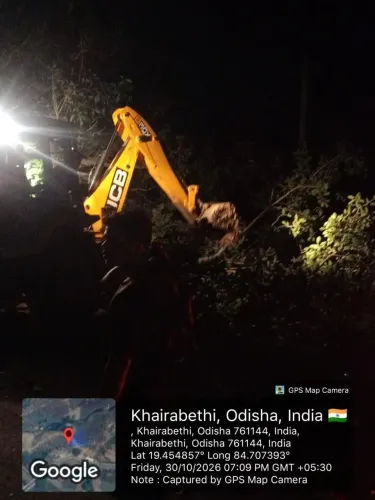
More than 6,400 workers have been deployed continuously to restore the electricity grid. The result: over 96% of power connections in southern Odisha are back online. Baudh, Malkangiri, Rayagada and Brahmapur have reached 100% restoration. For a coastal state that has learned, painfully, how long it can take to restore power after a major cyclone, that figure represents both logistical muscle and institutional memory built over decades.
Water war: 2,575 handpumps, 70 MLD supply, sand-dam construction at Janibali
Safe drinking water is the other frontline. 2,575 hand pumps and 162 rural piped-water schemes have been sanitised and made operational in affected areas. In Brahmapur city, 70 MLD (million litres per day) of water supply has been restored, backed by 20 water tankers and the distribution of water pouches counted in the lakhs.
At Janibali, 120 workers and 3 Poklain excavators are working around the clock on a sand-dam to reinforce the water supply infrastructure — another 'war-footing' deployment, as the CMO's post describes it.
A second storm: fishermen warned off the sea ahead of 3 November
The administration is not done yet. A fresh cyclonic system in the Bay of Bengal is forecast to cross the Andhra Pradesh coast by 3 November, and Odisha's disaster machinery is already on alert. The seas are rough. Fishermen across the coast have been issued a 'strict warning' not to venture out. The public, the CMO's office says, should remain 'alert and aware — not afraid.'
Odisha's cyclone-preparedness infrastructure — built after the catastrophic 1999 super cyclone and stress-tested at scale during Cyclone Fani in 2019 — means that warning and evacuation systems are now deeply embedded in how the state responds. The Arnab relief operation is the latest proof point. Whether the next system stays offshore or makes landfall will determine how much further that machinery is tested in the days ahead.
Point of View
Power restoration measured in days rather than weeks, and a maternal-health mobilisation that few disaster responses globally can match. The political optics matter too: the ruling administration is racing to demonstrate competence on the eve of a potentially second cyclone, a moment that historically defines or damages a government's credibility in a state that has voted disaster-management performance into its political calculus. The 96% power-restoration figure in particular is designed to signal that the state machine works — and works fast. The real test, however, is the next 72 hours: if the Bay of Bengal system intensifies and hits Odisha rather than Andhra Pradesh, every number in today's update will need to be repeated at a larger scale.
NationPress
1 Nov 2026
Frequently Asked Questions
How many people were evacuated due to Cyclone Arnab in Odisha?
75,855 people have been evacuated from high-risk zones and are sheltering in 396 relief camps across the affected districts, according to the Chief Minister's Office of Odisha.
Which districts in Odisha were most affected by Cyclone Arnab?
Ganjam and Kandhamal are the two most severely affected districts, according to the state government's update. Ganjam is a coastal district and Kandhamal an inland one hit by subsequent flooding.
Has electricity been restored in Odisha after the cyclone?
Yes. More than 6,400 workers have restored over 96% of power connections in southern Odisha. Baudh, Malkangiri, Rayagada and Brahmapur have achieved 100% restoration .
Is there another cyclone coming to Odisha in November 2026?
A new cyclonic system in the Bay of Bengal is forecast to cross the Andhra Pradesh coast by 3 November 2026 . Odisha's administration is on alert and has issued a strict warning to fishermen not to venture into the sea.
What is being done for pregnant women in cyclone-hit areas of Odisha?
807 pregnant women were safely moved to hospitals from flood-affected zones. Of these, 399 have delivered safely , the Chief Minister's Office confirmed in its operational update.