Odisha CM Office: Brahmapur Water Supply Rush After Cyclone
Synopsis
Odisha's Housing and Urban Development Department is on a war footing to restore drinking water in cyclone-hit Brahmapur, supplying 70 MLD from surface and well sources, deploying 20 tankers, enforcing a strict three-level chlorination protocol, and erecting a 20,000-sandbag temporary barrier at the critical Janibil Intake since 5 AM on November 1.
Key Takeaways
70 MLD of drinking water is currently being supplied to Brahmapur — 64 MLD from surface sources and 6 MLD from 15 production wells .
20 tankers (including 12 private ) are deployed for last-mile water distribution in cyclone-affected areas.
A strict three-stage chlorination protocol is in force: pre-chlorination at 4 PPM , post-chlorination at 10 PPM , and tail-end distribution at 2 PPM .
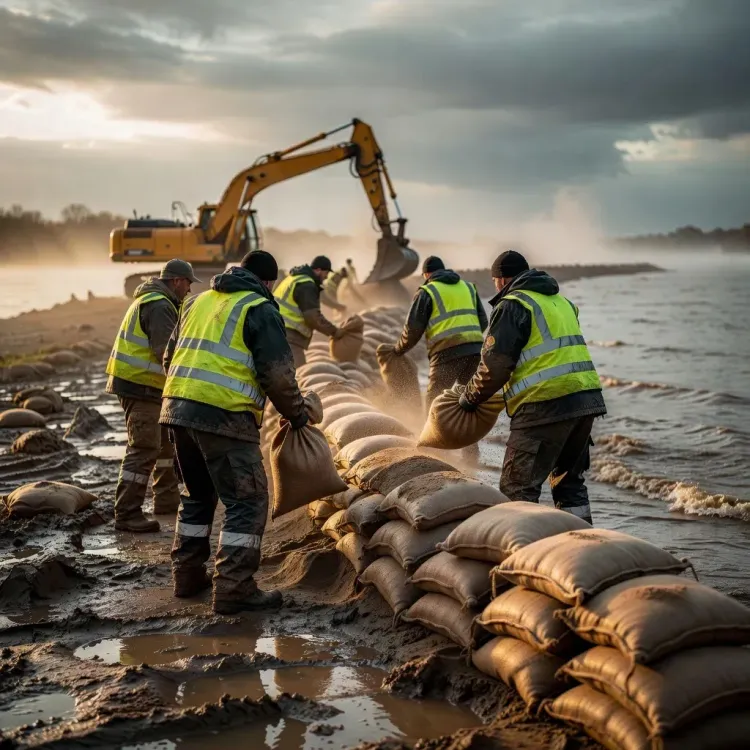
120 workers , 3 excavators , and 2 tractors have been working since 5 AM on November 1 to place approximately 20,000 sandbags at the Janibil Intake .
Brahmapur Municipal Corporation has been granted additional administrative and financial authority to accelerate field-level emergency actions.
The Odisha government has committed to restoring 100% normal water supply to Brahmapur residents at the earliest.
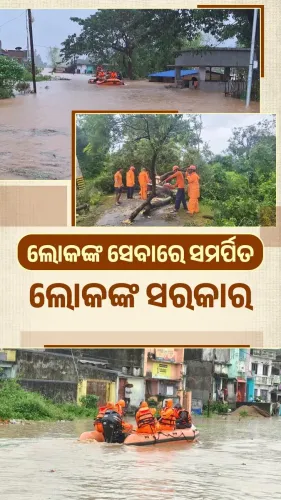
With a cyclone's damage still raw, Odisha's Housing and Urban Development Department has shifted into emergency overdrive — racing to restore safe drinking water to the cyclone-hit city of Brahmapur before a public health crisis compounds the disaster. The Chief Minister's Office of Odisha detailed the operation on Sunday, November 1, 2026, laying out a precise, numbers-driven account of exactly what is being done and how fast.
70 MLD and 20 Tankers: Brahmapur's Emergency Water Pipeline
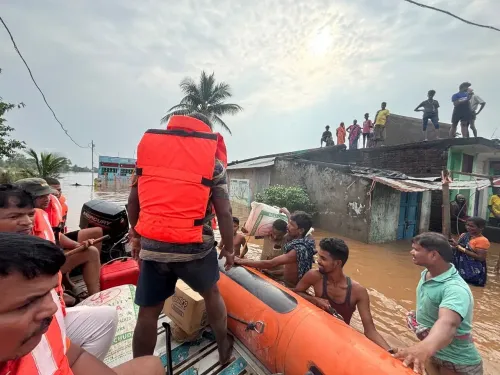
The state is currently pushing 70 million litres per day (MLD) into Brahmapur's distribution network — 64 MLD drawn from surface sources and a supplementary 6 MLD pumped from 15 production wells. That combined flow is keeping taps running while the primary intake remains damaged. To bridge gaps in the pipe network, 20 tankers have been deployed across affected localities, 12 of them privately contracted, ensuring last-mile water delivery to residents cut off from the main grid.
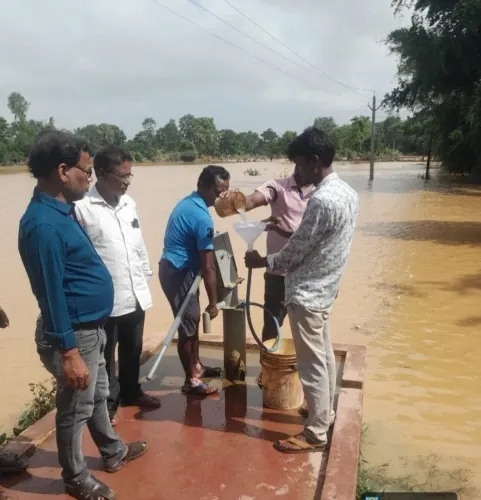
Water safety is being enforced with clinical precision. At the treatment plant, pre-chlorination is set at 4 PPM and post-chlorination at 10 PPM, while the tail-end of the distribution network is maintained at 2 PPM — a triple-layer disinfection protocol designed to prevent waterborne disease outbreaks in the vulnerable post-cyclone window.
20,000 Sandbags and 120 Workers at the Janibil Intake Since 5 AM
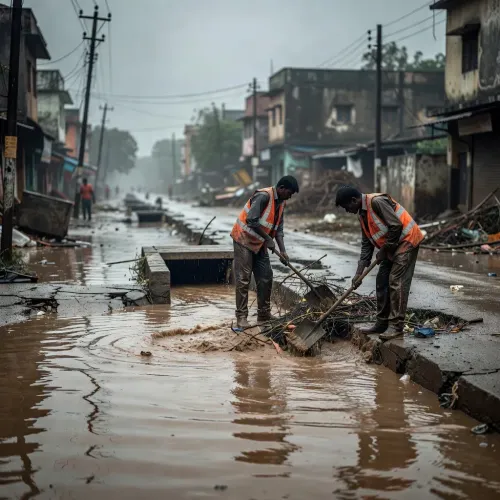
The operation's most urgent front is the Janibil Intake — the principal water intake structure whose damage is the root cause of the supply shortfall. Since 5:00 AM on Sunday, a crew of 120 labourers, supported by 3 excavators (Poclain machines) and 2 tractors, has been working to erect a temporary barrier using approximately 20,000 sandbags in the Connecticut Nala (drain) that feeds the intake. The CMO post described the effort as proceeding on a 'war footing' — 'ଯୁଦ୍ଧକାଳୀନ ଭିତ୍ତିରେ' (on a wartime basis). Once water flow is controlled, a full clean-up and repair of the intake structure can begin immediately.
Senior administrative officers from the department are providing continuous on-site supervision. The Brahmapur Municipal Corporation and other urban local bodies have been given additional administrative support and authorised to deploy emergency financial resources as needed — a signal that the state is clearing bureaucratic hurdles in real time rather than waiting for post-crisis approvals.
Odisha's Cyclone Playbook: A Pattern Rooted in Hard Experience
Brahmapur, in Ganjam district, sits in one of India's most cyclone-exposed coastal corridors. The city has been through this before — after Cyclone Fani in 2019, the Odisha government deployed near-identical emergency water restoration protocols across Ganjam's urban areas, a response that earned national recognition for speed and organisation. The current operation follows that established playbook: multi-source augmentation, strict chlorination, tanker deployment, and an engineering push at the intake point — all running simultaneously rather than sequentially.
The CMO post closed with an unambiguous government commitment: residents of Brahmapur will get 100% normal water supply restored as soon as possible. The sandbag barrier at Janibil is the critical path. When the flow is controlled, the clock starts on full normalcy.
Point of View
Numbers-heavy post — supply volumes, chlorination dosages, worker counts, sandbag quantities — is a deliberate exercise in accountability signalling, aimed at reassuring residents and pre-empting criticism over post-cyclone governance failures. Odisha has built a reputation for best-in-class disaster response since Fani 2019, and the Mohan Majhi government appears committed to protecting that institutional brand. The authorisation of emergency spending directly to urban local bodies is notable: it bypasses standard procurement cycles, a policy lever Odisha has used before to compress restoration timelines. The critical watchpoint is whether the Janibil Intake barrier holds and repairs can begin before the next weather system — because a second disruption on top of the current one would stress even a well-oiled system.
NationPress
1 Nov 2026
Frequently Asked Questions
Which cyclone damaged Brahmapur's water supply in 2026?
The Chief Minister's Office of Odisha confirmed that a cyclone disrupted water supply in Brahmapur, but the specific cyclone name was not mentioned in the official post.
How much water is being supplied to Brahmapur after the cyclone?
70 MLD of drinking water is currently being supplied — 64 MLD from surface sources and 6 MLD from 15 production wells , according to the CMO.
What is the Janibil Intake and why is it important for Brahmapur?
The Janibil Intake is the primary water intake structure that feeds Brahmapur's supply system. Its cyclone-damaged condition is the root cause of the current water shortage, making its repair the top government priority.
Is the drinking water in Brahmapur safe after the cyclone?
Yes, the Odisha government is enforcing a three-stage chlorination protocol: 4 PPM pre-chlorination , 10 PPM post-chlorination , and 2 PPM at tail-end distribution points to ensure water safety.
When will water supply fully return to normal in Brahmapur?
The Odisha government has committed to restoring 100% normal water supply to Brahmapur at the earliest. Full normalcy depends on completing the temporary barrier at the Janibil Intake , after which cleaning and repair can begin.