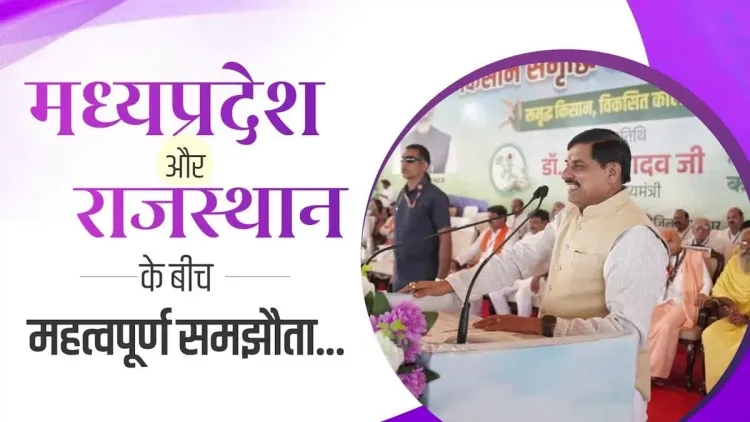
MP-Rajasthan ink historic Sardar Sarovar pact: CM Mohan Yadav
Synopsis
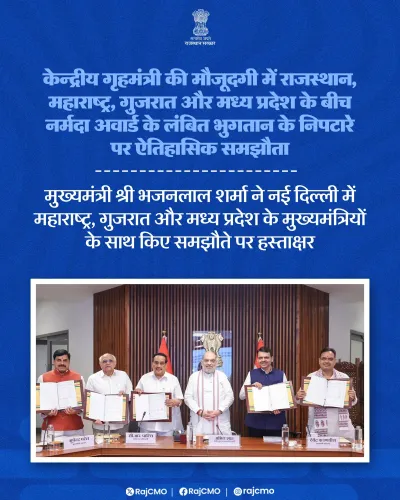
Chief Minister Dr. Mohan Yadav announced on 9 July 2026 that Madhya Pradesh and Rajasthan have reached a historic agreement on the Sardar Sarovar Project, promising irrigation benefits to several districts of Madhya Pradesh under a decades-old Narmada water-sharing framework.
Key Takeaways
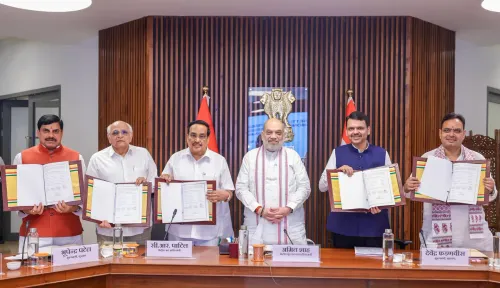
Madhya Pradesh and Rajasthan have signed a historic inter-state agreement on the Sardar Sarovar Project , announced on 9 July 2026 .
Mohan Yadav stated that several districts of Madhya Pradesh will benefit from the pact.
The agreement builds on the Narmada Water Disputes Tribunal's 1979 award , which allocated 18.25 MAF to Madhya Pradesh and 0.5 MAF to Rajasthan.
The Narmada Control Authority , established in 1980 , is expected to oversee implementation of the agreement.
Farmers in western Madhya Pradesh and irrigators in Jhalawar and Baran districts of Rajasthan are among the key stakeholders.
Operational details including revised water-release schedules and canal linkages are yet to be formally disclosed.
The Chief Minister's Office of Madhya Pradesh announced on Thursday, 9 July 2026 that a historic inter-state agreement has been reached between Madhya Pradesh and Rajasthan over the Sardar Sarovar Project, with Chief Minister Dr. Mohan Yadav stating that several districts of the state will benefit from the pact.
Sharing the development on X, CM Yadav said: 'Madhya Pradesh aur Rajasthan ke beech Sardar Sarovar Pariyojana ko lekar aitihasik samjhauta hua hai' — 'A historic agreement has been reached between Madhya Pradesh and Rajasthan regarding the Sardar Sarovar Project. Several districts of the state will benefit from this.'
Context
The Sardar Sarovar Project is a multipurpose dam constructed on the Narmada river in Gujarat, designed to deliver irrigation, hydropower, and drinking water to riparian and non-riparian states alike. Madhya Pradesh, as the upper riparian state, has long held significant submergence and irrigation claims under the project's framework, while Rajasthan was allocated a share of Narmada waters to serve its southern districts.
The Narmada Water Disputes Tribunal, constituted in 1969 and delivering its award in 1979, fixed Madhya Pradesh's share at 18.25 million acre-feet (MAF) and allocated 0.5 MAF to Rajasthan. Operationalising these allocations has required sustained political negotiation over the decades.
Policy Backdrop
The Narmada Control Authority, established in 1980, was tasked with overseeing the implementation of the Tribunal's orders, including the construction and management of the Rajasthan Feeder canal that carries Narmada waters northward. Inter-state coordination through this body has historically been the primary mechanism for resolving water-release schedules and canal linkage disputes between the riparian states.
Inter-state water-sharing agreements on the Narmada have repeatedly required fresh political impetus to translate Tribunal allocations into actual water delivery on the ground. The latest pact between Madhya Pradesh and Rajasthan follows this broader pattern of federal negotiation that has characterised Narmada governance since the 1979 Tribunal award.
Stakeholders and Impact
Farmers in western Madhya Pradesh stand to gain improved irrigation access if the agreement unlocks pending canal linkages or revises water-release calendars in their favour. On the Rajasthan side, irrigators in districts such as Jhalawar and Baran — which fall within the command area of the Narmada canal network — are among the primary beneficiaries of a more reliable water supply from the project.
CM Yadav's announcement underlines the political significance of the deal for Madhya Pradesh, where agricultural communities in multiple districts have long awaited the full realisation of the state's Narmada entitlement. The reference to 'several districts' suggests the agreement has a broad geographic footprint within the state.
What's Next
The operational details of the agreement — including any revised water-release calendar, new canal linkage proposals, or financial arrangements — are yet to be made public. The pact is expected to come under the purview of the Narmada Control Authority for formal review and implementation oversight.
Both state governments will need to coordinate on ground-level execution to ensure that the benefits announced by CM Yadav translate into measurable improvements in irrigation coverage across the identified districts. How swiftly the agreement moves from announcement to implementation will be the key test of its historic promise.
Point of View
Where Tribunal awards have often outpaced actual water delivery on the ground. For the BJP government in Madhya Pradesh, the announcement carries electoral weight in agricultural constituencies that have waited decades for the full realisation of the state's Narmada entitlement. The pact also reflects a broader pattern under which BJP-governed states have sought to project cooperative federalism on infrastructure — though the real test will come when operational details are disclosed and the Narmada Control Authority begins implementation review. Without specifics on water-release schedules or canal linkages, the announcement remains a political milestone whose policy substance is still to be demonstrated.
NationPress
8 Oct 2026
Frequently Asked Questions
What is the Sardar Sarovar Project agreement between Madhya Pradesh and Rajasthan?
It is a historic inter-state agreement announced on 9 July 2026 between Madhya Pradesh and Rajasthan concerning the sharing and utilisation of Narmada waters under the Sardar Sarovar Project, aimed at benefiting several districts of Madhya Pradesh.
How much water is Madhya Pradesh entitled to from the Narmada under the Tribunal award?
The Narmada Water Disputes Tribunal's 1979 award fixed Madhya Pradesh's share at 18.25 million acre-feet (MAF), making it the largest beneficiary among the riparian states.
Which districts in Rajasthan benefit from Narmada waters?
Rajasthan's primary beneficiary districts under the Narmada canal network include Jhalawar and Baran in the state's southern region, which fall within the command area of the Rajasthan Feeder canal.
Who oversees the implementation of Narmada water-sharing agreements?
The Narmada Control Authority, established in 1980, is the apex body responsible for overseeing the implementation of the Tribunal's orders, including water-release schedules and canal infrastructure across the riparian states.
What is the significance of the Madhya Pradesh-Rajasthan Sardar Sarovar pact?
The pact is significant because it seeks to operationalise decades-old Tribunal water allocations that have historically required fresh political negotiation, potentially unlocking irrigation benefits for farmers across several districts of both states.