MP CM Mohan Yadav Signs 5 MoUs at Semiconductor Summit
Synopsis
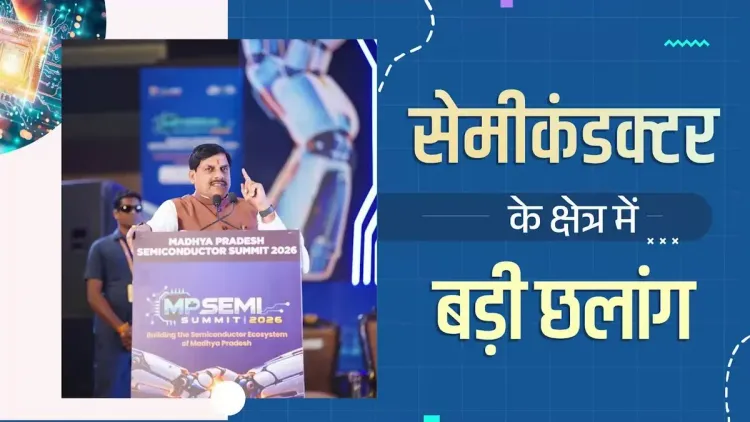
Madhya Pradesh signed five MoUs at the MP Semiconductor Summit on 23 October 2026, with MPIDC developing the Indore-Ujjain Economic Corridor for semiconductors, electronics, and advanced packaging, as CM Dr. Mohan Yadav positions the state as a key player in India's chip manufacturing push.
Key Takeaways
Five MoUs were signed at the MP Semiconductor Summit on 23 October 2026 .
MPIDC is developing an industrial zone along the Indore-Ujjain Economic Corridor with priority for semiconductor, electronics, and advanced packaging industries.
Vikram Udyogpuri near Ujjain is being continuously promoted as the state's hub for semiconductor and deep-tech industries.
Mohan Yadav stated Madhya Pradesh is 'rapidly moving to take a big leap in the semiconductor sector.' The push aligns with India's national Semiconductor Mission (2021) and the PLI scheme for electronics (2020) .
Key coordinating agencies include MPIDC , MAPIT , and MPSeDC-DST .
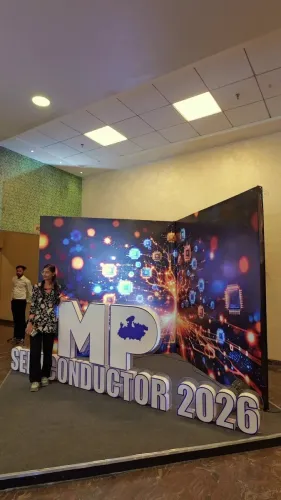
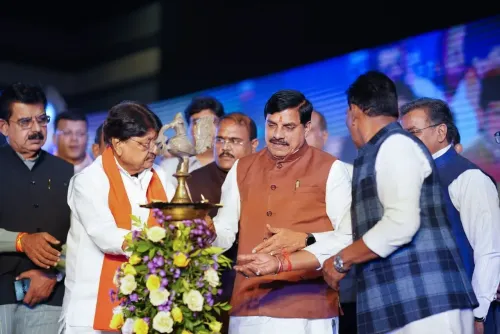
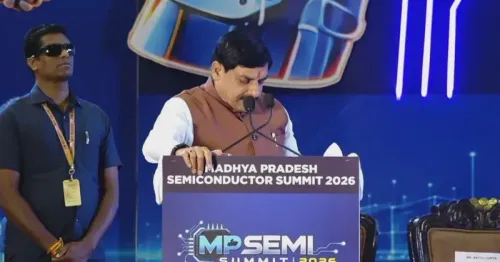
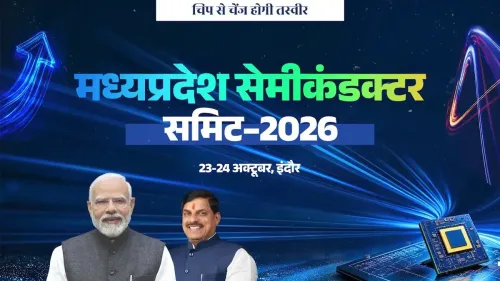
Madhya Pradesh is staking its claim in India's chip race — and it is moving fast. On Friday, 23 October 2026, the Chief Minister's Office of Madhya Pradesh announced that five MoUs were signed at the MP Semiconductor Summit, as the state accelerates its push to make the Indore-Ujjain Economic Corridor a high-tech manufacturing hub anchored in semiconductors, electronics, and advanced packaging industries.
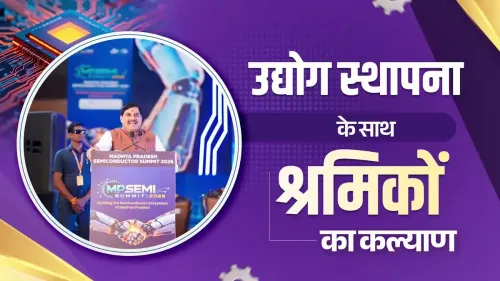
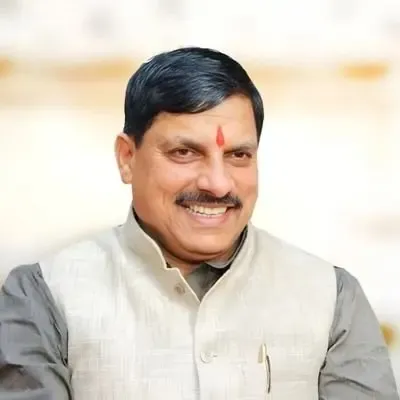
Chief Minister Dr. Mohan Yadav declared at the summit: 'मध्यप्रदेश सेमीकंडक्टर क्षेत्र में बड़ी छलांग लगाने की दिशा में तेजी से आगे बढ़ रहा है' ['Madhya Pradesh is rapidly moving in the direction of taking a big leap in the semiconductor sector']. The remarks came alongside confirmation that the Madhya Pradesh Industrial Development Corporation (MPIDC) is actively developing industrial zones along the corridor with priority allocation to semiconductor and deep-tech units.
Vikram Udyogpuri: MP's Chip-Town in the Making
Vikram Udyogpuri, the industrial township near Ujjain, sits at the heart of this strategy. The state has been continuously promoting semiconductor and deep-tech industries at this location, positioning it as the anchor node for high-value manufacturing between Indore and Ujjain. MPIDC's role as the nodal agency means land acquisition, infrastructure development, and investor facilitation are centralised — cutting the friction that has slowed industrial clusters in other states.
The five MoUs signed today represent fresh commitment from investors, though the specific companies and deal values have not been disclosed. What is clear is the direction: advanced packaging — the critical final step in chip manufacturing that global players have been racing to localise — is explicitly named as a priority sector alongside core semiconductor fabrication and electronics.
Where MP Fits in India's Semiconductor Race
India's Semiconductor Mission, launched in 2021, set an ambitious national goal of domestic chip design and fabrication capacity. The Production Linked Incentive (PLI) scheme for electronics and IT hardware, notified in 2020, has drawn manufacturers toward states that can offer ready industrial land and competitive incentive structures. MP's central geography — equidistant from major port cities and connected to national highways — is a genuine logistical asset that the state is now actively monetising.
Multiple Indian states have moved to carve out dedicated semiconductor zones: Gujarat hosts the Tata-Powerchip and CG Power fab projects under central support, while Telangana and Karnataka have deep-tech corridors of their own. Madhya Pradesh's bet is differentiation through the Indore-Ujjain axis — a corridor that pairs Indore's established manufacturing and financial ecosystem with Ujjain's emerging industrial township footprint at Vikram Udyogpuri.
Five MoUs — and the Execution Clock Starts Now
Signing MoUs at summits is a familiar script in Indian industrial policy. What separates winners from also-rans is the speed of land allotment, single-window clearances, and incentive disbursal that follows. The state's coordination across MPIDC, MAPIT, and MPSeDC-DST signals an attempt to align infrastructure, IT, and science-technology arms under a single push — a structural advantage if it holds.
With the summit now on record and five deals inked, the test for CM Dr. Mohan Yadav's semiconductor ambition begins the morning after — in the paperwork, the plots, and the power lines.
Point of View
Less capital-intensive entry point than full-node fabs. The multi-agency coordination between MPIDC, MAPIT, and MPSeDC-DST suggests the state is attempting to avoid the single-point-of-failure problem that has stalled other industrial corridors. If land allotment and incentive disbursal follow quickly, MP could emerge as a credible alternative to the Gujarat-Telangana duopoly in India's chip geography.
NationPress
23 Oct 2026
Frequently Asked Questions
What happened at the MP Semiconductor Summit on 23 October 2026?
Five MoUs were signed at the summit, and CM Dr. Mohan Yadav announced that MPIDC is developing an industrial zone in the Indore-Ujjain Economic Corridor focused on semiconductors, electronics, and advanced packaging.
What is Vikram Udyogpuri and why is it important?
Vikram Udyogpuri is an industrial township near Ujjain, Madhya Pradesh, being developed as a dedicated hub for semiconductor and deep-tech industries as part of the state's high-tech manufacturing push.
What is the Indore-Ujjain Economic Corridor?
It is a planned economic zone linking Indore and Ujjain districts in Madhya Pradesh, with MPIDC developing it as a priority destination for semiconductor, electronics, and advanced packaging industries.
How does Madhya Pradesh's semiconductor plan connect to national policy?
It aligns with the central government's India Semiconductor Mission launched in 2021 and the Production Linked Incentive scheme for electronics notified in 2020, both aimed at building domestic chip manufacturing capacity.
Which agencies are leading Madhya Pradesh's semiconductor push?
MPIDC is the nodal infrastructure agency, while MAPIT and MPSeDC-DST are coordinating IT and science-technology support for the semiconductor and deep-tech industrial zones.