MPSC Chairman Bhimanwar on leave amid paper leak probe; Pune protest called off
Synopsis
In a late-night turnaround, Maharashtra's government constituted a high-level judicial inquiry panel headed by a former Bombay High Court Chief Justice — and the MPSC Chairman announced he would go on leave — ending an 11-day student agitation in Pune over alleged paper leaks. The two-month deadline for reform recommendations will test whether the government's midnight concessions translate into lasting institutional change.
Key Takeaways
MPSC Chairman Vivek Bhimanwar announced at 1.24 am on Monday that he would proceed on leave until the state judicial inquiry into the alleged paper leak is completed.
The Maharashtra government constituted a high-level inquiry committee headed by former Bombay High Court Chief Justice Justice Dilip Bhosale .
Senior IAS officer Tukaram Mundhe has been appointed Committee Secretary to overhaul MPSC examination processes.
The committee must submit a detailed reform report within two months .
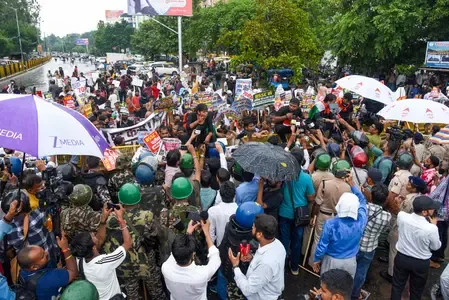
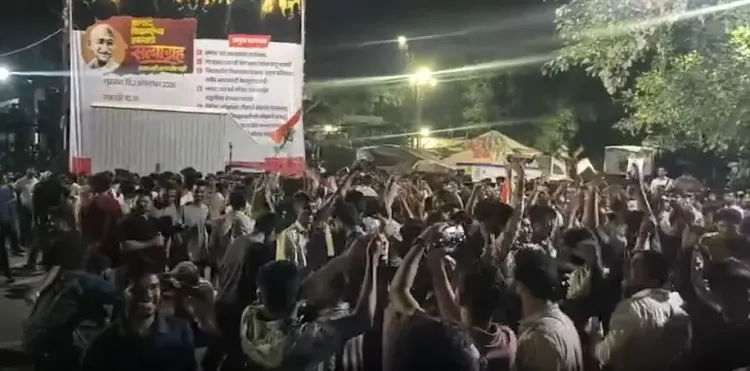
Competitive exam aspirants in Pune called off their 11-day street protest following the government's concessions, though the suspension is described as temporary.
NCP(SP) MLA Rohit Pawar welcomed the outcome but noted the primary demand of an outright resignation was not fully met.
MPSC Chairman Vivek Bhimanwar announced early on Monday, 13 October 2026, that he would proceed on leave until a state-ordered judicial inquiry into the alleged Maharashtra Public Service Commission (MPSC) paper leak controversy is completed. The announcement, made at around 1.24 am, came hours after the Maharashtra government constituted a high-level inquiry panel late Sunday night — a twin development that prompted competitive exam aspirants in Pune to call off their 11-day-long street protest.
What Triggered the Late-Night Breakthrough
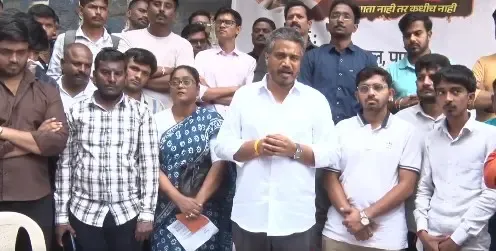
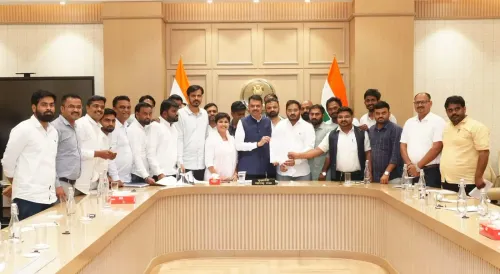
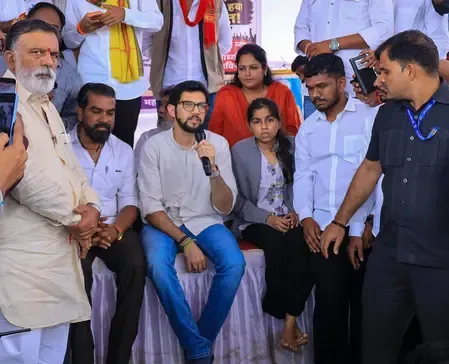
The breakthrough followed a marathon midnight meeting between state Public Works Minister Shivendra Raje Bhosale, political leaders, and a delegation of protesting students. The government's concessions — an independent judicial probe and the effective step-down of the Commission's top leadership — met the core demands of agitators who had been staging demonstrations near Navi Peth and SM Joshi Bridge in Pune for over a week under the banner of various student rights organisations.
In a gesture of goodwill after the talks, protesting aspirants applauded and expressed gratitude to police officers deployed at the site. The protest was announced as temporarily suspended, not permanently withdrawn — a distinction the student groups were careful to maintain.
Bhimanwar's Statement on X
In a post on X (formerly Twitter), MPSC Chairman Vivek Bhimanwar articulated his decision in terms of personal ethics and institutional credibility. 'The state government has announced a judicial inquiry into the MPSC paper leak case. Throughout my entire life, I have always prioritised ethics. Therefore, I have decided to go on leave during this period instead of continuing to serve in the post until this inquiry is completed. The autonomy, credibility, and interests of students of the MPSC have always been my priority, and they will continue to be so in the future. Jai Hind! Jai Maharashtra,' he said.
The High-Level Inquiry Committee
To address systemic flaws in the Commission's examination processes and recommend comprehensive administrative reforms, the state government has constituted a high-level inquiry and review committee headed by former Chief Justice of the Bombay High Court, Justice Dilip Bhosale. The panel's members include former Justice P.D. Naik, senior IAS officer Tukaram Mundhe — who has also been appointed Committee Secretary with a mandate to overhaul examination processes — Retired Secretary Ganesh Patil, and Inspector General of Police Lakhmi Gautam. The committee has been asked to study structural flaws in MPSC operations and submit a detailed reform report within two months.
Political Response and Student Reaction
Nationalist Congress Party (Sharad Pawar faction) MLA Rohit Pawar, who participated in the protest alongside students, welcomed the government's concessions while noting that the primary demand had been the Chairman's outright resignation. 'Although it was delayed, the government has accepted the students' demands. While our primary demand was a resignation, keeping the students' examinations in mind, we decided to suspend the agitation. This victory belongs to the unity of the students,' he said.
Pawar acknowledged the government's significant accommodation, observing: 'The children took one step back, but the government took ten steps back.' He also announced plans to tour drought-affected regions in Vidarbha following the resolution. MLAs Vishwajeet Kadam and Pramod Patil were among the leaders who backed the movement throughout the 11-day agitation.
What Happens Next
The inquiry committee is expected to begin work immediately, with a reform report due within two months. The protest's suspension — rather than withdrawal — signals that student groups intend to monitor implementation closely. Notably, this episode adds pressure on the broader MPSC examination calendar, which thousands of aspirants depend upon for government employment; any further delays to scheduled exams could reignite tensions. How swiftly the committee establishes accountability will likely determine whether this represents a lasting institutional correction or a temporary concession.
Point of View
But it is notably incomplete — a leave of absence is not a resignation, and the protest's 'suspension' rather than withdrawal reflects that students know the difference. The formation of a committee headed by a former Chief Justice lends credibility, but India's record with such panels is mixed: they are often constituted to defuse street pressure, not to drive structural change. The two-month deadline is tight, and the MPSC's examination backlog — a direct consequence of the controversy — means the real cost is being borne by the very aspirants the panel is meant to protect. If the committee's report is shelved or diluted, Pune's streets could fill again quickly.
NationPress
12 Oct 2026
Frequently Asked Questions
Why did MPSC Chairman Vivek Bhimanwar go on leave?
Bhimanwar announced he would proceed on leave until a state-ordered judicial inquiry into the alleged MPSC paper leak controversy is completed. He stated that ethics have always been his priority and that the autonomy and credibility of the Commission must be protected during the inquiry period.
What is the MPSC paper leak controversy?
The controversy involves allegations of paper leaks and administrative irregularities in examinations conducted by the Maharashtra Public Service Commission, the body that recruits candidates for Maharashtra state government services. The allegations triggered an 11-day street protest by thousands of competitive exam aspirants in Pune.
Who is heading the judicial inquiry committee?
The high-level inquiry and review committee is headed by former Chief Justice of the Bombay High Court, Justice Dilip Bhosale. Other members include former Justice P.D. Naik, IAS officer Tukaram Mundhe (also Committee Secretary), Retired Secretary Ganesh Patil, and Inspector General of Police Lakhmi Gautam.
Has the Pune student protest been permanently called off?
No — the protest has been temporarily suspended, not permanently withdrawn. Student groups announced the suspension after the government constituted the judicial inquiry panel and the MPSC Chairman agreed to go on leave, but they indicated they will continue to monitor whether demands are fully implemented.
When will the inquiry committee submit its report?
The high-level committee has been tasked with studying structural flaws in MPSC operations and submitting a detailed reform report within two months of its constitution.