CM Office: MSME Policy Spurs Industrial Growth in Champawat
Synopsis
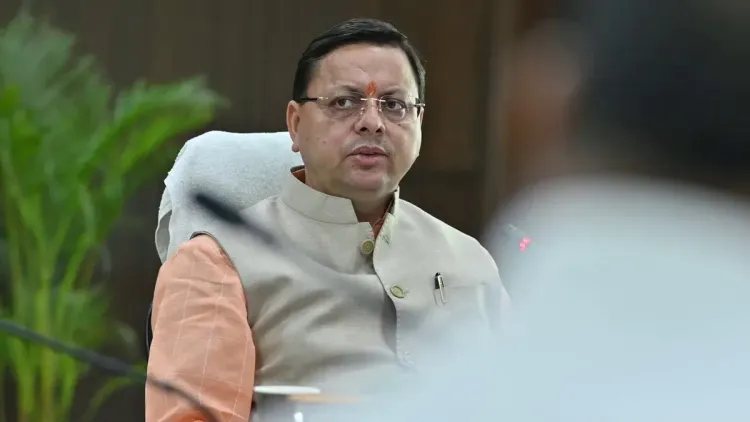
The Uttarakhand Chief Minister's Office on 9 July 2026 highlighted BNK Mineral Water in Champawat as a flagship success under the state MSME policy, underscoring the government's push to build dispersed manufacturing clusters in hill districts and curb out-migration.
Key Takeaways
The Uttarakhand Chief Minister's Office on 9 July 2026 publicly credited the state MSME policy with accelerating industrial development in Champawat district .
BNK Mineral Water has been named a 'new model of success' by the government, signalling its use as a reference case for future industrial outreach.
Uttarakhand's MSME strategy deliberately targets less-industrialised hill districts to counter out-migration, rather than concentrating growth in plains districts like Haridwar and Udham Singh Nagar .
Mineral water bottling is a priority sector because Uttarakhand possesses abundant natural springs suitable for commercial exploitation.
The national legal backbone for this push is the Micro, Small and Medium Enterprises Development Act, 2006 , supplemented by state-level subsidies and single-window clearances.
Future policy watchers will track state budget announcements for any extension of MSME incentives to additional Kumaon districts or new sectors.
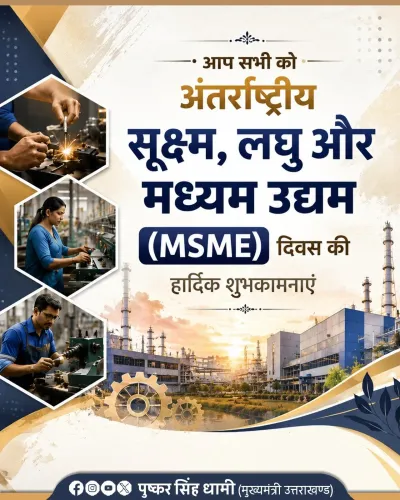
The Chief Minister's Office of Uttarakhand on 9 July 2026 highlighted how the state's MSME policy is driving industrial momentum in Champawat district, citing BNK Mineral Water as a new model of entrepreneurial success in the Kumaon hills.
The post, shared in Hindi, reads: 'MSME niti ke sahyog se janpad Champawat mein audyogik vikas ko mili nayi gati' — ('Industrial development in Champawat district has gained fresh momentum with the support of the MSME policy') — and names BNK Mineral Water as a 'new model of success.'
Context
Champawat is one of Uttarakhand's smaller hill districts in the Kumaon division, historically dependent on agriculture and government employment. The district has long faced challenges of out-migration as young residents move to plains cities in search of livelihoods. Industrial promotion in such districts is therefore a policy priority for the state government.
Mineral water bottling is considered a natural fit for Uttarakhand's hill districts, which sit atop abundant natural springs. A unit such as BNK Mineral Water leverages this geographic advantage to create local manufacturing activity and employment.
Policy Backdrop
Uttarakhand's MSME policy operates within the national framework established by the Micro, Small and Medium Enterprises Development Act, 2006, which created the legal architecture for promoting and developing MSMEs across India. State-level policies layer additional incentives — including capital subsidies, interest subventions, and single-window clearances — on top of this central framework.
The state government has used these instruments specifically to channel investment into less-industrialised hill districts, deliberately avoiding a concentration of industry only in plains districts such as Haridwar and Udham Singh Nagar. The goal is to build dispersed manufacturing clusters that keep economic activity — and people — in the mountains.
Stakeholders and Impact
The primary beneficiaries of this push are local MSME entrepreneurs in Champawat and the workers they employ. A functioning mineral water unit generates direct jobs in production, packaging, and logistics, as well as indirect demand for local suppliers and transport operators.
For the district administration, a successful unit like BNK Mineral Water serves a dual purpose: it demonstrates that the policy framework is working, and it acts as a reference point to attract further investment. The Chief Minister's Office amplifying the story on a public platform signals that the government intends to use such examples as active outreach to prospective entrepreneurs.
What's Next
The broader question is whether the momentum in Champawat can be replicated across other hill districts. Analysts and industry bodies will watch upcoming state budget announcements and any revision to MSME policy guidelines for signals that similar incentives may be extended to additional districts or sectors beyond mineral water bottling.
If Uttarakhand's dispersed-industrialisation approach delivers measurable employment numbers in FY 2026-27, it could strengthen the case for a more aggressive expansion of the single-window clearance model into tourism, food processing, and herbal product manufacturing — sectors where the state's natural endowments are equally strong.
Point of View
Not incidental praise — it frames local entrepreneurship as a policy outcome rather than individual luck. Uttarakhand has struggled for years to make its industrial incentive architecture legible to hill-district residents who remain sceptical that schemes designed in Dehradun reach them. By naming BNK Mineral Water publicly, the government is effectively creating a peer-referral signal for other prospective entrepreneurs in Kumaon. The broader arc here is the state's attempt to rebalance its industrial geography away from the plains corridor — a goal that will be tested when employment data from these dispersed clusters is eventually made public.
NationPress
7 Oct 2026
Frequently Asked Questions
What is the Uttarakhand MSME policy and how does it help hill districts?
Uttarakhand's MSME policy offers capital subsidies, interest subventions, and single-window clearances to micro, small and medium enterprises, with targeted incentives for less-industrialised hill districts to generate local employment and reduce out-migration.
What is BNK Mineral Water in Champawat?
BNK Mineral Water is a mineral water bottling unit in Champawat district, Uttarakhand, which the state Chief Minister's Office has cited on 9 July 2026 as a success model supported by the state MSME policy.
Why is Champawat being focused on for industrial development?
Champawat is a small hill district in Uttarakhand's Kumaon division that has historically faced out-migration and limited industry. The state government is using MSME incentives to create dispersed manufacturing activity there rather than concentrating growth only in plains districts.
What is the MSME Development Act 2006?
The Micro, Small and Medium Enterprises Development Act, 2006 is the central Indian law that established the legal framework for promoting and developing MSMEs across the country, on which state-level policies like Uttarakhand's are built.
Which sectors does Uttarakhand promote under its MSME scheme for hill districts?
Mineral water bottling is a key promoted sector given the state's natural springs, alongside food processing, herbal products, and tourism-linked manufacturing, all of which leverage Uttarakhand's geographic and natural resource advantages.