MTB Shimla 2026: 130 km, 3,800m climb and ₹8 lakh prize await 13th edition riders
Synopsis
MTB Shimla returns for its 13th edition with its most ambitious course yet — 130 km, 3,800 metres of climbing, nine national podium finishers, and a first-ever entry for gravel bikes. From an 11-year-old debutant to a 68-year-old veteran, the ₹8 lakh prize field captures just how far Indian mountain biking has travelled.
Key Takeaways
The 13th edition of MTB Shimla is organised by HASTPA from 23 to 25 October 2026 in Shimla, Himachal Pradesh .
The race covers 130 km of terrain with 3,800 metres of total climbing and a prize purse of ₹8 lakh across six categories .
Cyclists from 20 cities are competing, including nine national podium finishers .
For the first time, gravel bikes are permitted alongside mountain bikes at the event.
The field spans from 11-year-old Kaarik Sharma of Shimla to 68-year-old Maheshwar Dutt .
ASP Mehar Panwar highlighted road safety and helmet use as a core message woven into the event.
The 13th edition of MTB Shimla, one of the most demanding mountain biking events on the Himalayan racing calendar, is set to unfold across 130 km of rugged terrain with 3,800 metres of total climbing and a prize purse of ₹8 lakh, beginning 23 October in Shimla, Himachal Pradesh. Organised by HASTPA, the three-day event runs from 23 to 25 October and will draw cyclists from 20 cities, including nine national podium finishers.
Course and Format
Returning to its Cross Country Marathon (XCM) format, this year's race opens with a prologue before moving into two timed competitive stages. Nearly 90 per cent of the course runs off-road, routing riders through narrow single-tracks, forest trails, jeep roads, rock gardens and stream crossings — terrain that rewards both endurance and technical skill in equal measure.
In a first for the event, gravel bikes have been permitted alongside conventional mountain bikes, broadening participation for the growing gravel cycling community in India.
Stage-by-Stage Breakdown
Stage I — The Flight of the Pheasant takes place on 24 October, covering 55 km with 1,780 metres of elevation gain. Starting at the Kufri Wildlife Sanctuary, the route winds through Patgyaar, Talo ka Naal, Mundaghat, Tharol, Galu and Fagu before concluding at Dak Bangla. Sustained forest climbs and technical descents are expected to make this the decisive opening salvo.
Stage II — The Cedar Wreath, on 25 October, spans 48 km with 1,280 metres of climbing. Beginning again at Kufri Wildlife Sanctuary, riders pass through Charabra, Mashobra, Purani Koti, Kanda, Dak Bangla, Fagu and Bekalthi, finishing at Mashobra. Together, both stages carry the field deep into the forests, villages and mountain trails that lie beyond Shimla's well-known tourist circuits.
Who's Competing
The ₹8 lakh prize purse will be distributed across six categories, drawing competitors spanning generations. At 11 years old, Shimla's Kaarik Sharma is the youngest entrant; 68-year-old Maheshwar Dutt is the oldest. Shimla leads the local contingent with 18 riders, followed by Bengaluru with six. Participants are also travelling from Jaipur, Delhi, Leh and Guwahati, bringing together emerging talent and seasoned racers on the same unforgiving course.
Road Safety at the Centre of the Event
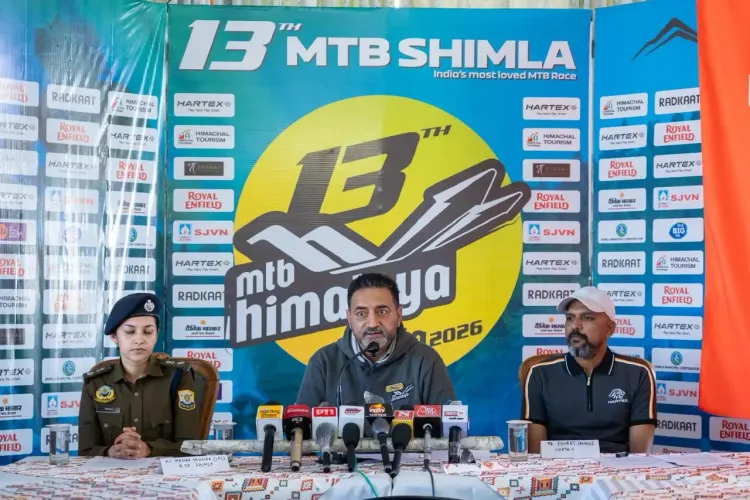
Beyond competitive racing, organisers have woven a road safety message into the event's fabric. Assistant Superintendent of Police (ASP) Mehar Panwar commended HASTPA for integrating responsible riding into the event's broader sporting focus, underscoring the importance of cultivating safe habits among young riders in particular.
'Wear a helmet correctly on every ride, follow traffic rules and respect every road user,' she told the media in Shimla, calling for a strong, visible message on helmet use at the event.
What to Watch
With nine national podium finishers in the field and a course that punishes any lapse in concentration, the 13th edition promises its most competitive field yet. The inclusion of gravel bikes adds a new strategic dimension, and the intergenerational spread — from an 11-year-old to a 68-year-old — underlines MTB Shimla's growing reach across India's cycling community.
Point of View
Yet it remains under-covered in national sports media still dominated by cricket and football. The decision to allow gravel bikes for the first time signals that organisers are tracking global cycling trends rather than standing still — a smart move as gravel riding expands rapidly among India's urban fitness community. The intergenerational field, stretching from an 11-year-old to a 68-year-old, is the clearest evidence yet that the event is building a genuine grassroots base rather than catering only to elite athletes. Whether prize money and visibility can keep pace with that ambition is the question the 14th edition will need to answer.
NationPress
22 Oct 2026
Frequently Asked Questions
What is MTB Shimla 2026?
MTB Shimla 2026 is the 13th edition of a competitive mountain biking event held in the Himalayan region around Shimla, Himachal Pradesh. Organised by HASTPA from 23 to 25 October, it features 130 km of off-road terrain, 3,800 metres of climbing, and an ₹8 lakh prize purse across six categories.
What are the two main stages of MTB Shimla 2026?
Stage I, called 'The Flight of the Pheasant', covers 55 km with 1,780 metres of elevation gain on 24 October, starting at Kufri Wildlife Sanctuary. Stage II, 'The Cedar Wreath', covers 48 km with 1,280 metres of climbing on 25 October, also starting at Kufri before finishing at Mashobra.
Who can participate in MTB Shimla 2026?
The event is open to cyclists across six age and skill categories. This year's field includes participants from 20 cities across India, ranging from 11-year-old Kaarik Sharma to 68-year-old Maheshwar Dutt, as well as nine national podium finishers.
What is new in the 13th edition of MTB Shimla?
The 13th edition marks the first time gravel bikes are permitted at the event, alongside conventional mountain bikes. It also returns to the Cross Country Marathon (XCM) format, with a prologue followed by two timed stages.
How does MTB Shimla address road safety?
Road safety and responsible riding have been integrated into the event's wider focus. ASP Mehar Panwar, who addressed the media ahead of the race, called for a strong message on helmet use and traffic rule compliance, particularly for young riders.