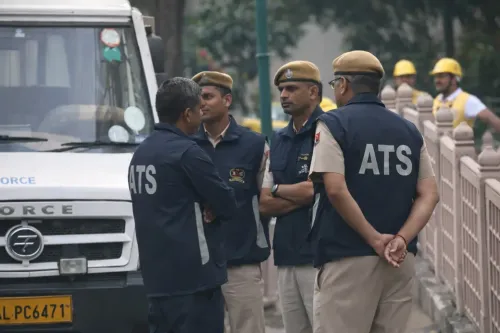
Mumbai ATS arrests 20-year-old for spying on Chabad House, Jewish sites
Synopsis
A 20-year-old from Airoli was allegedly photographing the Chabad House — site of one of 26/11's bloodiest episodes — for anti-national handlers on Telegram, and was receiving payments for it. The Mumbai ATS arrest also unravelled a Kerala UAPA link and exposed what officials say is a Pakistani-handler network systematically targeting unemployed youth online.
Key Takeaways
Yash Singh , 20 , of Airoli, Navi Mumbai , arrested by the ATS on 15 November 2026 for allegedly surveilling sensitive Mumbai locations.
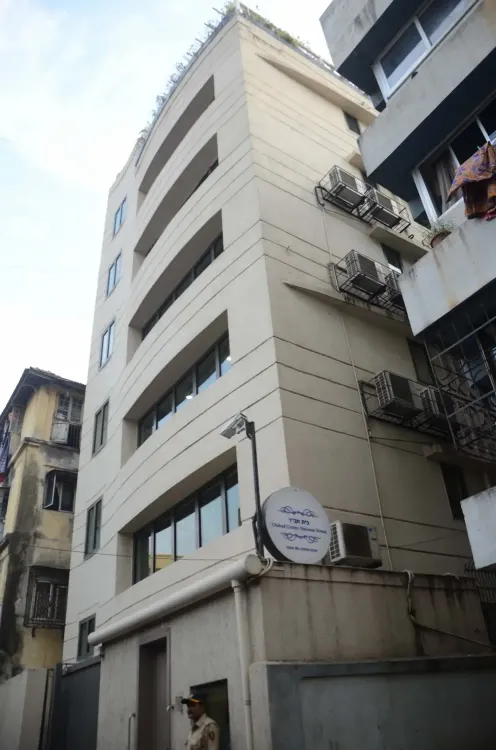
Alleged targets included the Chabad House/Nariman House in Colaba — a primary 26/11 attack site — and businesses linked to Jewish citizens.
Singh allegedly used Telegram to share photos and location data with anti-national handlers, and received payments in return.
He was found linked to Crime No.
994/2025 at Thrissur East Police Station, Kerala , under Section 13 of UAPA, 1967 ; Kerala Police arrested him in connection with that case.
The ATS has identified the Shahzad Bhatti network as among the Pakistani-handler operations using social media to recruit financially distressed youth for anti-national tasks.
The ATS has issued a public advisory urging citizens not to interact with unknown handles on social media or share information about sensitive locations.
Mumbai's Anti-Terrorism Squad (ATS) has arrested 20-year-old Yash Singh, a resident of Airoli, Navi Mumbai, for allegedly conducting surveillance on sensitive locations across the city — including the Chabad House (Nariman House) in Colaba — and sharing photographs and location details with anti-national operatives via social media. The arrest, made on 15 November 2026, follows a confidential tip received by the ATS Navi Mumbai unit and marks a significant counter-intelligence operation targeting what officials describe as a foreign-linked recruitment network.
What Singh Allegedly Did
According to officials, Singh had been assigned by anti-national actors and mafia-linked social media handles to photograph and document the Chabad House/Synagogue in Colaba, companies owned by Jewish citizens, foreign or Jewish nationals and their vehicles, and surrounding strategic locations. He allegedly transmitted this reconnaissance material through Telegram to handlers he had contacted via social media platforms, and reportedly received financial payments in return for the information.
The Chabad House carries particular historical weight — it was one of the primary targets during the 26/11 Mumbai terror attacks of 2008, making any surveillance of the site a matter of heightened national security concern.
Kerala UAPA Link Surfaces
Investigators uncovered a critical cross-state connection during the probe. Singh was found to be linked as an associate in Crime No. 994/2025, registered at Thrissur East Police Station, Kerala, under Section 13 of the Unlawful Activities (Prevention) Act (UAPA), 1967. The ATS promptly shared its findings with Thrissur police, following which a Kerala Police team arrived in Navi Mumbai, questioned Singh, confirmed his direct involvement in that case, and subsequently arrested him in connection with the Kerala investigation.
The Shahzad Bhatti Network and Social Media Recruitment
The ATS has flagged a broader threat pattern underlying this arrest. According to the agency, several international criminal syndicates and anti-national elements — including the Shahzad Bhatti network, described as a Pakistani handler operation — are systematically using platforms such as Telegram, Instagram, and WhatsApp to identify and recruit unemployed, financially distressed youth. Officials say these operatives lure targets with money before tasking them with anti-national and sabotage-related activities. This case, investigators note, is representative of a growing trend of low-cost, high-risk human intelligence gathering via social media.
ATS Warning to Citizens
The ATS has issued a public advisory urging citizens — particularly parents and young people — not to interact with unknown individuals on social media or accept financial offers from unfamiliar handles. The agency has specifically cautioned against sharing photographs, reconnaissance details, or information about sensitive locations with anyone. The ATS added that it is actively identifying and taking action against individuals drawn into such networks, and that further investigations are ongoing.
With the UAPA case in Kerala under active inquiry and the Mumbai reconnaissance probe continuing, authorities are expected to pursue additional leads that could expose wider elements of the alleged network.
Point of View
Deniable local recruits sourced cheaply through social media. What is striking is the cross-state dimension: a Mumbai reconnaissance case with a Kerala UAPA thread suggests these networks operate on a pan-India basis, not in city silos. The ATS advisory is well-meaning, but the deeper policy question is whether India's counter-radicalisation architecture — focused largely on religious extremism — is built to intercept financially motivated, ideologically agnostic recruits who are hired the way gig workers are.
NationPress
15 Nov 2026
Frequently Asked Questions
Who was arrested by the Mumbai ATS and why?
Yash Singh , a 20-year-old resident of Airoli, Navi Mumbai, was arrested by the Anti-Terrorism Squad (ATS) for allegedly conducting reconnaissance of sensitive sites including the Chabad House in Colaba and Jewish-linked businesses, and sharing photographs and location details with anti-national operatives through social media platforms. He allegedly received payments for this activity.
What is the Chabad House and why is it significant?
The Chabad House , also known as Nariman House , is a Jewish community centre in Colaba, Mumbai . It was one of the primary targets during the 26/11 Mumbai terror attacks of 2008, making it one of the most sensitive locations in the city from a security standpoint.
What is the Kerala UAPA connection in this case?
Investigators found that Singh was linked as an associate in Crime No. 994/2025 , registered at Thrissur East Police Station, Kerala , under Section 13 of the Unlawful Activities (Prevention) Act (UAPA), 1967 . A Kerala Police team subsequently travelled to Navi Mumbai, confirmed his involvement, and arrested him in connection with that case.
What is the Shahzad Bhatti network mentioned by the ATS?
The Shahzad Bhatti network is described by the ATS as one of several Pakistani-handler operations using platforms like Telegram , Instagram , and WhatsApp to recruit unemployed and financially distressed youth in India for anti-national and sabotage activities. The ATS says it is actively tracking and acting against individuals linked to such networks.
What precautions has the ATS asked citizens to take?
The ATS has urged citizens — especially parents and young people — not to interact with unknown individuals on social media, not to accept financial offers from unfamiliar handles, and not to share photographs or information about sensitive or strategic locations with anyone. The agency has warned that it is actively pursuing those drawn into such networks.