Mumbai Metro Line 12-A: Cabinet clears ₹13,856 crore project, 3.5-year deadline set
Synopsis
The Maharashtra Cabinet has cleared Mumbai Metro Line 12-A — an 18.40 km, ₹13,856 crore elevated corridor from Manpada–Katai Naka to Taloja — with CM Fadnavis setting a firm three-and-a-half-year deadline. With interchange links to the Bullet Train feeder and three metro lines, and a projected daily ridership of 4,74,000, this is among the most strategically loaded metro approvals in the MMR expansion drive.
Key Takeaways
The Maharashtra Cabinet approved Mumbai Metro Line 12-A on 27 October 2026 , at an estimated cost of ₹13,856.37 crore .
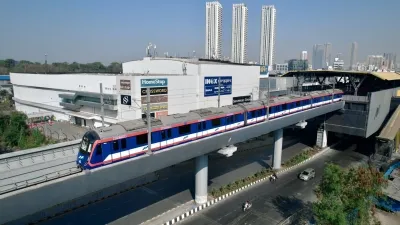
The 18.40 km fully elevated corridor connects Manpada–Katai Naka to Taloja via Kalyan Phata , with 12 elevated stations .
Daily ridership is projected at 4,74,000 commuters ; road commute times expected to drop by 40%–50% .
MMRDA is the implementing agency and has been declared Special Planning Authority (SPA) for the project zone.
Interchange connections are planned with Metro Lines 12, 14 , Navi Mumbai Metro Line 1 , and Mumbai–Ahmedabad Bullet Train feeder routes.
CM Fadnavis directed officials to accelerate all ongoing metro projects across Maharashtra to meet deadlines.
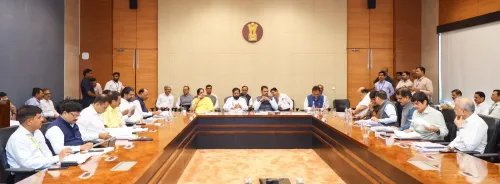
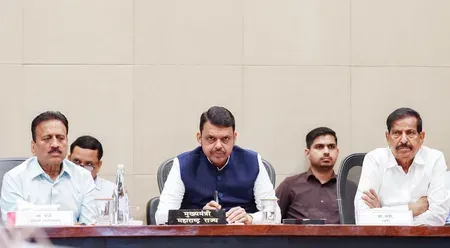
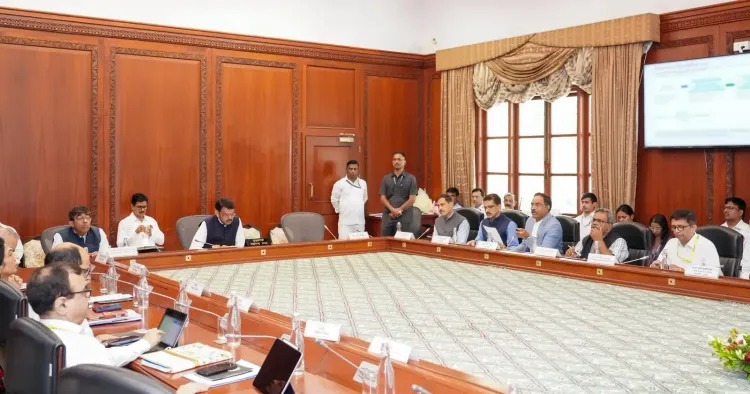
The Maharashtra Cabinet Committee on Infrastructure, chaired by Chief Minister Devendra Fadnavis, on Tuesday, 27 October 2026, approved the ₹13,856.37 crore Mumbai Metro Line 12-A — an 18.40 km fully elevated corridor linking Manpada–Katai Naka to Taloja via Kalyan Phata. The Cabinet directed authorities to complete the project within three and a half years, with the Mumbai Metropolitan Region Development Authority (MMRDA) designated as the implementing agency.
Project Scope and Infrastructure
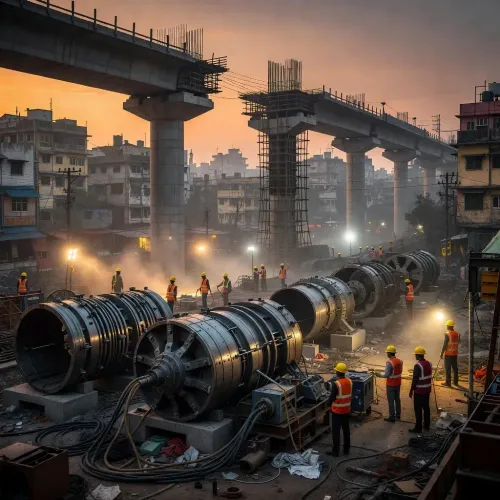
The corridor will feature 12 elevated stations along its 18.40 km stretch. The alignment incorporates a 6.93 km four-lane integrated flyover and an 8.69 km six-lane integrated flyover, making it one of the more engineering-intensive metro proposals in the Mumbai Metropolitan Region (MMR). The government has also declared MMRDA the Special Planning Authority (SPA) for the project's influence zone, enabling streamlined land acquisition and development approvals.
Multimodal Connectivity and Interchange Points
Metro Line 12-A has been designed as a strategic connector between the industrial belts of Kalyan-Dombivli and Navi Mumbai. At Katai Naka, it will interchange with Metro Line 12 and with feeder routes for the Mumbai–Ahmedabad Bullet Train corridor. Between Katai Naka and Kalyan Phata, it will connect to Metro Line 14, while Amandoot station will serve as an interchange node with Navi Mumbai Metro Line 1. Feeder bus services are planned at all 12 stations to address last-mile connectivity gaps.
Expected Impact: Commuters, Environment and Economy
The project is projected to draw a daily ridership of 4,74,000 commuters once operational. According to MMRDA Metropolitan Commissioner Dr Sanjay Mukherjee, the modal shift from private vehicles to rapid transit will ease congestion on national highways and meaningfully reduce carbon dioxide (CO₂) emissions. Commute times on the corridor are expected to fall by 40% to 50% compared with existing road travel. The project is additionally intended to catalyse economic and industrial development across the broader Thane–Navi Mumbai region.
Funding and Land Transfer Mechanism
Selected government-owned lands within the project influence zone are to be transferred to MMRDA to support project financing and development. This land-value-capture approach has been used in earlier metro phases across Mumbai as a way to partially offset capital outlays without proportionate increases in state budgetary allocation.
Fadnavis Pushes State-Wide Metro Acceleration
Chief Minister Fadnavis also directed officials to fast-track all ongoing metro construction work across Maharashtra to meet committed deadlines — a signal that the administration intends to hold line agencies accountable across the metro portfolio, not just on Line 12-A. With Mumbai's metro network expanding rapidly, the three-and-a-half-year target for this corridor will be closely watched as a benchmark for execution credibility.
Point of View
However, is ambitious by Mumbai metro standards, where land acquisition delays and utility shifting have routinely stretched timelines. MMRDA's designation as Special Planning Authority could reduce approval friction, but the real test is whether the land-value-capture mechanism generates sufficient non-budgetary funding without creating development controversies. With Fadnavis publicly extending the acceleration directive to all state metro projects, his political credibility is now tied to delivery on a broad infrastructure portfolio — a high-stakes bet in a state where past metro promises have left commuters sceptical.
NationPress
27 Oct 2026
Frequently Asked Questions
What is Mumbai Metro Line 12-A and where will it run?
Mumbai Metro Line 12-A is an 18.40 km fully elevated metro corridor approved by the Maharashtra Cabinet on 27 October 2026. It will connect Manpada–Katai Naka to Taloja via Kalyan Phata, with 12 elevated stations serving the Kalyan-Dombivli and Navi Mumbai belt.
What is the cost of Mumbai Metro Line 12-A?
The project is estimated to cost ₹13,856.37 crore. Selected government-owned lands within the project influence zone will be transferred to MMRDA to help fund and support development, reducing reliance on direct budgetary outlay.
When will Mumbai Metro Line 12-A be completed?
Chief Minister Devendra Fadnavis has directed authorities to complete the project within three and a half years of the Cabinet approval on 27 October 2026. MMRDA is the implementing agency responsible for meeting this deadline.
How many commuters will Metro Line 12-A serve daily?
The project is projected to carry 4,74,000 commuters per day once operational. It is also expected to cut road commute times along the corridor by 40% to 50% and reduce CO₂ emissions by shifting traffic from private vehicles to rapid transit.
Which metro lines and transport networks will connect to Metro Line 12-A?
Metro Line 12-A will interchange with Metro Line 12 and Mumbai–Ahmedabad Bullet Train feeder routes at Katai Naka, with Metro Line 14 between Katai Naka and Kalyan Phata, and with Navi Mumbai Metro Line 1 at Amandoot station. Feeder bus services are planned at all 12 stations.