Myanmar drug cartels fuel Northeast India narcotics threat, exploit Manipur unrest
Synopsis
Myanmar's drug cartels are not just smuggling narcotics into India — they are allegedly bankrolling unrest in Manipur to keep security forces distracted while consignments move. With opium cultivation at 53,100 hectares and cartel production reportedly tripling in 2026, Indian enforcement agencies face a threat that is growing faster than any seizure record can contain.
Key Takeaways
Myanmar reportedly now produces the world's largest quantity of opium, with cultivation rising to 53,100 hectares in 2025 .
Intelligence officials allege cartels have hired local operatives to deliberately trigger violence in Manipur and other northeastern states to distract security agencies.
Cartel production reportedly surged by nearly three times in 2026 , outpacing enforcement gains.
Seizures in Assam stood at 31,706 kg and in Tripura at 46,346 kg ; Mizoram recorded a sharp spike to 2,556 kg in 2025 .
The Moreh-Tamu border corridor remains the primary transit route for narcotics entering India from Myanmar.
Officials warn cartel financial reserves may exceed those of some governments, enabling rapid network regeneration after busts.
Myanmar's drug cartels have emerged as the single largest narcotics threat to Northeast India, with intelligence officials warning that the cartels are deliberately stoking civil unrest in states like Manipur to move consignments across the porous India-Myanmar border while security forces remain occupied. The warning comes as agencies report a near-threefold surge in cartel production in 2026, compounding an already overwhelming enforcement challenge.
Myanmar Becomes World's Top Opium Producer
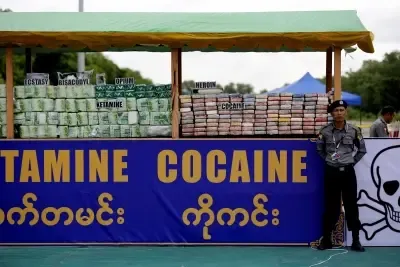
The shift in the global narcotics landscape accelerated after the Taliban regime in Afghanistan imposed a ban on opium cultivation, effectively redirecting the trade to Myanmar's Golden Triangle. According to officials, Myanmar now reportedly produces the largest quantity of opium in the world. A government official noted that by 2025, the opium cultivation area in Myanmar had risen to 53,100 hectares.
The Narcotics Control Bureau (NCB) had described the scale of the narcotics trade out of Myanmar as 'dramatic' in 2025. By March 2026, the government informed the Lok Sabha that the number of drug seizures had gone up considerably, even as officials acknowledged that production was outpacing enforcement.
Seizures Rise, But the Problem Deepens
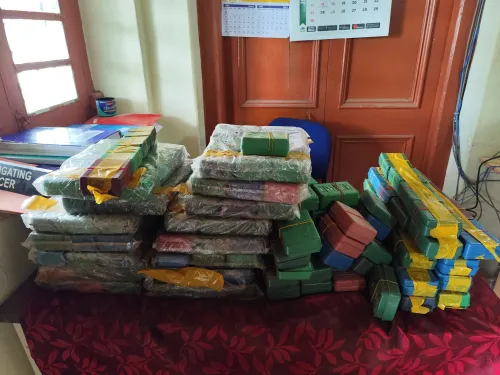
Seizure data from northeastern states underlines the scale of the problem. In Assam, 31,706 kg of narcotics were seized, while Tripura recorded 46,346 kg. Mizoram saw a sharp spike, with seizures climbing from 1,967 kg in 2024 to 2,233 kg in 2025. A separate data point within the source indicates that Mizoram's seizures jumped from just 284 kg in 2024 to 2,556 kg in 2025, reflecting the volatility of flows into the state.
Notably, officials caution that even record seizures do not fully reflect the scale of trafficking. Intelligence reports suggest cartel production in 2026 has ramped up by nearly three times, meaning enforcement gains are being rapidly outpaced.
Cartels Exploit Conflict — Including in Manipur
According to an Intelligence Bureau official, Myanmar's drug cartels have repeatedly sought to exploit civil unrest in northeastern states, with Manipur identified as a key vulnerability. The official alleged that investigations have on multiple occasions revealed that cartels hire local operatives to deliberately inflame sensitive local issues, triggering violence that can last for days or even months.
'Such situations provide drug networks with opportunities to expand their operations and strengthen their presence in the region,' the official said. With security agencies focused on managing the violence, cartels exploit the distraction to move large consignments into the northeast.
Synthetic Drugs and Financial Firepower
Beyond opium, Myanmar's cartels are now producing synthetic drugs on a large scale. Methamphetamine is being smuggled into India in significant quantities, driven by strong domestic demand. Officials warn this compounds the enforcement challenge, as synthetic drug supply chains are harder to detect and disrupt.
The financial resources of these cartels further complicate matters. One official said there is 'a strong possibility that the combined wealth of these cartels could be significantly greater than that of a government.' This means that even after successful busts, networks can rapidly regroup, absorb losses, and establish new supply chains.
Terrain and Border Gaps Hamper Agencies
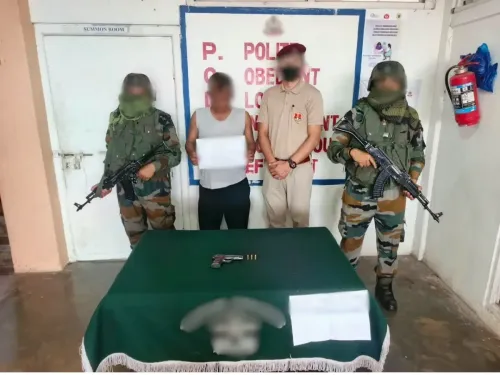
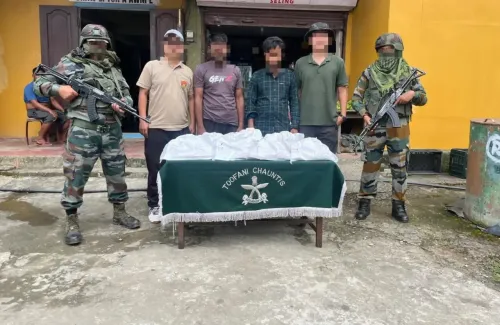
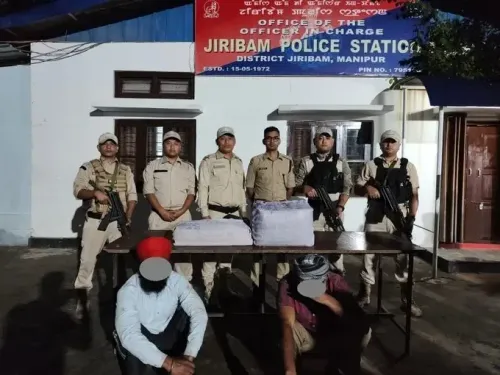
The Moreh-Tamu corridor remains the primary transit point for narcotics entering India from Myanmar. Porous stretches along the India-Myanmar border, combined with dense forest and hilly terrain, make enforcement operations extremely difficult. The NCB and Assam Rifles have been working in close coordination, leading to major drug busts over the past two to three years, but officials acknowledge these gains remain insufficient given the scale of production.
India and Myanmar have held several rounds of bilateral talks on the issue and agreed on joint measures to combat the trade, though officials note that tackling the problem at source will take considerable time. While networks tied to Pakistan-based operators like Dawood Ibrahim and Haji Salim have faced significant disruption, the Myanmar corridor represents a threat of a categorically different scale — one that operates beyond India's direct control and continues to widen.
Point of View
Busting consignments at the border is a holding action, not a solution. The allegation that cartels are deliberately inflaming conflict in Manipur deserves far more scrutiny than it receives: if verified, it reframes what appears to be an ethnic or political crisis as, at least in part, a narco-strategic operation. India's bilateral talks with Myanmar have produced agreements, but Myanmar's governing reality — deep instability and competing armed factions — means there is no reliable counterpart to enforce them on the other side.
NationPress
6 Oct 2026
Frequently Asked Questions
Why has Myanmar become the biggest narcotics threat to Northeast India?
Myanmar reportedly became the world's largest opium producer after the Taliban banned cultivation in Afghanistan, redirecting global supply to Myanmar's Golden Triangle. By 2025, opium cultivation in Myanmar had reached 53,100 hectares, and cartel production reportedly tripled further in 2026, making the Myanmar corridor a threat of a scale that Indian agencies have not previously faced.
How are Myanmar drug cartels exploiting unrest in Manipur?
According to Intelligence Bureau officials, investigations have revealed that cartels allegedly hire local operatives to inflame sensitive issues in northeastern states — including Manipur — deliberately triggering prolonged violence. With security agencies diverted to managing the unrest, cartels reportedly move large drug consignments across the India-Myanmar border with reduced risk of interception.
What narcotics seizure data has been reported from Northeast India?
According to data shared with the Lok Sabha in March 2026, Assam recorded seizures of 31,706 kg and Tripura 46,346 kg. Mizoram saw a dramatic spike, with seizures jumping from 284 kg in 2024 to 2,556 kg in 2025. Officials note, however, that even these large seizure figures represent only a fraction of what is being trafficked.
Which agencies are combating narcotics smuggling in Northeast India?
The Narcotics Control Bureau (NCB) and the Assam Rifles are the primary agencies working in close coordination to combat narcotics trafficking across the India-Myanmar border. Their joint operations have led to major drug busts over the past two to three years, though officials acknowledge that cartel production is growing faster than seizures.
What makes Myanmar drug cartels so difficult to dismantle?
Officials say Myanmar's drug cartels possess financial resources so vast that their combined wealth could potentially exceed that of a government. This allows them to absorb losses from drug busts, quickly regroup, and establish new supply chains. Compounding the challenge are porous border stretches, dense forest and hilly terrain along the India-Myanmar border, and the political instability inside Myanmar that limits the scope of bilateral enforcement cooperation.