Nadda Flags 42 Crore Hypertension, Diabetes Screenings Under NCD Drive

Synopsis
Union Health Minister J. P. Nadda on June 2, 2026 cited 42 crore hypertension and diabetes screenings under India's NCD programme and flagged an ongoing 100-day TB elimination campaign to accelerate detection and treatment, underscoring the government's push from curative to preventive primary care.
Key Takeaways
42 crore people each have been screened for hypertension and diabetes under the national NCD screening programme.
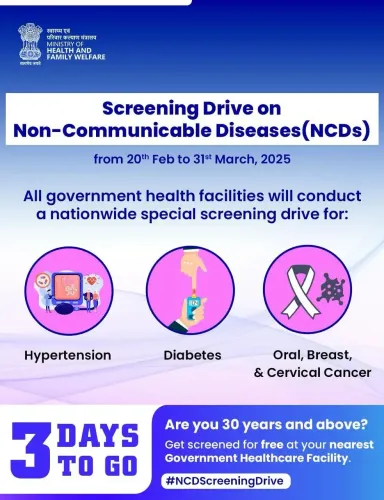
36 crore people have been screened for oral cancer; 17 crore women for breast cancer; 9 crore women for cervical cancer.
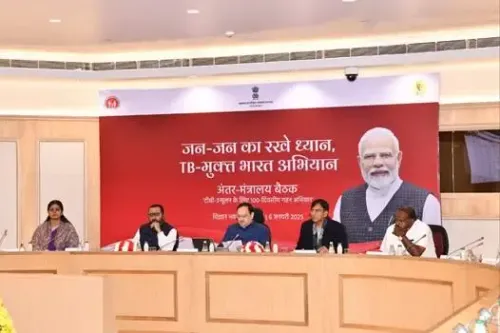
A 100-day TB elimination campaign is currently under way under the National TB Elimination Programme to maximise case identification and timely treatment.
Screening efforts are anchored in Ayushman Bharat Health and Wellness Centres , mandated since 2018 for community-level NCD detection.
India's TB elimination target of 2025 — five years ahead of the SDG deadline — makes the 100-day campaign a critical performance marker for the NTEP.
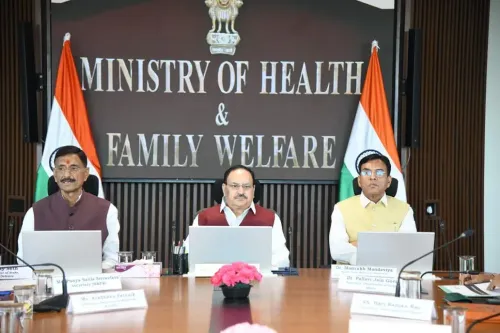
Union Health Minister J. P. Nadda on Tuesday, June 2, 2026, shared cumulative figures from India's national non-communicable disease screening programme, highlighting that 42 crore people each have been screened for hypertension and diabetes, and announced an ongoing 100-day tuberculosis elimination campaign aimed at accelerating case detection and treatment initiation.
Context
In his post, Nadda stated — 'NCD स्क्रीनिंग के तहत अब तक 36 करोड़ लोगों की Oral Cancer, 17 करोड़ महिलाओं की Breast Cancer, 9 करोड़ महिलाओं की Cervical Cancer तथा 42-42 करोड़ लोगों की Hypertension और Diabetes के लिए स्क्रीनिंग की जा चुकी है।' — meaning: 'Under NCD screening, 36 crore people have been screened for oral cancer, 17 crore women for breast cancer, 9 crore women for cervical cancer, and 42 crore each for hypertension and diabetes.' He also noted that a 100-day campaign is under way for TB elimination to identify the maximum number of patients and begin timely treatment.
The figures represent cumulative progress under population-based screening efforts linked to Ayushman Bharat Health and Wellness Centres, which were mandated in 2018 to deliver community-level NCD screening across India's primary healthcare network.
Policy Backdrop
The screening push draws from the National Programme for Prevention and Control of Cancer, Diabetes, Cardiovascular Diseases and Stroke (NPCDCS), launched in 2010-11 under the National Health Mission to operationalise NCD detection at district and sub-district levels. The programme covers the five conditions cited by the minister — oral cancer, breast cancer, cervical cancer, hypertension, and diabetes — as part of a shift from episodic curative care toward proactive early intervention.
On the tuberculosis front, the National TB Elimination Programme (NTEP) set a target to eliminate TB by 2025, five years ahead of the global Sustainable Development Goal timeline, following India's political commitment at the End TB Summit 2018. The current 100-day campaign is a time-bound intensified detection drive under NTEP, combining active case finding with digital tracking through the Nikshay portal.
Stakeholders and Impact
The NCD screening figures span the general population as well as women specifically — the 17 crore breast cancer and 9 crore cervical cancer screenings are entirely women-focused, reflecting the programme's targeted approach to gender-specific cancers. At 42 crore each, the hypertension and diabetes screening numbers represent one of the largest population-based chronic-disease detection exercises globally.
For TB, the 100-day campaign directly targets undiagnosed patients who remain outside the treatment cascade — a critical gap in India's elimination strategy, given that missed cases drive continued transmission. Early identification and treatment initiation are central to reducing both disease burden and community spread.
What's Next
Quarterly progress reports on the 100-day TB campaign and updated NCD screening tallies are expected through health ministry data releases and parliamentary disclosures. With the 2025 TB elimination deadline having passed, the government faces pressure to demonstrate trajectory, making the outcome of this intensified campaign a significant marker for the programme's credibility. Sustained expansion of Health and Wellness Centres will remain the structural backbone for pushing NCD screening coverage further into rural and underserved populations.
Point of View
Which has already lapsed without official acknowledgement of a reset. Together, the messaging positions the ministry as data-driven and target-oriented, though independent verification of cumulative screening figures will be essential to assess actual programme depth versus registration coverage.
NationPress
29 Jul 2026
Frequently Asked Questions
How many people have been screened for diabetes and hypertension in India?
According to Union Health Minister J. P. Nadda, 42 crore people each have been screened for hypertension and diabetes under India's NCD screening programme as of June 2026.
What is the 100-day TB elimination campaign in India?
The 100-day TB elimination campaign is a time-bound intensified case-finding drive under the National TB Elimination Programme (NTEP) , aimed at identifying undiagnosed TB patients and initiating their treatment as quickly as possible.
What cancers are covered under India's NCD screening programme?
The NCD screening programme covers oral cancer (36 crore screened), breast cancer (17 crore women screened), and cervical cancer (9 crore women screened), alongside hypertension and diabetes.
What is India's target for TB elimination?
India set a target to eliminate TB by 2025 under the National Strategic Plan for TB Elimination, five years ahead of the global Sustainable Development Goal timeline committed to at the End TB Summit 2018 .
What is NPCDCS in India?
The National Programme for Prevention and Control of Cancer, Diabetes, Cardiovascular Diseases and Stroke (NPCDCS) is a Central scheme under the National Health Mission, launched in 2010-11 , that provides population-based screening for NCDs at the primary care level.