Nadda: Ayushman Bharat cuts out-of-pocket health spending to 42%
Synopsis
Union Health Minister J. P. Nadda says Ayushman Bharat has driven India's out-of-pocket healthcare expenditure down from 64% to 42%, with over 13 crore hospitalisations and ₹2 lakh crore in treatments delivered, including new universal coverage for all citizens aged 70 and above.
Key Takeaways
Out-of-pocket healthcare expenditure in India has fallen from 64 percent to 42 percent , according to Union Health Minister J.
Ayushman Bharat PM-JAY , launched in September 2018 , provides ₹5 lakh annual coverage per eligible family for secondary and tertiary hospitalisation.
The scheme has facilitated over 13 crore hospitalisations and delivered ₹2 lakh crore worth of treatments to beneficiaries.
Coverage has been extended to all citizens aged 70 years and above , regardless of income level.
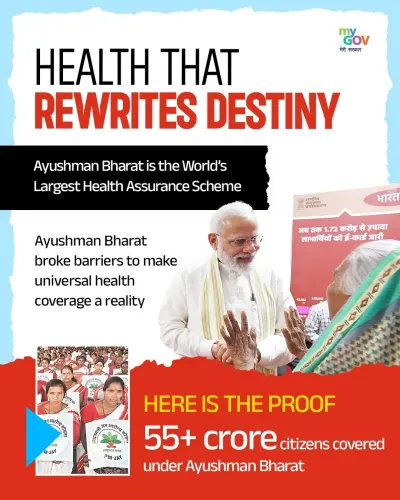
The scheme is described as the world's largest government-funded health assurance programme .
Updated National Health Accounts data and the 70-plus expansion rollout at state level remain key metrics to watch.
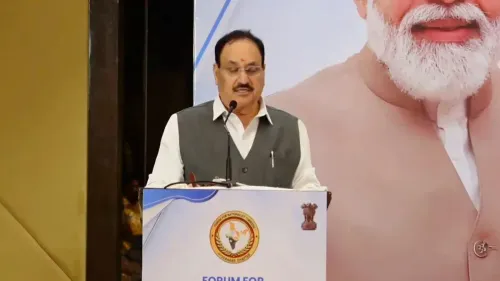
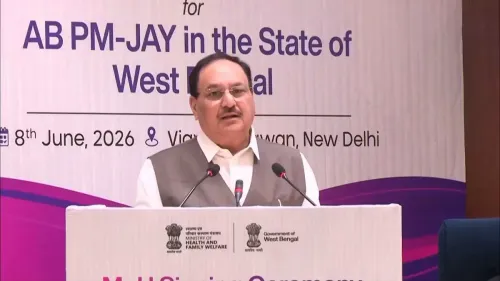
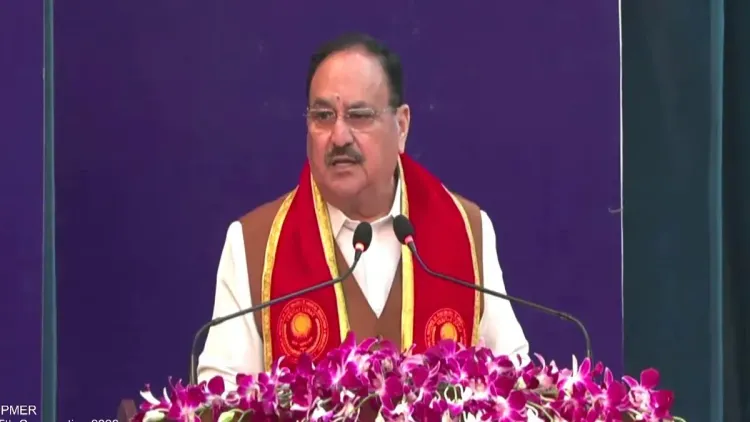
India's out-of-pocket healthcare burden — once a financial death sentence for millions of low-income families — has dropped from 64 percent to 42 percent, Union Health Minister J. P. Nadda declared on Saturday, 21 November 2026, citing the transformative reach of Ayushman Bharat, the government's flagship health assurance scheme.
From 64% to 42%: what that number really means
For decades, India's healthcare story had a brutal subplot: families selling land, livestock, and jewellery to pay hospital bills. Out-of-pocket expenditure — the share of health costs borne directly by patients — hovered above 60 percent of total health spending, one of the highest ratios among large economies. The National Health Policy 2017 had flagged this as a crisis demanding urgent correction.
Nadda's figure of 42 percent suggests that correction is now measurable and substantial. A 22-percentage-point reduction in this metric, if sustained, represents tens of millions of households no longer pushed to the financial brink by a single hospitalisation. That is not a statistic — it is a structural shift.
Ayushman Bharat's scale: 13 crore hospitalisations, ₹2 lakh crore in treatments
Launched in September 2018 under Prime Minister Narendra Modi's government, Ayushman Bharat Pradhan Mantri Jan Arogya Yojana (PM-JAY) was designed as the world's largest government-funded health insurance scheme — and the numbers Nadda cited underline why that description holds. He pointed to over 13 crore hospitalisations facilitated under the scheme and ₹2 lakh crore worth of treatments delivered to eligible beneficiaries.
The scheme provides ₹5 lakh annual health coverage per eligible family for secondary and tertiary hospitalisation at empanelled public and private hospitals. The model was built to absorb catastrophic health expenses — the kind that historically wiped out savings in a single medical episode.
The 70-and-above expansion: ageing India gets a safety net
Perhaps the most consequential recent evolution of the scheme is its extension to all citizens aged 70 years and above, regardless of income. This move directly addresses India's rapidly ageing demographic curve, where senior citizens face disproportionately high hospitalisation rates and are least equipped to absorb sudden medical costs.
By removing the income-eligibility filter for this age group, the policy signals a shift toward universality — a step closer to the universal health coverage goal that global health bodies have long urged India to pursue. For a country where elderly care has traditionally fallen entirely on families, the coverage floor now has a government guarantee behind it.
A health minister's report card — and what comes next
Nadda's post reads as both a progress report and a political marker, arriving as the government approaches a period of budget and policy deliberations. The figures he cited — hospitalisations, treatment value, and the out-of-pocket reduction — will face scrutiny when updated National Health Accounts data or fresh household expenditure surveys are released. State-level rollout of the 70-plus expansion and scheme funding allocations in the next Union Budget will be the real test of whether the trajectory holds.
India set out in 2017 to fix a healthcare financing system that punished its poorest citizens for falling ill. If the numbers Nadda cited are borne out, the country is more than halfway there — and the finish line is finally visible.
Point of View
And a drop from 64 percent to 42 percent — if verified by independent survey data — would represent one of the most significant social policy outcomes of the Modi government's tenure. Nadda's decision to lead with this number, rather than beneficiary enrolment counts, signals a deliberate shift in how the government wants Ayushman Bharat's success to be measured: not just coverage on paper, but actual financial relief in households. The extension to all citizens aged 70 and above also marks a quiet but consequential move toward universality, departing from the scheme's original income-targeting logic. The political and policy test now is whether state governments — many of which run parallel schemes — align their infrastructure and funding to sustain this trajectory as India's ageing population grows.
NationPress
21 Nov 2026
Frequently Asked Questions
What is Ayushman Bharat and who is eligible?
Ayushman Bharat PM-JAY is India's government-funded health insurance scheme providing up to ₹5 lakh annual coverage for hospitalisation. It targets economically vulnerable families and, following a recent expansion, all citizens aged 70 years and above regardless of income.
How much has out-of-pocket healthcare spending reduced in India?
According to Union Health Minister J. P. Nadda, out-of-pocket healthcare expenditure in India has reduced from 64 percent to 42 percent, a decline attributed largely to the reach of the Ayushman Bharat scheme.
How many people have been hospitalised under Ayushman Bharat?
Nadda cited over 13 crore hospitalisations facilitated under Ayushman Bharat, with ₹2 lakh crore worth of treatments delivered to eligible beneficiaries since the scheme's launch.
Are senior citizens covered under Ayushman Bharat?
Yes. Ayushman Bharat has been expanded to cover all citizens aged 70 years and above, providing them with ₹5 lakh annual health coverage irrespective of their income level.
When was Ayushman Bharat launched and by whom?
Ayushman Bharat PM-JAY was launched in September 2018 by the government of Prime Minister Narendra Modi as the world's largest government-funded health assurance scheme targeting secondary and tertiary hospitalisation costs.