Nadda: Ayushman Bharat cuts out-of-pocket health costs
Synopsis
Union Health Minister J. P. Nadda says Ayushman Bharat has driven out-of-pocket health expenditure down from 62.6 percent in 2018 to 43.4 percent, marking a nearly 19-percentage-point relief for Indian households and advancing India's universal health coverage goals.
Key Takeaways
Union Health Minister J.
Nadda stated on 8 June 2026 that Ayushman Bharat has cut out-of-pocket health expenditure from 62.6 percent in 2018 to 43.4 percent .
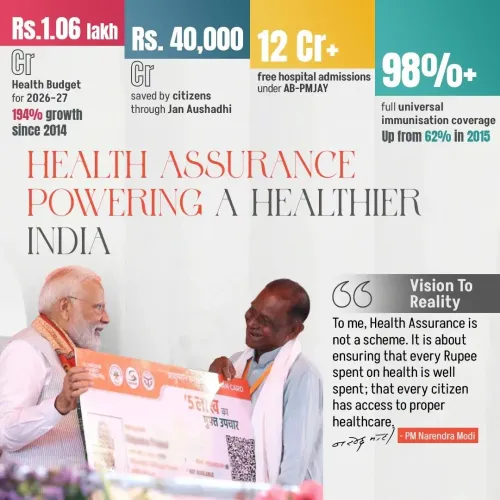
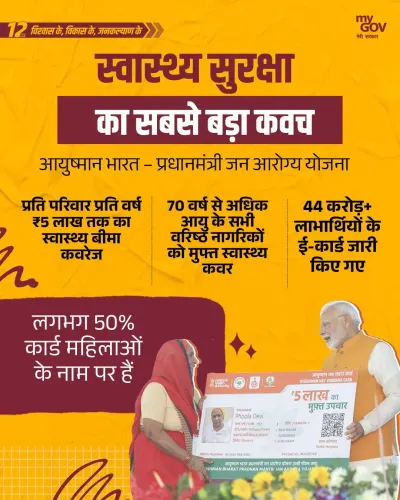
Ayushman Bharat PM-JAY , launched in September 2018 , covers over 10 crore families with up to Rs 5 lakh per year in cashless hospitalisation benefits.
The National Health Policy 2017 targets out-of-pocket spending below 30 percent of total health expenditure by 2025 — a benchmark not yet reached.
The reduction of nearly 19 percentage points over roughly seven years represents the largest single-period decline attributable to a centrally funded health insurance expansion in India.
The shift aligns with India's obligations under Sustainable Development Goal 3 on universal health coverage and financial risk protection.
Parliamentary scrutiny of health budget allocations and future expansions to the Ayushman Bharat beneficiary list will determine the pace of further reduction.
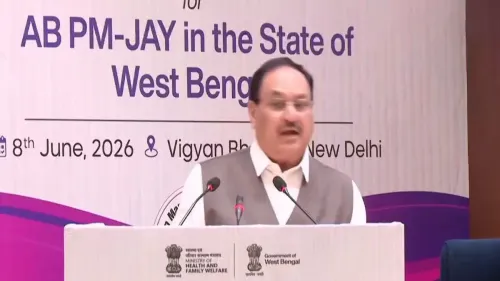
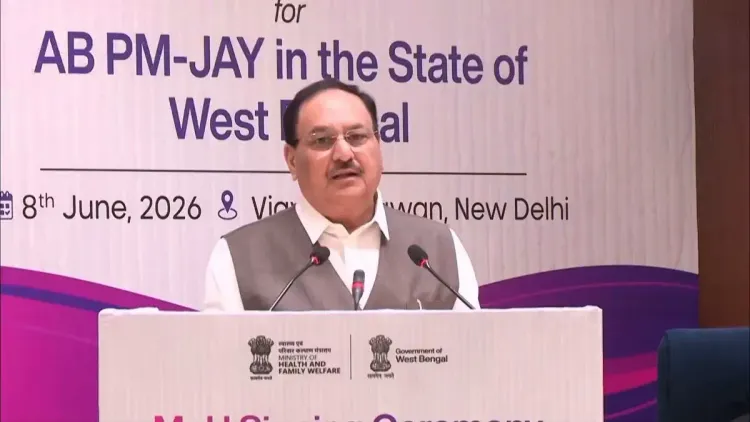
Union Health Minister J. P. Nadda on Monday, 8 June 2026 highlighted a significant reduction in out-of-pocket health expenditure among Indian households, attributing the decline to the Ayushman Bharat scheme. Nadda stated that the share of out-of-pocket spending on health has fallen from 62.6 percent in 2018 to 43.4 percent, delivering meaningful financial relief to ordinary citizens.
Context
In his post, Nadda wrote: 'Ayushman Bharat' yojana ka bada prabhav yeh hai ki logon ka swasthya par hone wala 'out-of-pocket' kharcha 2018 ke 62.6% se ghatakar 43.4% rah gaya hai — ('The major impact of the Ayushman Bharat scheme is that people's out-of-pocket expenditure on health has come down from 62.6 percent in 2018 to 43.4 percent, providing significant economic relief to ordinary citizens.')
The post was accompanied by a video and was shared in Hindi, underscoring the government's outreach to a broad domestic audience on a flagship welfare programme.
Policy Backdrop
Ayushman Bharat Pradhan Mantri Jan Arogya Yojana (PM-JAY) was launched in September 2018 and provides cashless hospitalisation coverage of up to Rs 5 lakh per family per year for secondary and tertiary care to over 10 crore poor and vulnerable families across India.
The scheme was designed in part to address catastrophic health expenditure — a situation where households are pushed into poverty by large, unplanned medical bills. The National Health Policy 2017 had set an explicit target to reduce out-of-pocket expenditure to below 30 percent of total health expenditure by 2025, signalling that the current figure, while improved, still leaves room to reach that benchmark.
Before PM-JAY, the Rashtriya Swasthya Bima Yojana, launched in 2008, offered more limited health insurance to below-poverty-line households. Ayushman Bharat represented a significant expansion in both coverage and benefit size.
Stakeholders and Impact
The primary beneficiaries of this reduction are low-income and rural households, who historically bore a disproportionate share of health costs through direct payments to hospitals and pharmacies. A fall of nearly 19 percentage points in out-of-pocket spending since 2018 suggests that a larger share of health costs is now being absorbed by government-funded insurance and public health infrastructure.
Public hospitals empanelled under Ayushman Bharat have played a central role in delivering cashless care, reducing the need for families to arrange funds upfront. This shift also aligns with India's commitments under Sustainable Development Goal 3 on universal health coverage, which calls for financial risk protection as a core measure of health system performance.
What's Next
Parliamentary discussions on health budget allocations and any announced expansions to the Ayushman Bharat beneficiary list or coverage limits will be closely watched as indicators of how far the government intends to push out-of-pocket costs further downward. The National Health Policy 2017 target of below 30 percent remains the stated long-term benchmark, and reaching it would require sustained increases in public health financing alongside continued scheme enrolment.
As India's publicly funded health insurance architecture matures, the trajectory of household health spending will remain a key metric for assessing whether universal health coverage goals are being meaningfully advanced.
Point of View
The government is shifting the conversation from enrolment numbers — which have been the traditional metric — to financial protection outcomes, a more internationally recognised measure of health system performance. The figure, if sustained, also signals forward momentum toward the National Health Policy 2017 target of sub-30-percent out-of-pocket spending, though a gap of over 13 percentage points remains. This framing positions health insurance expansion as an economic welfare instrument, not merely a medical one — a politically resonant argument ahead of any budget cycle.
NationPress
20 Sept 2026
Frequently Asked Questions
What is Ayushman Bharat and who does it cover?
Ayushman Bharat PM-JAY is India's flagship government health insurance scheme launched in September 2018. It provides cashless hospitalisation coverage of up to Rs 5 lakh per family per year for secondary and tertiary care to over 10 crore poor and vulnerable families.
What does out-of-pocket health expenditure mean?
Out-of-pocket health expenditure refers to direct payments made by households at the point of receiving health services, such as hospital bills, medicines, and diagnostic tests, that are not covered by insurance or government schemes.
By how much has out-of-pocket health spending fallen in India since Ayushman Bharat launched?
According to Union Health Minister J. P. Nadda, out-of-pocket health expenditure has fallen from 62.6 percent in 2018, when Ayushman Bharat was launched, to 43.4 percent — a decline of nearly 19 percentage points.
What is India's target for reducing out-of-pocket health expenditure?
The National Health Policy 2017 set a target to reduce out-of-pocket health expenditure to below 30 percent of total health expenditure by 2025. The current figure of 43.4 percent indicates progress but shows the target has not yet been met.
What was the health insurance scheme before Ayushman Bharat?
Before Ayushman Bharat, the Rashtriya Swasthya Bima Yojana, launched in 2008, provided more limited health insurance to below-poverty-line households. Ayushman Bharat significantly expanded both the number of beneficiaries and the annual coverage amount.