Nadda chairs third chemicals-sector meet under IndiaChem2026
Synopsis
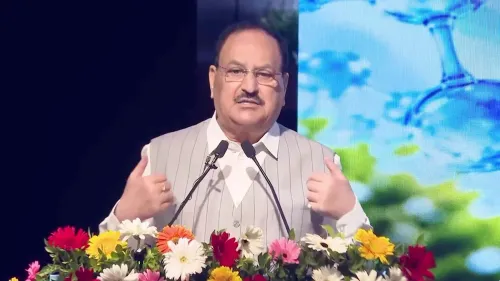
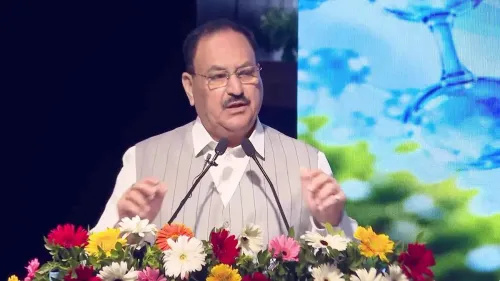
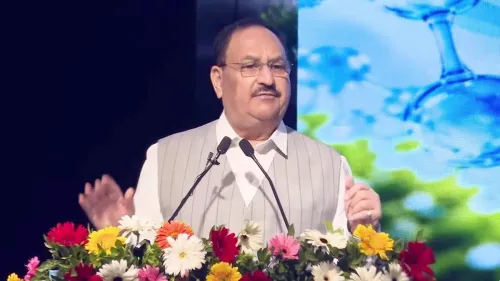
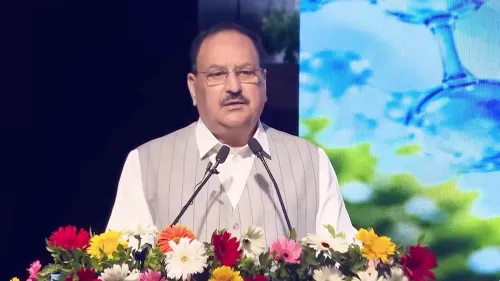
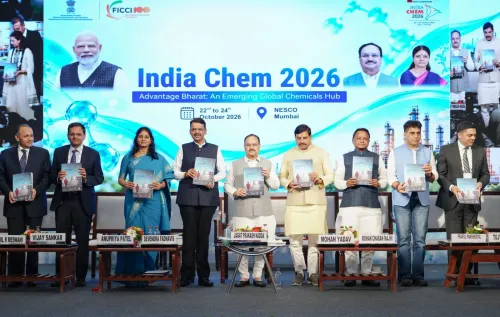
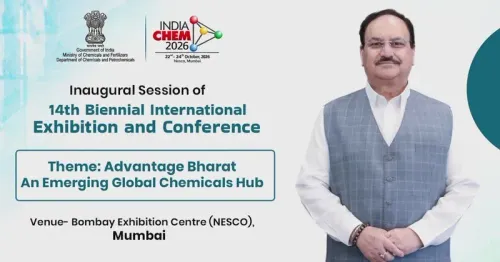
Union Minister J. P. Nadda held the third government-industry consultation of 2026 on chemicals and petrochemicals on 22 October, framing the sessions as a collective effort to realise the Viksit Bharat vision through active industry partnership under #IndiaChem2026.
Key Takeaways
Nadda chaired the third chemicals and petrochemicals industry consultation of 2026 on 22 October .
Earlier rounds were held in April and August 2026 , reflecting a sustained quarterly engagement cadence.
The government's stated goal is a 'holistic approach' to removing sector challenges in partnership with industry.
Nadda linked the effort to the Viksit Bharat vision, citing collective participation of 140 crore Indians.
The consultations fall under the #IndiaChem2026 banner, with sector outcomes yet to be formally announced.
India's chemicals and petrochemicals sector got another high-level push on Thursday, 22 October 2026, as Union Minister of Chemicals and Fertilizers J. P. Nadda convened the third in a series of government-industry consultations this year — signalling that New Delhi is treating the sector as a sustained priority, not a one-off conversation.
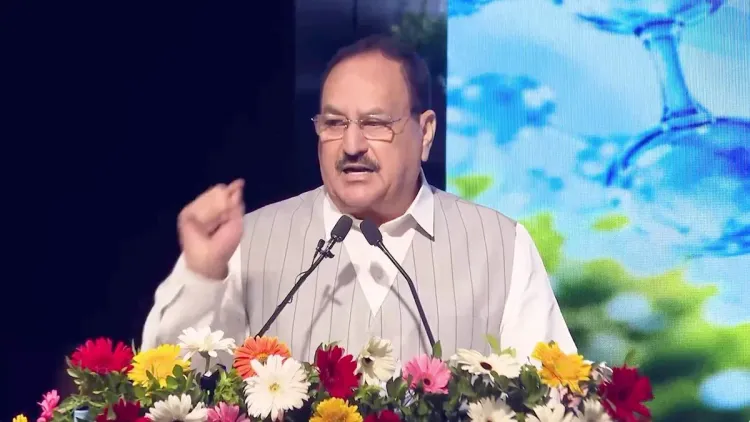
Addressing industry stakeholders at the meeting, tagged under #IndiaChem2026, Nadda underlined that the government is working alongside the private sector with a 'holistic approach' (समग्र दृष्टिकोण) to accelerate growth in chemicals and petrochemicals. 'The resolve of Viksit Bharat will be realised only through the collective participation of the government, industry, and 140 crore fellow citizens,' he said, adding his confidence that active industry cooperation would translate into success.
Three meetings in a year: why the cadence matters
The fact that this is the third such meeting in 2026 — after rounds held in April and August — is itself a signal. Routine one-off consultations rarely produce structural change; a quarterly drumbeat of engagement is designed to convert identified challenges into tracked action points. Nadda framed the explicit purpose of each meeting as 'removing hurdles and moving forward,' pointing to a problem-resolution agenda rather than a ceremonial gathering.
The chemicals and petrochemicals sector sits at the intersection of nearly every downstream manufacturing chain — from pharmaceuticals and agrochemicals to plastics and synthetic fibres. Sustained government attention here has direct implications for India's broader industrial competitiveness and import-substitution ambitions.
Viksit Bharat and the chemicals sector's role
Nadda's invocation of Viksit Bharat — the government's vision for a fully developed India by 2047 — ties the sector consultation explicitly into a long-term national economic arc. The vision demands a step-change in domestic manufacturing across high-value industries, and chemicals is one of the largest in terms of both output and employment multiplier effects.
The engagement also echoes the spirit of the Make in India initiative, launched in 2014, which identified chemicals and petrochemicals as a focus sector for capacity expansion and foreign investment. Over a decade on, the government's pitch to industry is now framed less as an invitation and more as a shared ownership model — collective responsibility between state and enterprise.
Whether these consultations crystallise into concrete policy announcements tied to IndiaChem2026 will determine whether this cadence of meetings becomes the foundation for a sector-wide transformation — or remains a well-attended conversation.
Point of View
The ministry is attempting to anchor incremental industry conversations within a larger, time-bound national ambition — giving each meeting a sense of consequence beyond its immediate agenda. The chemicals sector's upstream linkages make it a force-multiplier for pharma, agri, and packaging industries, which means this sustained attention carries real downstream policy stakes. Whether the cadence survives the transition from consultation to implementation will be the real test of this approach.
NationPress
22 Oct 2026
Frequently Asked Questions
What is IndiaChem2026?
#IndiaChem2026 is the banner under which the Indian government is conducting a series of high-level consultations between the Ministry of Chemicals and Fertilizers and industry stakeholders in 2026, aimed at accelerating growth and resolving challenges in the chemicals and petrochemicals sector.
How many IndiaChem2026 industry meetings have been held in 2026?
Three meetings have been held in 2026 — one in April, one in August, and the third on 22 October 2026, all chaired by Union Minister J. P. Nadda.
What is Viksit Bharat and how is it linked to chemicals sector policy?
Viksit Bharat is the Indian government's vision to achieve developed-nation status by 2047 through collective effort of citizens, government, and industry. Minister Nadda has explicitly linked the chemicals and petrochemicals sector consultations to this overarching goal.
What is J. P. Nadda's role in chemicals and fertilizers?
J. P. Nadda is the Union Minister of Chemicals and Fertilizers, in addition to being the Union Minister of Health and Family Welfare and the national president of the BJP.
How does Make in India relate to India's chemicals sector?
The Make in India initiative, launched in 2014, identified chemicals and petrochemicals as a priority manufacturing sector for domestic capacity expansion and foreign investment — a foundation on which current government-industry engagements under IndiaChem2026 continue to build.