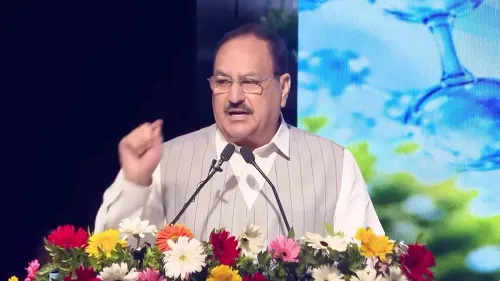
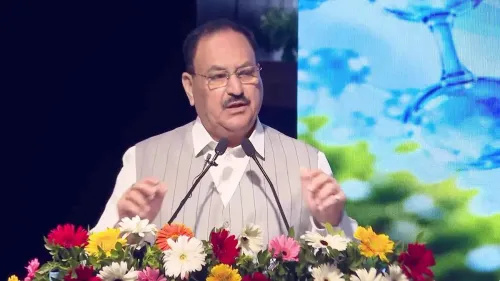
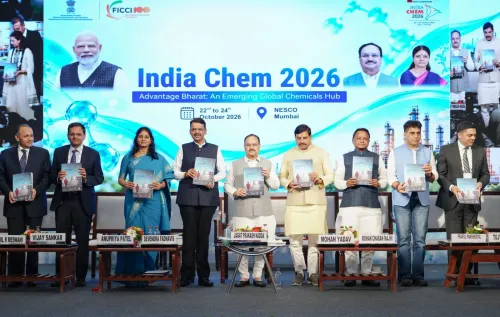
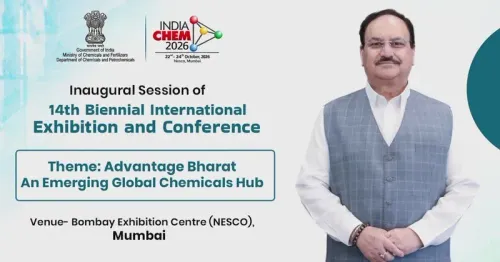
Nadda flags FTAs with Oman, NZ, UK, EFTA at IndiaChem2026
Synopsis
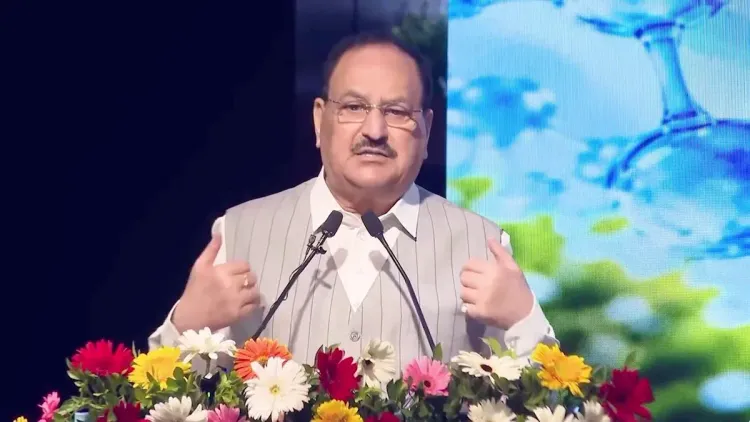
Union Minister J. P. Nadda, speaking at IndiaChem2026, highlighted India's active free trade agreements with Oman, New Zealand, the UK and EFTA, and ongoing EU negotiations, framing them as tools to integrate India's chemicals and petrochemicals sector into global value chains.
Key Takeaways
Nadda highlighted India's FTAs with Oman, New Zealand, the UK and EFTA at the IndiaChem2026 industry event on October 22, 2026 .
Talks with the European Union on a broad-based trade and investment agreement remain ongoing, Nadda confirmed.
India previously signed Comprehensive Economic Partnership Agreements with the UAE and Australia in 2022 , both covering chemicals.
The India-EU trade negotiations date back to 2007 and have yet to conclude, making them the most significant open trade file for the sector.
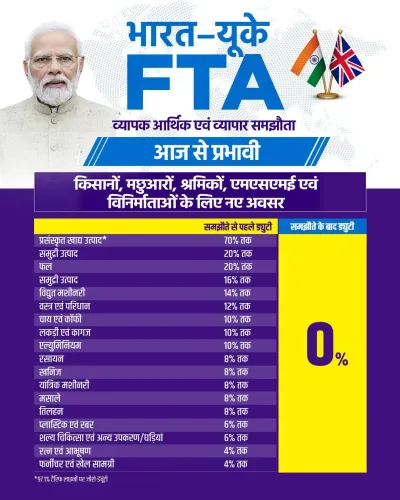
The government frames the FTA network as a direct enabler for the chemicals and petrochemicals sector to access global markets with preferential tariffs.
India's chemicals and petrochemicals sector is being wired into global markets through a web of free trade agreements — and Union Health and Chemicals Minister J. P. Nadda used the IndiaChem2026 platform on Thursday, October 22 to make that strategic ambition explicit.
Posting in Hindi, Nadda credited Prime Minister Narendra Modi's leadership for driving agreements with Oman, New Zealand, the United Kingdom and the European Free Trade Association (EFTA), while flagging that talks with the European Union remain live. 'यह केमिकल और पेट्रोकेमिकल क्षेत्र को वैश्विक बाजार से जोड़ने की हमारी प्रतिबद्धता को दर्शाता है' — 'This reflects our commitment to connecting the chemical and petrochemical sector with global markets,' he wrote.
The FTA mosaic taking shape around chemicals
India's push to lock in preferential market access is not new, but its pace has accelerated sharply. The country signed its Comprehensive Economic Partnership Agreement with the UAE in 2022, which included provisions covering chemical products, and concluded a similar deal with Australia the same year. The EFTA agreement — covering Switzerland, Norway, Iceland and Liechtenstein — added four more high-income markets to the network.
Oman, as a member of the Gulf Cooperation Council, represents a strategically important gateway into the Gulf and West Asia. The UK and New Zealand deals extend India's reach into English-speaking economies with sophisticated demand for specialty chemicals and intermediates.
The EU negotiation: two decades and counting
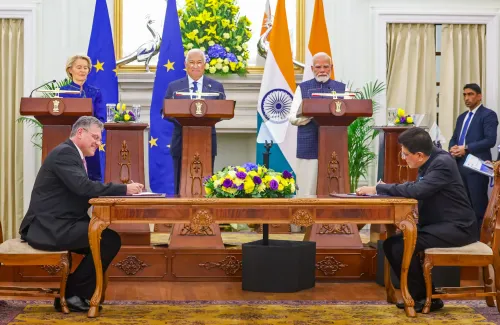
The most consequential unfinished business is the India-EU Broad-based Trade and Investment Agreement, talks for which first began in 2007. Progress has been fitful — paused for years, then relaunched — but a deal with the EU's single market of over 400 million consumers would dwarf any individual bilateral FTA India has signed. Nadda's mention of 'ongoing talks' signals that the government continues to count EU access as a live target, not a diplomatic footnote.
Why IndiaChem2026 is the right stage for this message
The chemicals and petrochemicals sector is among India's most export-hungry manufacturing verticals, supplying raw materials to textiles, pharmaceuticals, agriculture and construction. Integrating it into global value chains through preferential tariff schedules directly reduces the cost disadvantage Indian exporters face in competitive markets.
By delivering this message at an industry-facing event, Nadda is signalling to chemical exporters that the government's trade diplomacy is calibrated to their sectoral needs — not just broad strategic optics. The FTA pipeline, in that reading, is also an industrial policy instrument.
With EU negotiations still on the table and IndiaChem2026 drawing sector leaders together, the next round of India-EU talks will be closely watched to see whether diplomatic momentum can finally close a deal that has waited nearly two decades.
Point of View
New Zealand, the UK and EFTA in a single breath alongside the still-pending EU deal, Nadda is managing expectations — celebrating wins while keeping the pressure on the most consequential negotiation. The chemicals angle is also politically savvy: as minister for both health and chemicals, Nadda can speak to pharmaceutical intermediates and industrial chemicals alike, giving the message cross-sector reach. The real test will come when the EU negotiations produce a concrete offer — at which point the FTA mosaic either becomes a genuine industrial policy asset or remains an aspirational map.
NationPress
22 Oct 2026
Frequently Asked Questions
What FTAs has India signed that cover chemicals?
India has signed trade agreements with the UAE and Australia (both in 2022) and with the EFTA bloc that include provisions covering chemicals and petrochemicals. Deals with Oman, New Zealand and the UK have also been referenced by the government as part of this expanding network.
What is the status of the India-EU trade agreement?
Negotiations for the India-EU Broad-based Trade and Investment Agreement began in 2007 and have been relaunched multiple times. As of October 2026, Union Minister J. P. Nadda confirmed that talks remain ongoing, though no conclusion date has been officially announced.
What is EFTA and why does it matter for India?
EFTA — the European Free Trade Association — comprises Switzerland, Norway, Iceland and Liechtenstein . These are high-income, technology-intensive economies. An India-EFTA deal gives Indian chemical and petrochemical exporters preferential access to these markets and opens the door to investment and technology partnerships.
What is IndiaChem 2026?
IndiaChem2026 is a major industry event focused on India's chemicals and petrochemicals sector. It serves as a platform for government, industry leaders and global partners to discuss trade, investment and sectoral policy, and is used by ministers to signal policy direction to exporters and manufacturers.
How does J. P. Nadda relate to the chemicals sector?
J. P. Nadda holds the portfolio of both Union Minister of Health and Family Welfare and Minister of Chemicals and Fertilizers , making him the nodal minister for the chemicals and petrochemicals industry and its trade policy linkages.