Nadda hails Anahat Singh's historic World Squash Junior gold
Synopsis
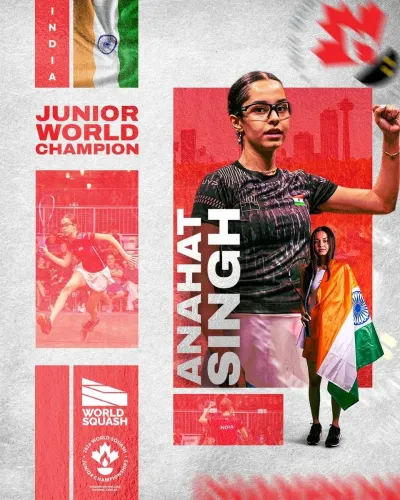
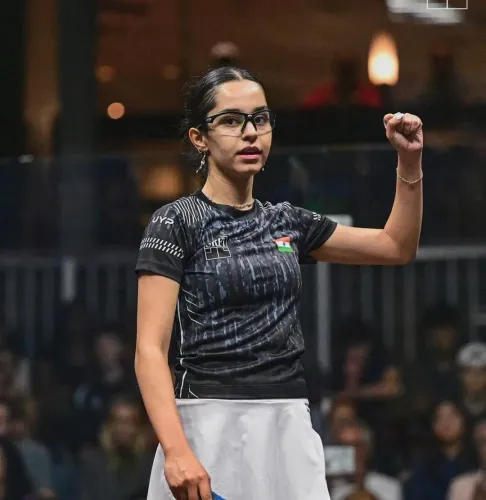
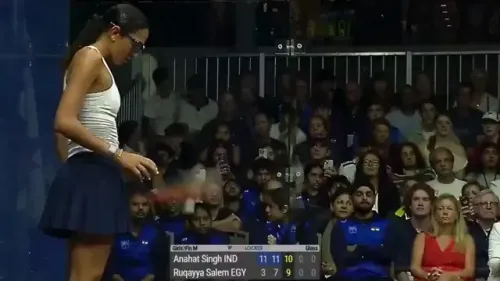
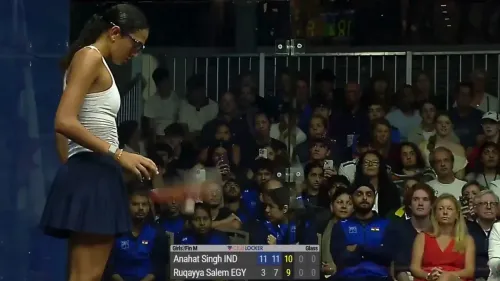
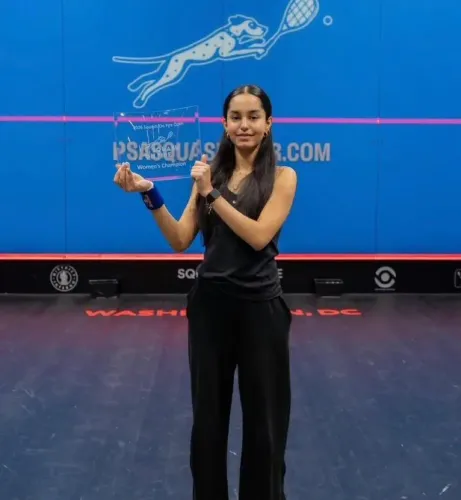
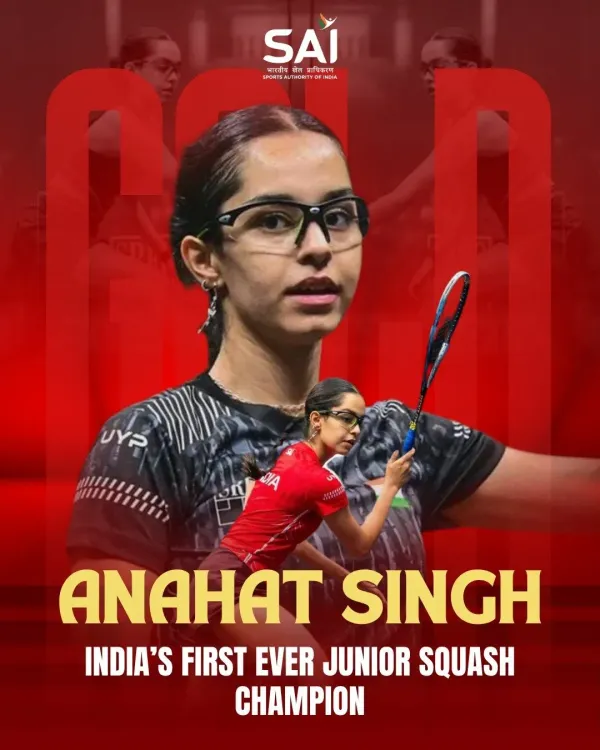
Union Health Minister J. P. Nadda has congratulated squash player Anahat Singh for winning gold at the 2026 World Squash Junior Championships, hailing her as the first Indian to claim the title and calling the achievement a source of national pride.
Key Takeaways
Anahat Singh won the gold medal at the 2026 World Squash Junior Championships , according to Union Health Minister J.
Nadda's post on 27 July 2026 .
Nadda described her as the first Indian to win gold at the World Squash Junior Championships, calling it a historic achievement.
The minister expressed hope that her success would inspire young Indians to take up sports and pursue their ambitions.
The win aligns with India's broader push to build a competitive sports culture beyond cricket, backed by programmes such as Khelo India , launched in 2017 .
Squash stakeholders — coaches, academies, and federations — are likely to use the result to press for greater recognition and funding for the sport.
Union Health Minister J. P. Nadda on Sunday, 27 July 2026, congratulated squash player Anahat Singh for winning the gold medal at the 2026 World Squash Junior Championships, calling it a 'golden moment for India' and describing her achievement as historic — the first time an Indian has claimed gold at the championship.
Context
Nadda, posting on X, wrote: 'You have created history by becoming the first Indian to win gold at this championship. Your hard work and dedication have made the whole country proud.' The post underscored the significance of the win not just as a sporting milestone but as a cultural marker for a country that has historically channelled its sporting enthusiasm into cricket above all other disciplines.
Anahat Singh is one of India's most-watched young squash talents, having represented the country at the junior level across international circuits. A gold at the World Juniors places her among the most decorated Indian squash players of any generation.
Policy Backdrop
The congratulatory post arrives against the backdrop of sustained government investment in non-cricket sports. The Khelo India programme, launched in 2017, was designed to identify and nurture grassroots talent across disciplines, providing training infrastructure, stipends, and international exposure to young athletes.
Squash has been among the disciplines that have benefited from improved access to coaching and competitive platforms under such schemes. India's rise in junior squash rankings over the past decade is partly attributed to this institutional push, which has sought to convert individual brilliance into systemic excellence.
Stakeholders and Impact
The win carries significance for the broader squash community in India — coaches, academies, and federations that have lobbied for greater recognition and funding for the sport. A world junior gold is among the strongest arguments such stakeholders can present when seeking resources from national sports bodies.
For young athletes across disciplines, Nadda's message — 'May your success inspire many young Indians to take up sports and chase their dreams' — reflects a deliberate government effort to use high-profile wins as recruitment tools for sports participation at the grassroots level. The ripple effect of a visible champion in a minority sport can be substantial in shaping aspiration among school-age players.
What's Next
Attention will now turn to whether Anahat Singh can carry this momentum into senior international competition, where Indian squash has historically struggled to break into the top tier. Her trajectory will be closely watched as a test case for how well India's junior development pipeline translates into senior podium finishes.
More broadly, India's performance in subsequent junior and senior squash tournaments will serve as a measure of whether the country's investment in the sport is producing systemic results or isolated breakthroughs. Calls for enhanced funding, more international fixtures, and better domestic league structures are likely to grow louder on the back of this result.
Point of View
Serving dual purposes: it rewards athletes with political visibility and reinforces the narrative that state investment in grassroots sport is yielding returns. Nadda's post is calibrated to that broader messaging arc, coming from a minister whose portfolio is health rather than sports — signalling that the celebration of athletic achievement has become a whole-of-government communication posture. For the BJP, which has sought to project India as a rising multi-sport nation ahead of future global events, a world junior gold in squash is precisely the kind of story worth amplifying. The real test, however, will be whether institutional follow-through matches the rhetorical enthusiasm.
NationPress
26 Jul 2026
Frequently Asked Questions
Who is Anahat Singh and what did she win?
Anahat Singh is an Indian junior squash player who won the gold medal at the 2026 World Squash Junior Championships, becoming the first Indian to claim gold at the tournament.
What did J. P. Nadda say about Anahat Singh's win?
Union Health Minister J. P. Nadda congratulated Anahat Singh on X, calling it a 'golden moment for India' and saying she had created history as the first Indian to win gold at the World Squash Junior Championships.
Is Anahat Singh the first Indian to win the World Junior Squash Championship?
According to Union Health Minister J. P. Nadda's post on 27 July 2026, Anahat Singh is the first Indian to win gold at the World Squash Junior Championships.
What is the Khelo India programme and how does it relate to Indian squash?
Khelo India is a government programme launched in 2017 to promote grassroots sports participation and talent development across disciplines, including squash, by providing training infrastructure and international exposure to young athletes.
When did Anahat Singh win the World Junior Squash gold medal?
The win was announced by Union Health Minister J. P. Nadda on 27 July 2026, when he posted his congratulations on X following the 2026 World Squash Junior Championships.